From mayor to prime minister
Does Andy Burnham’s experience as a regional mayor prepare him for No.10?

Introduction
Andy Burnham is expected to succeed Keir Starmer as prime minister within weeks. As well as his time as a minister in the last Labour government, his nine years as mayor of Greater Manchester are routinely put forward by supporters as his main qualifying experience for the top job.
But is running a city region of around 2.8 million people comparable to running a country of 70 million, with a £1 trillion economy? This paper explores the similarities, and differences, between the two roles.
Regional (formerly metro) mayors represent a relatively new source of political power in England. Though London has had a mayor since 2000, the first mayors outside the capital were elected less than a decade ago. Until his by-election win, Burnham was one of England’s longest-serving mayors, having led the Greater Manchester Combined Authority (GMCA) since its creation in 2017.
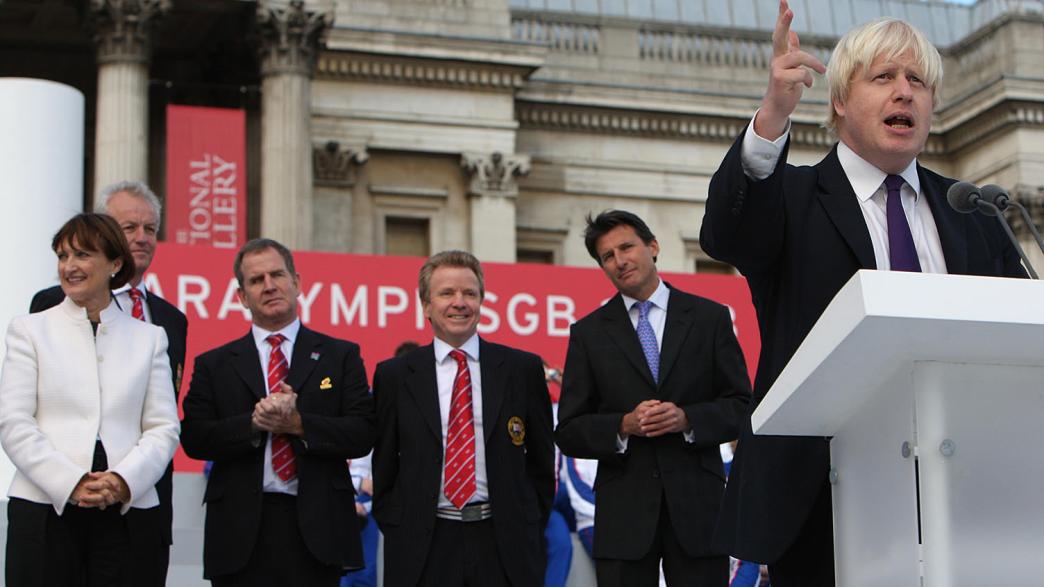
Mayors can build a big profile, and in doing so become contenders for higher office Indeed, should he make it to No.10, Burnham will not be the first to tread this path: Boris Johnson made the step up from City Hall in London to No.10 in 2019 – though, unlike Burnham, he did so after a spell on the backbenches and after holding senior cabinet roles including foreign secretary.
No role represents a perfect proving ground for the unique post of prime minister. New prime ministers typically make this step either from another cabinet role or (after an election) from the opposition benches. The former equips would-be premiers with experience of executive leadership and policy delivery, albeit within a departmental silo; leaders of the opposition have no executive control but, in their role ‘shadowing’ the prime minister must be across all policy areas and set out a broad vision for government.
In some ways a mayoralty might be considered to offer better preparation for Downing Street than either route. As head of an executive, mayors lead an organisation and set a broad vision for its political direction. Mayors also exercise responsibility across a range of policy areas, each of which has its own department at the national level. And they are the most visible face of the whole administration in the media and public eye.
Yet in terms of the scale of the role, the style of leadership required, and the nature of the decisions they take, they simply cannot compare.
On the sheer scale of the brief, mayors don’t come close
A mayor is the leader of a fairly large organisation, at least in the longer established strategic authorities: the GMCA has over 600 staff (2,000 if the fire service is included). 6 Greater Manchester Combined Authority, Corporate Plan Summary 2022-2025, www.greatermanchester-ca.gov.uk/media/6733/corporate-plan-summary-v4.pdf This is a much bigger team than that of the leader of the opposition but is dwarfed by most Whitehall departments – and a small fraction of some of the biggest.
This allows a mayor to be a visible leader across a combined authority, developing personal relationships with a large proportion of staff, including all those at senior levels, in a way a prime minister cannot. The sheer scale of Whitehall means that a PM must rely far more on intermediaries and advisers to project their authority across the administration.
Compared to a secretary of state, a mayor’s brief is quite broad, crossing what in central government are departmental boundaries – (local) transport, economic development, and elements of skills, housing, regeneration and employment support; the Greater Manchester mayor also has police and crime commissioner powers, and a role in health and justice. This means mayors, like prime ministers, do need to prioritise and choose when and how to intervene.
But the scope of the prime minister’s brief is much, much broader than this.
While mayoral responsibilities have been devolved from several different Whitehall departments, they are mostly in service of the single overarching objective of driving economic growth. A key role for mayors is, through key strategic initiatives such as local growth plans or the long-term ‘Greater Manchester Strategy’, to provide a framework to join up decision making across these domains.
Prime ministers will of course also ‘go for growth’ but as one objective among many, often contested and conflicting ones. And to do this (and other objectives) they have a much wider range of levers to use too: including, among other areas, public service delivery (which mayors are mostly not responsible for), economic regulation and internal and external security.
Though they will travel, to promote their region for investment say, being a mayor is far more of a domestic role. By contrast most prime ministers find far more time occupied by foreign affairs then they anticipate, even in relatively benign time – today they are a major preoccupation. Mayors similarly have no role on foreign or defence policy and, unlike Boris Johnson who had been foreign secretary in Theresa May’s government, Andy Burnham’s previous Whitehall and Westminster experience was entirely domestic.
In practice, prime ministers need to choose a small number of objectives to prioritise, to give clear direction and to resolve disputes between colleagues. If they seek to micromanage they will find themselves, and their administration, paralysed.
One way mayors have managed to improve policy making in their places is by joining up decision making across different policy areas, like transport and housing. As combined authorities are relatively new institutions, mayors can set a culture that establishes a less siloed approach from the start. Siloed decision making has long been a feature of policy in Whitehall, and a mayor that grasps the importance of joined-up working might be able to work differently.
But mayors operate at a more manageable geographic scale and lead smaller organisations. Joining up in this way is much harder at the central government level, where departments are big, each with their own culture, ways of working and priorities, and so silos are more entrenched. In Whitehall, secretaries of state can operate without seeking buy-in from their colleagues (even though most of the government’s biggest challenges cut across departmental boundaries).
A prime minister needs both a clear set of objectives and the authority to ensure ministers work together, in a way that mayors do not have to worry about.

Prime ministers appoint their cabinet – but still have to appeal to different wings of their party.
Mayors have a stronger personal mandate (and are often more popular) than prime ministers
Mayors have the biggest direct, personal mandates of any elected position in the UK. Some 420,000 people voted to re-elect Andy Burnham as mayor in 2024. While as leader of the opposition Keir Starmer was the face of the Labour Party the only people who voted personally for him at the 2024 general election were his constituents in Holborn and St. Pancras: 18,884 did so.
This gives mayors a high degree of political authority as they can point to having been elected by voters across their region, helping them develop and ‘sell’ longer-term plans. Once elected, they also have job security for a full four-year term – quite unlike prime ministers who, as Keir Starmer will be all too aware, are ever vulnerable to changing political sentiment in the country and among MPs.
This personal mandate empowers mayors to take on the role of champion for their region. They make the case for it on the national and international stage, to government and to investors. The Covid pandemic was a clear example: Burnham’s profile as Greater Manchester mayor increased when he pushed back against the government’s plans for tighter restrictions in his region. Even outside of crises, to date mayors have mostly been making the case to Westminster for funding for projects. And with greater powers and funding moving out from Whitehall, mayors have operated in a context of increasing budgets.
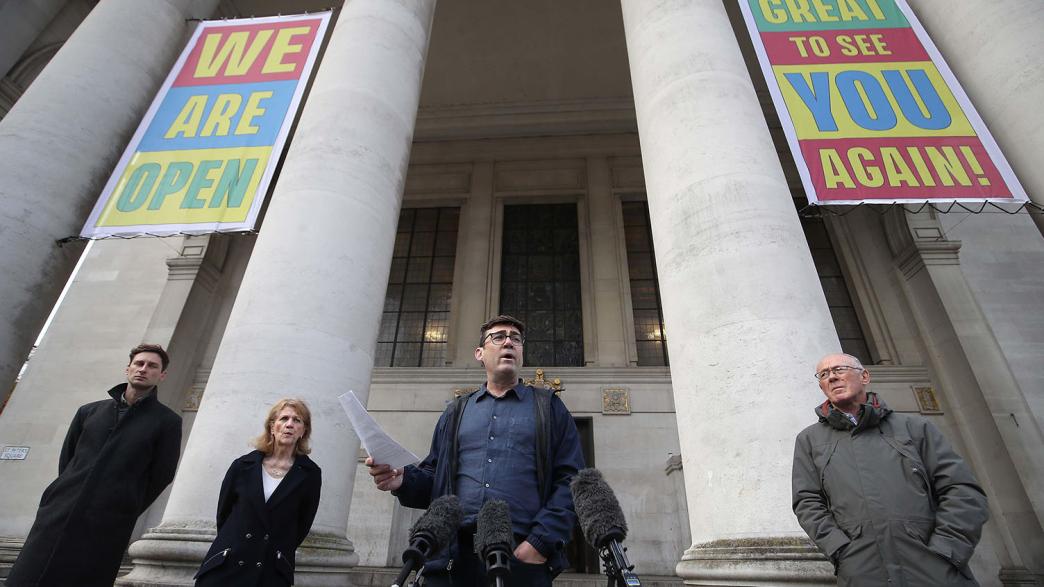
Mayors do not need to balance tax and spending and can point to central government’s failings if projects do not go ahead or people are disappointed. This direct mandate and high profile role has made mayors some of the most recognised local politicians in the UK, exceeding name recognition for MPs and councillors. 8 Lavoie A, Swinney P, Place over politics: What polling tells us about how successful devolution has been to date, Centre for Cities, 25 March 2024, www.centreforcities.org/publication/place-over-politics/#mayors
Mayors can also benefit from being – physically and culturally – outside Westminster, something else Burnham, dubbed ‘King of the North’ by his supporters, has benefitted from. Clearly this is not something a prime minister can deploy, although it is notable that Burnham has been rumoured to want to situate part of his prime ministerial office in Manchester.
Effective transitions of prime minister: lessons for Andy Burnham
Andy Burnham needs to be ruthless with his time and priorities in his preparations for power.
Read our comment
Both mayors and prime minister exercise their political authority through others – but again at vastly different scale
Neither mayors or prime ministers can ever work alone. As well as relying on their cabinets or boards, both rely on other political advisers and support functions. But again, the sheer scale of a prime minister’s network is a key difference.
Within a combined authority, the mayor has strong influence over the direction of the whole organisation but limited direct authority over staff who instead work for the authority as a corporate entity. Mayors have small political offices – often limited to a chief of staff and a political adviser, though they will have a bigger private office of permanent, non-political staff – meaning relationships with the combined authority senior leadership team are critical to achieving their ambitions.
Prime ministers have bigger teams, though still relatively few staff working to them directly (a couple of hundred at most, out of around 500,000 civil servants across the UK). These include top-level mandarins in the cabinet secretary, who is also the head of the civil service, and No.10 principal private secretary, who runs the prime minister’s office. A PM must have a good working relationship with all if they are to get anything done.

The size of the posts’ political team is another stark difference. Prime ministers have a large team of 40–50 political advisers, from their chief of staff (their most senior political aide) and political secretary (who advises them on the views of their party) to a range of policy-specific special advisers. Getting this team set up correctly, so everyone has clarity on what their role is and what the prime minister wants them to achieve, is an essential requirement for a prime minister to be successful. As the IfG has argued, reforming how the centre of government works, including by strengthening the prime minister’s office, will allow prime ministers to drive their ambitions across government more effectively.
Even with all these advisers, cabinet ministers are much better resourced than their boss, in terms of both budgets and staff (though they have far smaller political teams). A politically powerful prime minister sets the direction of their government and makes clear what they expect their ministers to deliver, but they cannot force them to do so, and they have very little ability to make things happen alone. So having strong relationships with the cabinet, and ensuring they are bought into the prime minister’s priorities, is a prerequisite for getting things done.
As well as needing to work with their cabinet, a prime minister also needs to carefully manage their parliamentary party – something a mayor, with their direct personal mandate and job security until the next election, does not need to worry about. Prime ministers need the support of MPs to pass legislation, of course, but also when their government makes difficult decisions that require explaining to the public. And, as both Boris Johnson and Keir Starmer found out, a large parliamentary majority is no guarantee that they will always have the support of their party.

Boris Johnson in the House of Common after winning a large majority in the 2019 election. But a large parliamentary majority is no guarantee that a prime minister will always have the support of their party.
Prime ministers cannot duck difficult decisions on tax and spend
Mayors need to have only a limited grasp on fiscal policy. They manage a budget, but one that is substantively set in Whitehall. They have only the most limited tax-raising powers: a small council tax precept, which only three mayors including Burnham have implemented, and a business rates supplement that only London has introduced. Their organisations do not borrow from global capital markets. Mayors are responsible for driving economic growth in their region, but are expected to do so by exercising limited spending levers effectively.
The prime minister also holds the official title of ‘first lord of the Treasury’ and, in conjunction with their chancellor, set the government’s overall fiscal and economic policy. They are responsible for most tax raising: over £1 trillion per year. Through spending reviews and other fiscal events, they decide where that money should be spent and how much the government should borrow. Questions of money are at the heart of most policy debates: if one area – in either policy or geographical terms – is to be prioritised, how will that be paid for, and who will lose as a result? How can the government support economic growth to boost living standards and bolster tax revenues?
Mayors can (and do) blame central government for something not being adequately funded: prime ministers cannot pass the buck. Nor are mayors confronted as constantly with difficult trade-offs or find themselves responsible for saying ‘no’. The sheer pace of decisions and trade-offs that land at No.10’s door make it far harder to create a vision that the whole country can get behind – and the occupant is all but guaranteed to watch their approval ratings plummet.
In short, should Andy Burnham become prime minister he will need to get more comfortable with being unpopular.
The UK government is currently spending 9% of its total budget on debt interest payments. The prime minister and chancellor are responsible for projecting a credible economic strategy that reassures bond markets and ensures the government can borrow at an affordable rate. As Burnham will have discovered when comments earlier this year that the government should not “be in hock to the bond markets” provoked a sharp reaction, what (prospective) prime ministers say about economic policy matters greatly for investor confidence and government borrowing costs.
What does Andy Burnham really stand for?
The Economist's Hugo Gye joins the podcast to discuss what happens when power changes hands mid-parliament.
Listen to the podcast
Prime ministers face extraordinary levels of scrutiny
There is something of an irony when it comes to the accountability of mayors in that while they have, as noted, a large direct personal mandate, scrutiny of their work is far weaker than in national government. MSA scrutiny committees are poorly resourced and, with attendance unpaid, often not quorate. If the MSA board is largely of one party – as Greater Manchester has been – this can also be a weak source of challenge. This is often compounded by complicated and dense financial statements and a sparse local media landscape.
And while some novel public scrutiny approaches such as Mayor’s Question Time have emerged, in practice, many mayoral decisions receive limited external attention and focus will often come after the fact if something has gone wrong (for example in Tees Valley, where the management and dealings of the Teesworks development corporation has faced criticism).
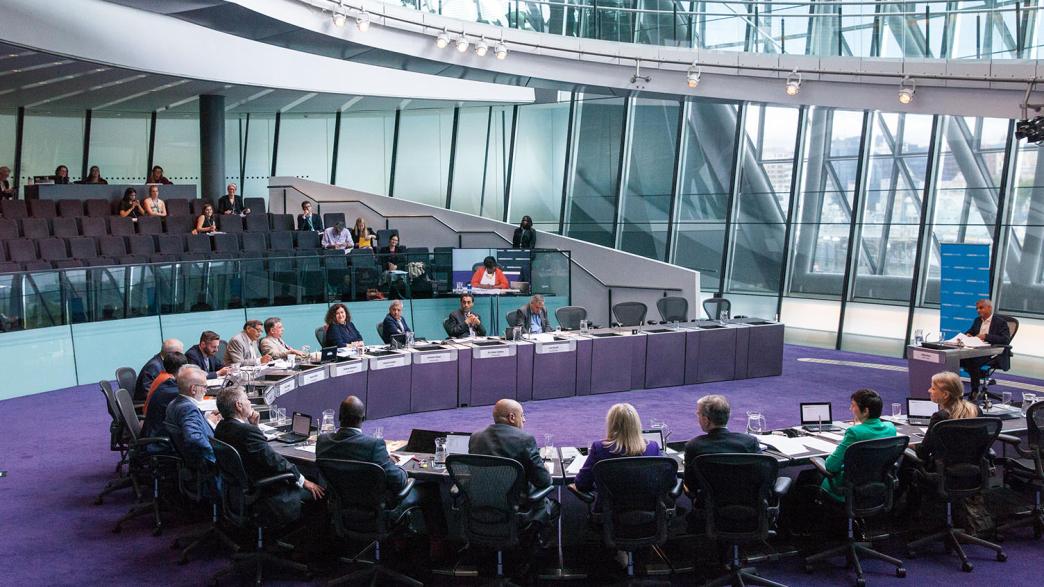
It hardly needs saying that the scrutiny a prime ministers faces is intense. They have formal parliamentary moments, including weekly PMQs and thrice-yearly appearances at the Liaison Committee, where they are questioned by select committee chairs about the entire range of government business.
But as the figurehead of the government, they also face huge scrutiny from other politicians (including, increasingly, from their own party), business, the media and the public. When things go wrong in government it is the prime minister who has to explain what has happened and what they are doing to fix it.
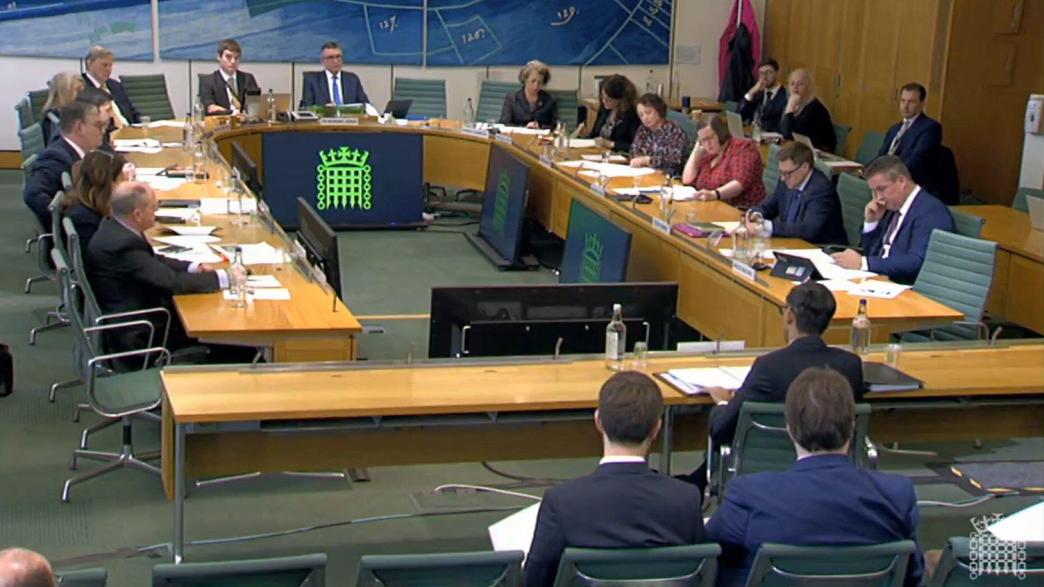
They also have to respond to lead the response to major crises, communicating to the public about what is happening. They set the example for their ministerial team – identifying priorities, making trade-offs and upholding expected standards of behaviour.
The ultimate accountability check on a prime minister is of course whether or not they still have the support of their parliamentary party. Different parties have different mechanisms for removing their leaders, but all take into consideration the public popularity of the leader – as, it feels fair to say, has happened in the past weeks. Once the public has decided they do not like a prime minister, a party often moves against them.

Andy Burnham with supporters after winning the Makerfield by-election.