Reflecting on Keir Starmer’s premiership
The IfG team looks back at two years of Labour government under Keir Starmer.

Introduction
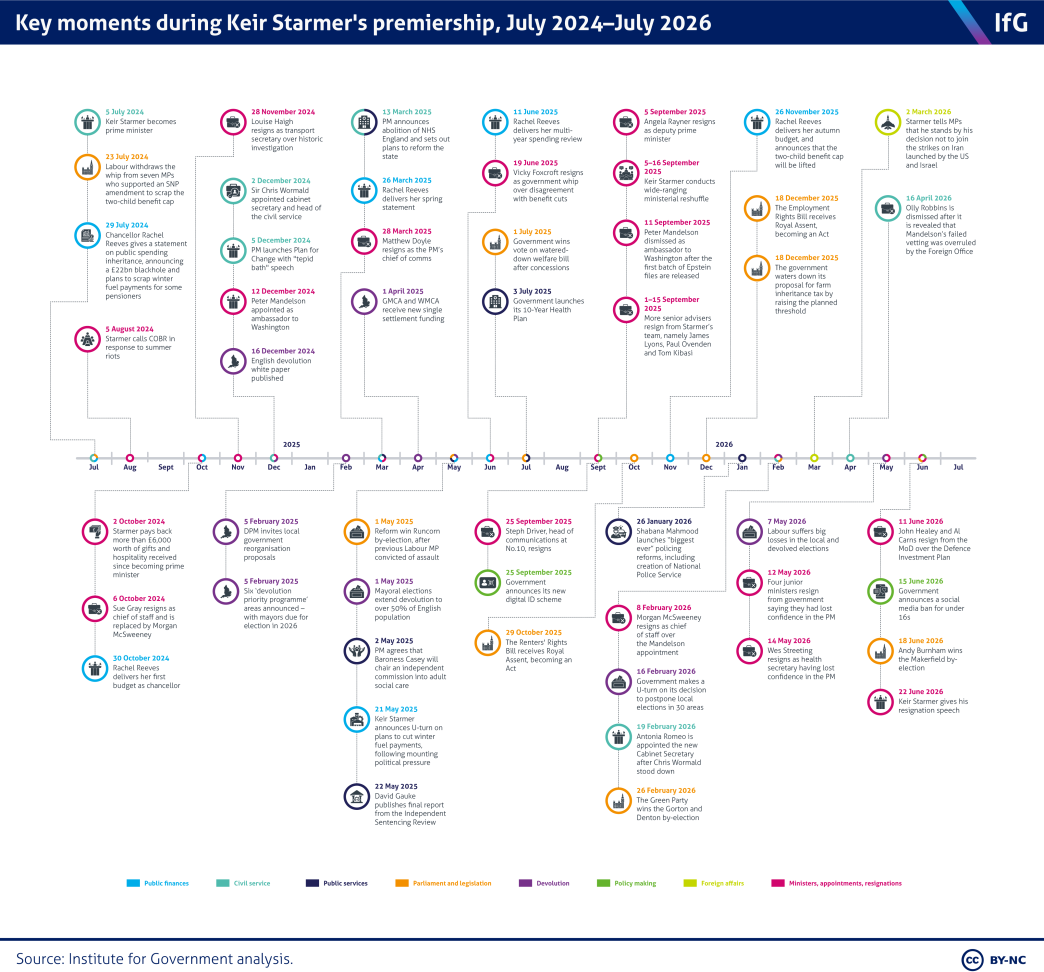
On 4 July 2024, Keir Starmer became the first Labour prime minister in almost a decade and a half – leading his party to an historic general election victory. He entered Downing Street with the largest parliamentary majority of any prime minister since Tony Blair in 1997. However, just two years later, almost to the day, Starmer announced his resignation, first as Labour leader and then as prime minister.
So why did the Starmer premiership fail to meet expectations? Was it policy, politics or personalities that led to the Labour party breaking from tradition and changing its leader mid-parliament? The IfG team share their reflections on Keir Starmer’s premiership
Before 2024, Labour focused more on campaigning than on preparing to govern
It was telling that, whenever Keir Starmer was asked to explain the achievements of his government, almost until his departure speech, his emphasis was on changing the Labour Party and then winning the election. Those successes were necessary, but far from sufficient, for being a successful prime minister, and Starmer’s focus on them affected how the rest of his premiership unfolded.
Starmer campaigned on competence. Indeed, he and his cabinet seemed to think that the mere fact of a Labour government replacing a Conservative one would be enough to kick the UK economy out of the growth doldrums of the past decade – that simply by acting with competence and integrity where he had charged his predecessors with the opposite, he could reverse the decline in trust in politics. This assumption was swiftly undermined, if not disproved, when soon after entering office he and his colleagues were revealed to be taking various freebies from donors This caused damage to a key plank of the government’s reputation in a way from which it never really recovered.
After the election, the lack of a clear governing plan was palpable – as was the seeming distance Starmer seemed to put between himself and the policies his ministers were pursuing. Plans lacked coherence and what had appeared to be ‘big ideas’, such as mission-driven government, evaporated into nothingness as Starmer crossed the threshold of No.10.
The lack of centrally driven planning meant that some departments where ministers were clear on what they wanted to do (MHCLG, DESNZ and maybe DfE) could move ahead; while in others, ministers were unable to give their civil servants clear direction and got off to a fumbling start – despite the fact that all the main cabinet jobs, save DCMS, went to the people who had shadowed them in opposition.
Starmer’s ambitions to ‘rewire the state’ never really took off
At first, Starmer appeared to be a rare prime minister who had genuine interest in and desire to reform the state. The 2024 election campaign and the early months of his government were dominated by talk of cross-cutting 'missions', and how their delivery would necessitate “nothing less than the complete rewiring of the British state”.
But big words were followed by little action. The language around missions became increasingly woolly until the word became a catch-all term for almost anything the government wanted to announce. It became clear that little thinking had been done in opposition about how – in basic, practical terms – to translate the rhetoric into reality. The 2025 spending review offered the final opportunity for missions to live up to the billing with, for instance, spending allocated by priorities instead of by department. The opportunity was missed.
Starmer deserves credit for improving relations (at least initially) between ministers and civil servants, although this rapprochement did not last. He and his ministers entered office with warm words for officials, and there was every sign of a much-needed reset. But it was not long before familiar ministerial frustrations began to bubble up, and Starmer was complaining of officials being comfortable in the “tepid bath of managed decline”. Even though there were later signs of regret around this language, other events – including the nature of Chris Wormald's departure and the abrupt sacking of Olly Robbins – dented relations again. Low levels of trust, a longstanding problem in the relationship, remain.
Occasionally, the spotlight was turned to other areas of state reform. In a speech in March 2025, for example, Starmer described "quangos, arms-length bodies and regulators" as a "cottage industry of checkers and blockers". But despite some positive moves (including considered measures around reform of water regulation) this language was not underpinned by an overall strategy for making government at arm’s length work better.


Prevention, integration, devolution? Public service reforms peter out
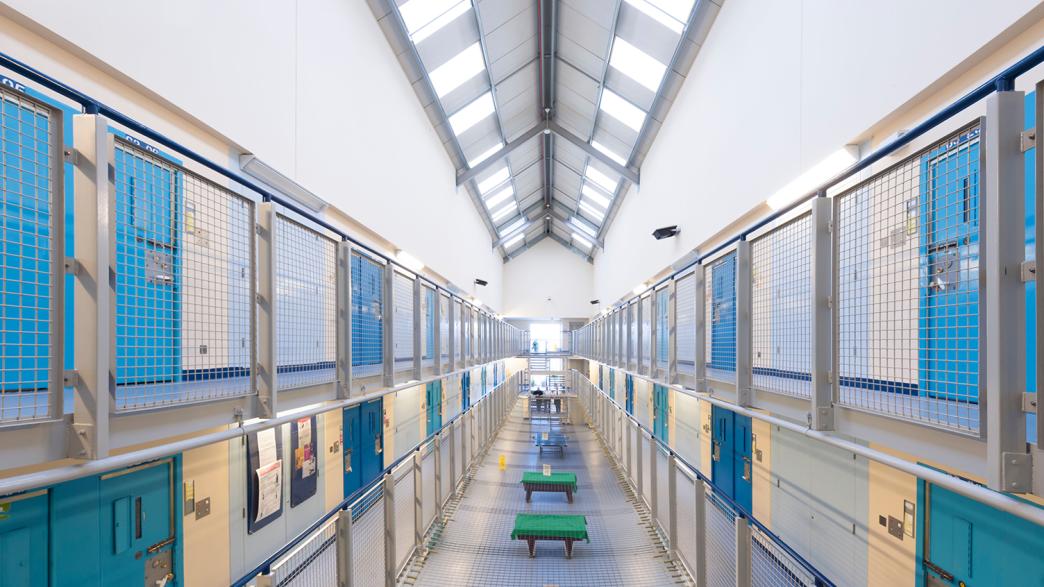
Reform efforts beyond central government also floundered, despite being a major focus. Almost all public services were performing much worse in 2024 than the last time Labour was in power. Some – prisons and local government – were at risk of sector-wide collapse. Unlike New Labour, Starmer knew that he wouldn’t be able to pour lots of additional funding into public services and instead argued for improvements in performance through reform.
From the beginning, the term was nebulous. It took a year for the government to provide any clarification at the 2025 spending review. The three ‘principles’ in that document were welcome: that public services should be more devolved, integrated and focused on prevention. But beyond those overarching three ideas, little detail was articulated.
In lieu of a clear vision and central direction, ministers retreated into their departments and pursued their own priorities. That has frequently meant undertaking large, top-down, structural reorganisation of services, merging subnational organisations (integrated care boards, police forces and local authorities), cutting the staff that work in them, and centralising power in the hands of secretaries of state.

Take the NHS. The government launched its 10-Year Health Plan for England in July 2025. That included three “shifts” in how the NHS delivers care. Realising even one of those would have marked a momentous change in how the health service operates. But the government didn’t stop there. It also undertook the abolition of NHS England, the reorganisation of integrated care boards, an attempt to hit longstanding hospital targets for the first time in more than a decade, and the design and implementation of radical new funding models. This added up to an overwhelming amount of change.
Despite the overall haphazardness of the Starmer government’s reform plans, there are some bright spots. The government increased capital budgets for services, an area that has been continuously neglected by past governments. Budgets for most services are longer-term, and with fewer ringfences. That is helping services to plan more effectively over time.
The public service reform team in the Cabinet Office have been working on genuinely new ways of delivering services. The government has launched place-based budgeting pilots and the ‘prevention demonstrator’ programme in Greater Manchester. The problem is that the ‘good bits’ of public service reform are contained to small pockets of government and are being largely steam-rolled by the massive reform programmes happening in departments.
In the end, many of Starmer’s failings, like so many of his predecessors’, trace back to an inability to tackle fundamental problems with how the UK government operates. For all the talk of fundamental rewiring he did not reform the centre of government, the dysfunction of which is well documented. He did not overhaul the creaking architecture of the civil service itself, or address the ambiguities and confused accountabilities within Whitehall and beyond. And, again despite grand rhetoric on the campaign trail, his government missed a huge opportunity on public service reform.

Starmer struggled to build the right team
One of the recurring themes of Starmer’s premiership was changes of personnel. Having appointed former senior civil servant Sue Gray as his chief of staff in opposition, he replaced her with his former chief of staff Morgan McSweeney in September 2024. This was the start of a high rate of churn in key roles around the prime minister. Among other political advisers, Starmer had four heads of communication during his two years in office. And, as noted above, Starmer struggled to get relationships with senior officials working well.
Starmer did make some interesting appointments, drawing on people’s expertise and experience. He reached across party lines to appoint advisers like David Gauke to lead the sentencing review, or David Willetts as chair of the Regulatory Innovation Office. He also appointed as ministers people with subject-matter expertise, including Lord Timpson as prisons minister and Lord Vallance as science minister.
But when it came to running his own team, Starmer failed to work out what support he needed and who was best placed to deliver it – as the revolving door at No.10 shows only too plainly.

Starmer’s preference for process over politics made his job harder
Starmer’s government as a whole was never able to articulate why it wanted to be in power and the perception was of a prime minister who deliberately eschewed ‘vision’ (a word Starmer is said to dislike) 4 www.thenewworld.co.uk/tom-baldwin-its-the-values-stupid/ in favour of a focus on process.
The first few months saw a flurry of reviews into an array of policy areas. Some, like the sentencing review, led by former Conservative lord chancellor David Gauke, were relatively quick and did deliver change. But others have achieved little and some, almost halfway through the parliament, are still yet to report. The social care review – led by another heavyweight, Baroness Casey – was scheduled to report as late as 2028, at which point the government will (likely) be gearing up for the next general election.
These reviews have also sat alongside a large number of public inquiries – eight of which have been launched since 2024. At the beginning of this year there were a record 27 public inquiries active across the UK, including those already underway across areas including health, social care and policing.
While inquiries can show a willingness to confront issues and establish facts independently, the scale and duration of so many simultaneous inquiries dilutes their impact. It has reinforced the perception that the Starmer government favours process over decisive action and is willing to defer accountability into the future.
Starmer and Reeves’ economic management put them on the back foot from the start
On the economy, Starmer and Rachel Reeves started on the back foot. This was in part through no fault of their own: they inherited arguably the most daunting fiscal situation of any government in recent decades, with a high deficit and unrealistic spending plans. But some of their travails have been of their own making. Labour’s approach during the election campaign boxed them in still further, with their ‘cast-iron’ guarantees not to increase the rates of income tax, national insurance and VAT – and pretence that Jeremy Hunt’s spending plans were compatible with their plans for public services.
After the election the government tried to change the narrative, pointing to a £22 billion ‘black hole’, discovered only once in office, in those 2024/25 spending plans. In response, Reeves made sensible changes to the fiscal rules to allow more investment and a less sensible increase to NICs (a more damaging choice than income tax that riled businesses) to put public service spending on a more realistic path.
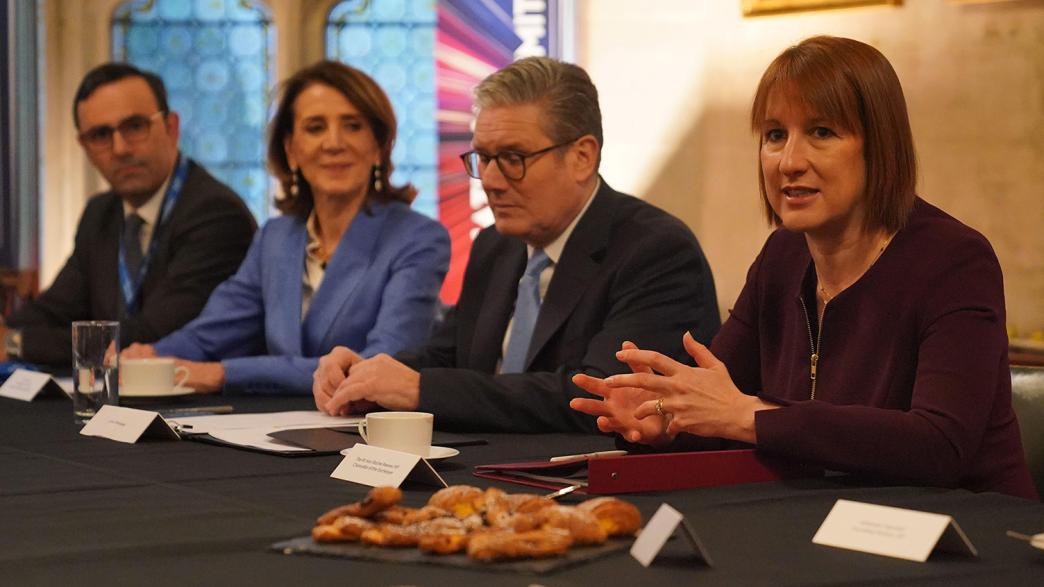
But despite being one of the biggest tax-raising budgets on record the chancellor’s November 2024 decisions left only wafer thin ‘headroom’ against the fiscal rules, leaving her vulnerable to even the slightest downturn in the economic forecasts.
The forecast in March 2025 was, indeed, worse – leading to constant speculation about further tax rises or other changes required to bring the chancellor back on track to meet her rules. This, alongside Reeves’ choice of main tax raiser, undermined business and consumer confidence and, ultimately, the government’s growth priority.
Reeves and Starmer have been unlucky. Donald Trump’s trade wars, followed by his Iran war, have sent shockwaves across the global economy and hit many countries’ growth prospects, including those of the UK. But the first few months of a new government afford a rare opportunity to set up a ‘burning platform’ to reform the UK’s broken tax system – and this was not taken.
At the micro policy level there is lots for successors to pick up and build on. There have been welcome changes, like the multi-year spending review to provide more certainty, and a nascent but encouraging reform agenda across public services, as discussed above. But future governments will need a more robust fiscal strategy if they want to avoid being buffeted by every small change in economic conditions or interest rates.
Starmer often seemed more comfortable on the world stage than at home
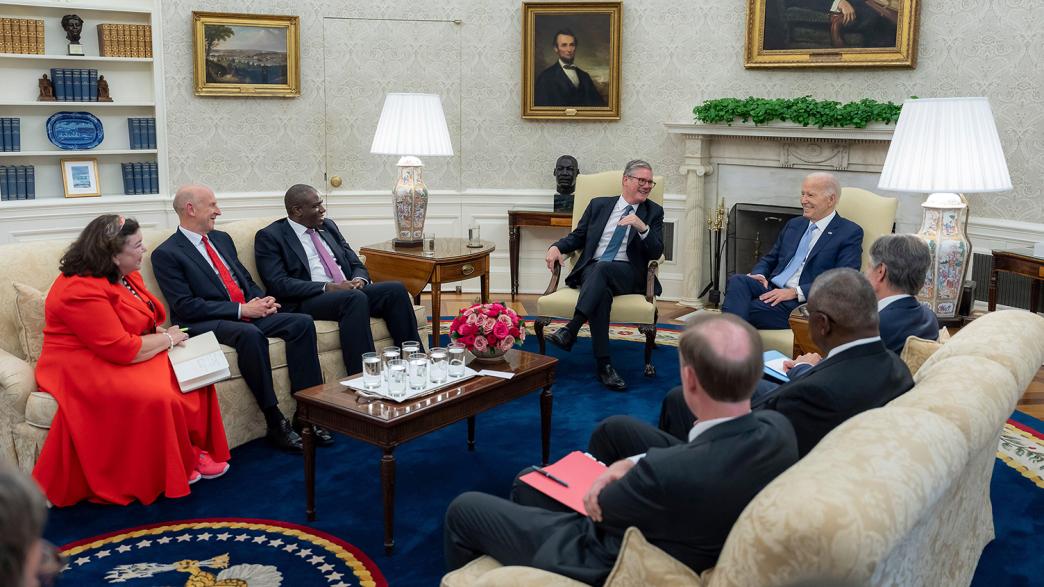
The first weeks set the tone for Starmer’s premiership. In his first week he attended a NATO summit – with an outgoing Joe Biden. Two weeks later, he hosted a lavish get-together with European leaders at the European Political Community meeting at Blenheim Palace. He took the opportunity of a summer of international sport to build relations with Emmanuel Macron and then German chancellor Olaf Scholz. It was clear that Starmer both enjoyed the international stage – much more so than Rishi Sunak who had left as much as possible to Lord Cameron – and that he in turn was welcomed, particularly by European leaders who had been through the mill of dealing with Brexit Britain.
Labour had promised closer relations with the EU to knock the edges off Boris Johnson’s “botched Brexit deal”, but hemmed itself in with red lines which limited how far it could go. So far, the reset – over-hyped in May 2025 – has failed to deliver the agreements the UK sought. The EU has been more successful at achieving its offensive interests. The 22 July summit, a date only secured a couple of days before the Makerfield by-election, which was supposed to see the announcement of deals on agrifood, ETS linkage, and youth mobility, was unilaterally delayed by the EU a couple of days afterwards.
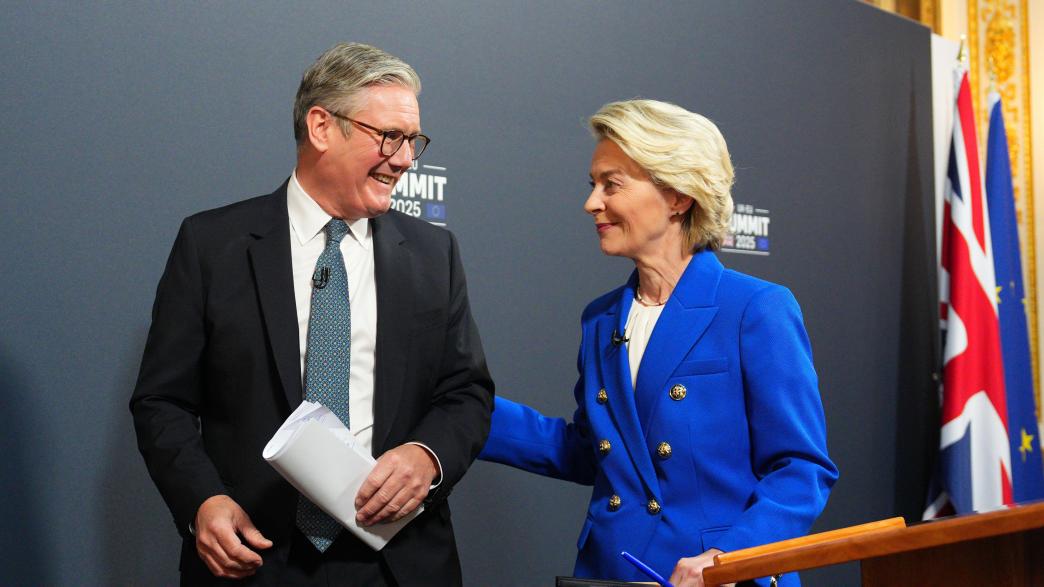
Since the start of the year, both Starmer and Reeves had indicated they wanted to move even closer – but it was far from clear that they had concrete proposals that the EU would be prepared to consider while the UK continued to rule out free movement.
Starmer status as ‘Trump whisperer’ would not last
The other running theme of the Starmer premiership has been the need to operate in Trump’s world. That caused him problems – and perhaps hastened his exit – with his decision to appoint Lord Mandelson as the UK’s ambassador to the US, on the basis that he would be best able to deal with a maverick president. The UK approach was public sycophancy and sometimes successful quiet diplomacy with the King repeatedly deployed to play to Trump’s vanity. But the “special relationship” degraded even before Starmer denied Trump the right to launch his initial attacks on Iran from UK bases, a move which allowed Starmer to differentiate himself, successfully for a time, from many of the opposition parties.
Trump has catalysed Starmer to lead – with President Macron – a ‘coalition of the willing’ on Ukraine, where he has continued the UK’s staunch support. The UK has become a much bigger player in discussions on European security as the implications of Trump’s Euroscepticism have become clear. The question remains whether the UK could be a much bigger player if its bluff was called to act as opposed to talk.
Meanwhile, Starmer has followed his Conservative predecessor in a way that would not have been predicted on taking office. Rishi Sunak took the UK development aid commitment down from the “legally binding” 0.7% to 0.5%. Starmer used another 0.2% to finance the uplift in defence spending before his first bilateral with Trump in February 2025. If DfID was one of New Labour’s proudest creations, the Labour government of 2024 has not reversed the merger with FCDO and has left its budget in shreds. Meanwhile the FCDO itself is in the middle of a big downsizing which is now leaderless after Starmer’s defenestration of its architect, Olly Robbins, over the Mandelson vetting row.
Another area of surprising continuity is that Starmer is as enthusiastic a champion for the UK’s independent trade policy as were Liz Truss and Rishi Sunak. Quite how far he thought through the implications for the UK’s relationship with EU is not clear.

Starmer made poor use of his large parliamentary majority
A large Commons majority is powerful on paper but requires active management to be useful in practice. This is especially the case given the shift towards greater assertiveness among backbenchers seen in recent years. During periods of minority government and Brexit disputes, MPs came to realise that they really could shape policy – but Starmer and his whips appeared to have assumed that either their backbenchers wouldn’t seek to do so, or that the size of their majority meant it didn’t matter. They were wrong.
Within just months of taking office, Starmer’s parliamentary operation chose to suspend the whip from seven MPs who had rebelled on an SNP amendment scrapping the two-child benefit cap; its hardline approach shocking many MPs and getting intra-parliamentary party relations off on a bad foot. Not much later, Labour MPs were tasked with voting for unpopular changes to the winter fuel allowance that the government subsequently U-turned on. This meant backbenchers got political grief for a decision many of them were clearly unenthusiastic about, and which was then reversed anyway. Once again, the approach of the whips to dissent unnerved many, with media reports of backbenchers describing whips’ tactics as “feudal”. Rather than asserting the dominance of the prime minister, it undermined him.
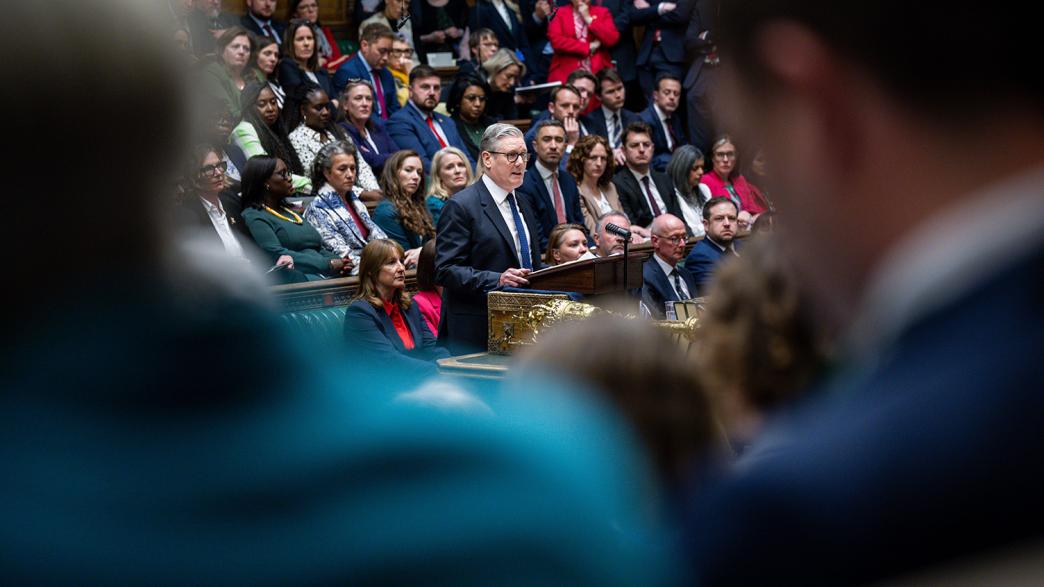
In September 2025, in one of Starmer’s many ‘resets’, there was a promise to increase ‘face time’ with Labour MPs – in particular newly elected MPs who had had little to no contact with the prime minister so far. But this appeared short lived and grumblings about Starmer’s relationship with backbenchers plagued his time as prime minister.
This also gave rise to the sense that Starmer and his whips didn’t have as a good enough sense of their colleagues’ views. A good whipping operation doesn’t just transmit to backbenchers what their leadership wants; it also relays their concerns back to the leadership. At a time when MPs are receiving more casework and correspondence from their constituents than ever before, it’s crucial that mechanisms exist for them to raise issues.
Starmer’s successor – especially if it is Andy Burnham, who has been out of the Commons for almost a decade – will need to ensure they are listening to colleagues and building relationships. This will involve a good whipping operation, as well as effective use of spads to listen to backbenchers and understand the sentiment of the parliamentary Labour party. Burnham has indicated he will take a different and more flexible approach to how the whipping system works, although it’s not clear what this means, and it’s much easier to commit to do this than to actually deliver it once installed in No.10.
Starmer’s government has had some legislative successes but it’s the failures that speak volumes
While debates over the long-term success of legislative reforms will continue, Starmer’s government did not lack ambition when it came to its legislative programme. Several big changes emerged from manifesto commitments into legislation, including reforms on employment rights, renters’ rights, the creation of Great British Energy, and smoking reform. The ambition continued into the second parliamentary session. The King’s Speech in May 2026 was one of the largest in recent times with most departments having at least one bill. However, the breadth of the programme was seemingly designed to please everyone rather than prioritise key changes.
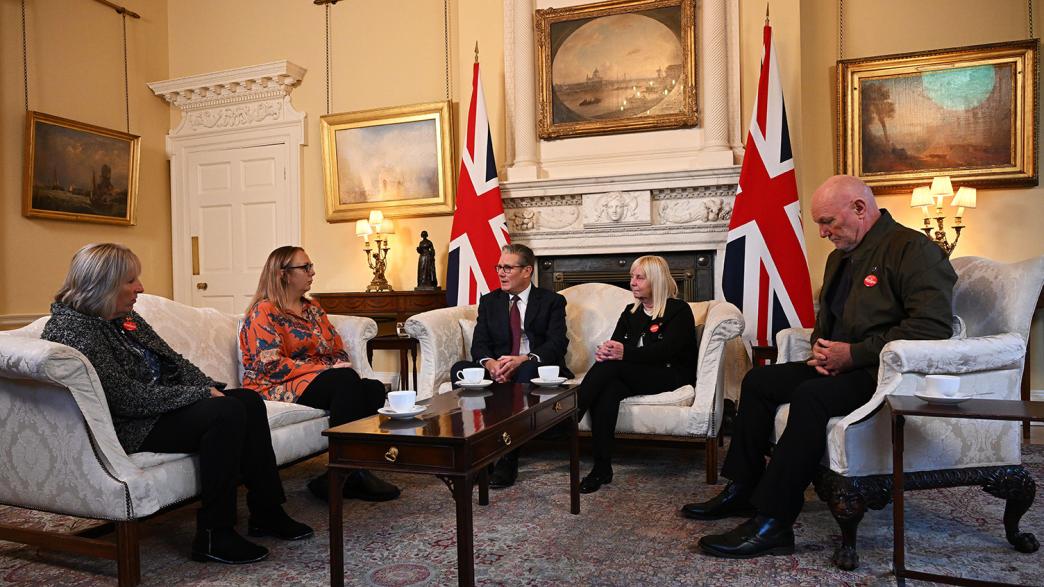
Legislative achievements have, however, been largely overshadowed due to several challenges: the government’s difficulty in communicating the overarching significance of what it has delivered, delays to major reforms including leasehold reform, and the political challenges of delivering legislation with a large number of backbench MPs who feel disconnected. This other half of the legislative story highlights the limits of political authority for Starmer and the difficulty his government faced in delivering some of the reform it announced. The clearest example is the long-promised Hillsborough Law, both a personal and political priority for Keir Starmer. The proposed legislation is intended to address longstanding concerns around candour, accountability, transparency and the treatment of victims and bereaved families by public authorities. But this legislation has stalled amid deteriorating trust between campaigners and government.
The debate on assisted dying also exposed problems of political leadership. Although the legislation was a private members bill not a government bill, its passage consumed a substantial amount of political attention and parliamentary time. The government remained neutral, butits decision not to provide greater support, or take on the topic itself meant that complex questions around regulation, safeguards and implementation were largely left to MPs, and their researchers to work through.