Working to make government more effective

Explainer

Regional mayors

Regional mayors are directly elected regional leaders of mayoral strategic authorities. But what do they do?
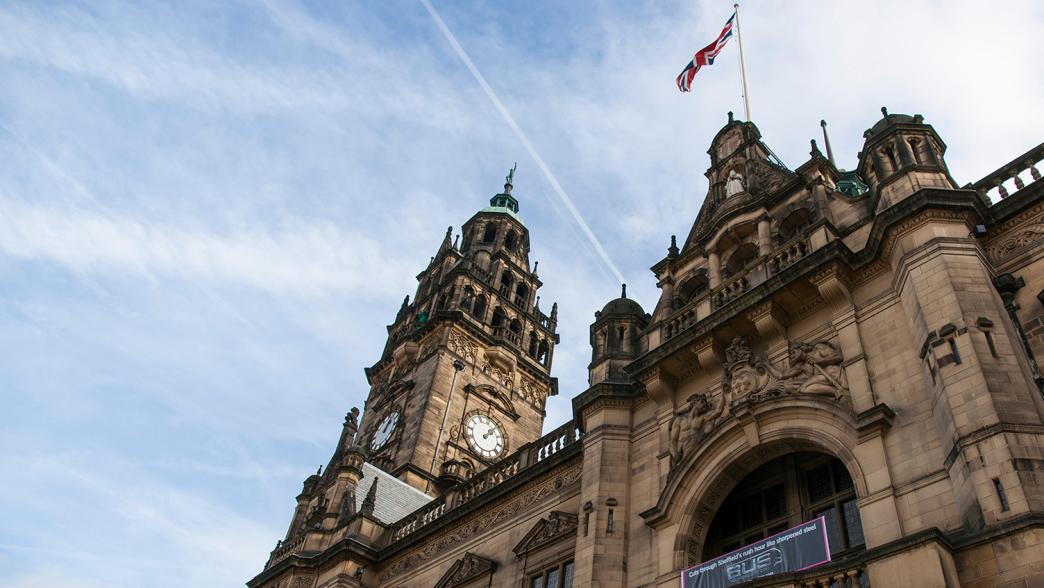
Sheffield town hall
Elections took place in May 2024 for the existing mayoral posts in South Yorkshire, West Yorkshire, Tees Valley, Greater Manchester, Liverpool City Region, West Midlands and London, as well as in three new posts.

Regional mayors, also known as metro mayors, are directly elected regional leaders who lead mayoral strategic authorities (MSAs), which exercise devolved powers at the regional level. But what do they do?

What is a regional mayor?

Regional mayors are directly-elected leaders who chair mayoral strategic authorities (also known as combined authorities) to which specified functions and budgets have been devolved from Whitehall. 42 Department for Levelling Up, Housing, and Communities, Levelling Up the United Kingdom, Department for Levelling Up, Housing, and Communities, 2022, p.137, www.gov.uk/government/publications/levelling-up-the-united-kingdom.  MSAs are formed of a group of local authorities at a city-regional or regional level.

The specifics of the powers of MSAs vary from place to place but typically include aspects of transport, skills, housing, and local infrastructure investment, and in some cases spatial planning, policing, health and employment support. The English Devolution and Community Empowerment Act established a three-tier devolution framework that applies by default to all places, bringing greater consistency in what is devolved to each MSA.  


Mayors are intended to provide “strong local leadership” as prominent individuals that local residents can hold directly accountable. 47 Department for Levelling Up, Housing, and Communities, Levelling Up the United Kingdom, Department for Levelling Up, Housing, and Communities, 2022, p.136, www.gov.uk/government/publications/levelling-up-the-united-kingdom.  They also provide central government with a single point of contact when they want something done in a region. 48 Akash Paun, Alex Nice and Lucy Rycroft, How metro mayors can help level up England, Institute for Government, 2022, p. 33, www.instituteforgovernment.org.uk/publication/report/how-metro-mayors-can-help-level-england.

Beyond exercising the powers formally devolved to them and the authorities they lead, mayors can exercise soft power as champions of place. They can use their convening power for policies requiring coordination across public services, including in areas beyond their formal brief. 49 Akash Paun, Alex Nice and Lucy Rycroft, How metro mayors can help level up England, Institute for Government, 2022, p. 31, www.instituteforgovernment.org.uk/publication/report/how-metro-mayors-can-help-level-england.  For instance, in South Yorkshire, despite not having any formal powers for public health, Mayor Oliver Coppard announced the ‘Beds for Babies: Safe Space to Sleep Programme’ in 2024. 50 South Yorkshire Mayoral Combined Authority, ‘South Yorkshire’s mayor to invest £2.2 million to guarantee beds for babies – a safe space to sleep for every child aged 0-5’, South Yorkshire Mayoral Combined Authority, 12 March 2024, retrieved 29 April 2024, www.southyorkshire-ca.gov.uk/news/article/12cf5653-9626-437b-b8e2-98884859c985.  Similarly, in Greater Manchester, Mayor Andy Burnham established a programme to tackle rough sleeping in 2018, with the programme still running today. 

Who are England’s regional mayors?  

As of May 2025, there are 14 regional mayors (including the Mayor of London, which has a different devolution model). 10 represent the Labour party, two are Conservatives and two are from Reform UK. To date, 23 different people have held the post of regional mayor somewhere in England.  

A timeline chart from the Institute for Government showing regional mayors by region and party, 2000 to 2025, where there have been 15 Labour mayors (3 of whom were independent during some of their time as mayor), 6 Conservative mayors and 2 Reform UK mayors across 15 regions.

In late 2025, the government postponed the planned May 2026 mayoral elections in Greater Essex, Sussex and Brighton, Hampshire and the Solent, and Norfolk and Suffolk until 2028. Earlier delays were also agreed for Cheshire and Warrington and Cumbria, where elections were postponed until 2027 to align with local election cycles.  

What is the process to become a candidate for regional mayor?

Candidates require a nomination paper signed by 100 local voters, including at least 10 from each constituent council. 58 The Combined Authorities (Mayoral Elections) Order 2017 sch 1 Pt 3 para 8(1).  If there are more than 10 constituent councils, the number of signatures required rises to 10 times the number of councils. 59 The Combined Authorities (Mayoral Elections) Order 2017 sch 1 Pt 3 para 8(2).  For London, 330 signatures are required, including 10 from each borough and the City of London. 60 The Greater London Authority Elections Rules 2007 sch 3 Pt 3 para 7(1).

Candidates must deliver their nomination papers by 4pm on the 19th day before the election (or 24 days before in London). The returning officer then publishes the statement of persons and parties nominated by 4pm 18 working days before the election (or by noon, 22 days before for London). 61 The Combined Authorities (Mayoral Elections) Order 2017 sch 1 Pt 2 para 3; The Greater London Authority Elections Rules 2007 sch 3 Pt 2 para 3.

Candidates have to give a deposit of £5,000, or £10,000 if standing in London. 62 The Combined Authorities (Mayoral Elections) Order 2017 sch 1 Pt 3 para 10; The Greater London Authority Elections Rules 2007 sch 3 Pt 3 para 9(1).

Political parties run their own selection processes to choose their candidate, with the details determined by internal party rules. When selected, candidates submit a certificate of authorisation from the party with their nomination papers.  

Mayors do not need to be from a political party. Three regional mayors (Ken Livingstone, Jamie Driscoll and Dan Norris) have been independent during some of their mayoral tenure. In May 2025, Andrea Jenkyns and Luke Campbell – who both represent Reform UK – became the first mayors to be elected from a political party other than Labour or the Conservatives.  

Who is eligible to stand as a candidate for regional mayor?  

Candidates for regional mayor must be over 18 years old and have a qualifying address. This means they must be a registered voter in, live in, own land or property in, or work within the combined authority geography (including for a year before nomination and on polling day). 63 The Combined Authorities (Mayoral Elections) Order 2017 sch 1 Pt 3 para 6(7)-(9); Greater London Authority Act 1999 s 20.

There is no requirement to be born or to grow up in the local area, nor is there a requirement to be a British citizen. 64 Local Government Act 1972 s 79; Greater London Authority Act 1999 s 20.  However, regional mayors often stand in areas they have enduring links to. Of the 23 previous and current mayors, at least ten were born within their combined authority area. Others, such as Andy Street and Paul Bristow, grew up in the area despite not being born there.  

Individuals cannot stand as a candidate for regional mayor if they are currently employed by the combined authority or a constituent council. 71 The Combined Authorities (Mayoral Elections) Order 2017 sch 1 Pt 3 para 9(b); Greater London Authority Act 1999 s 21.  They also may not hold a politically restricted post, for example as a statutory chief officer of a local authority. 72 The Combined Authorities (Mayoral Elections) Order 2017 sch 1 Pt 3 para 9(b); Greater London Authority Act 1999 s 21.   

Candidates can also be barred from running if they have been imprisoned (depending on length of sentence and whether there was the option of a fine), if they are subject to a debt relief or bankruptcy restriction order, if they have been found guilty for illegal or corrupt electoral practices (within certain time restrictions), or if they are subject to the notification requirement of or under part 2 of the Sexual Offences Act 2003. 73 The Combined Authorities (Mayoral Elections) Order 2017 sch 1 Pt 3 para 9(b); Greater London Authority Act 1999 s 21-21A.

An MP is permitted to stand as a mayoral candidate without vacating their parliamentary seat, and similarly, a sitting mayor does not have to resign to stand for election as an MP. However, holding both roles simultaneously is not possible.

Members of the House of Lords can stand for and hold the position of mayor, without giving up their Lords membership, as is the case for Ben Houchen, Tees Valley mayor and a member of the House of Lords. 

Can a mayor be an MP?  

While mayors can be candidates in parliamentary elections, the English Devolution and Community Empowerment Act introduced provisions preventing mayors from simultaneously serving as Members of Parliament.  74 English Devolution and Community Empowerment Act 2026: https://bills.parliament.uk/bills/4002  Previously, only mayors who held police and crime commissioner functions would have had to resign, as legislation prevents PCCs from holding both roles. 

In May 2026, Andy Burnham announced his intention to run for an election as an MP in the Makerfield constituency, after the sitting MP announced he would resign in order to provide a vacancy for Burnham to attempt to become an MP. Burnham could stand in the resulting by-election while remaining mayor of Greater Manchester, but if elected as an MP, he would be required to resign as mayor.   

Mayors also cannot simultaneously serve as a local councillor. A councillor elected as mayor must step down from the former role.  

What happens if a mayor resigns?

Unlike parliamentary by-elections, the timetable for a Mayoral election following a resignation is set out in legislation. If a mayor resigns and creates a vacancy, the combined authority in which the mayor resigns must give public notice of the vacancy. The combined authority returning officer must set the date for the election within 35 working days.  

How are mayors elected?

The most recent mayoral elections were held on 1 May 2025 in the West of England, Cambridgeshire and Peterborough, Greater Lincolnshire, and Hull and East Yorkshire.

Since the implementation of the Elections Act 2022, mayoral elections in England have used the first-past-the-post (FPTP) voting system. 75 Elections Act 2022 c. 37.  Prior to this, mayoral elections used the supplementary voting (SV) system. In 2026, the Labour government passed legislation to return mayoral elections to the SV system.  The government has stated that: “While elections to councils and parliaments using First Past the Post provides an opportunity for the electorate to select a range of candidates to take office and create a body where differing views and policies are represented, the same benefits do not apply when electing to a single-person executive position.”  76 English Devolution and Community Empowerment Bill: Explanatory Notes, July 2025, https://publications.parliament.uk/pa/bills/cbill/59-01/0283/en/240283en.pdf

Under FPTP, mayors can be elected with substantially less than a majority of votes; for example, the West of England and Cambridgeshire and Peterborough mayors won less than 30% of the vote in 2025. 

Turnout at mayoral elections is generally lower than at general elections. The average turnout across the 14 mayoral elections in 2024 and 2025 was 31%. Turnout was highest in London (41%) and lowest in Liverpool City Region (24%). 

What prior political experience do regional mayors typically have?

Most mayors have some political experience before taking on the role. 11 of the 23 previous or current metro mayors had been MPs, with five holding ministerial roles, before they were elected as mayors. 14 had been local councillors, while six had held both roles. Only Andy Street, Richard Parker, David Skaith, Oliver Coppard and Luke Campbell were neither an MP nor a councillor before being elected mayor.  

At what ages have regional mayors taken office?  

The minimum age to become a regional mayor is 18. The youngest age that a metro mayor has taken office is 30, the oldest 61.  

How much are regional mayors paid?  

Mayors’ salaries vary. The average salary of the 12 regional mayors in 2024/25 was £102,458.17. 79 This figure does not include the salary of the mayor of the West Midlands for 2024/25, which is not publicly available.  The mayor of Greater London had the highest salary at £160,976 a year, and the Tees Valley mayor had the lowest salary at £65,000 a year. In 2025/26, the salary for the mayor of Hull and East Yorkshire is £72,000 and the Greater Lincolnshire mayor’s salary is £86,060.  

Mayors cannot vote on their own salary, so rely on their combined authority members voting on whether to accept the recommendations of an Independent Renumeration Panel (IRP). Previous IRPs have considered other mayors’ salaries, police and crime commissioners’ salaries and MP salaries as comparators. 80 Liverpool City Region Combined Authority, ‘Report of the Independent Renumeration Panel: Metro Mayor renumeration 2022-4’, no date, retrieved 12 February 2024, liverpoolcityregion-ca.moderngov.co.uk/documents/s62266/Enc.%201%20for%20Independent%20Remuneration%20Panel%20-%20Metro%20Mayor%20Remuneration.pdf   

Related content

21 JUN 2024 Explainer

English devolution

What is the history of English devolution? How much of England has devolution? Which powers are devolved?