Working to make government more effective

Comment

Ten things we learned from the King’s Speech 2026

What did the King’s Speech tell us about the government’s priorities for the new session?

King Charles III delivers the King's Speech 2026
Thirty-seven bills were announced in the 2026 King's Speech.

This is a King’s Speech which aims to please everyone. However, with big questions about whether the government can deliver on its plans, it is a legislative programme which may end up leaving many unsatisfied

The King’s Speech might have been overshadowed by speculation around Keir Starmer’s position as prime minister – but it still deserves scrutiny.

This was a big King’s Speech that reveals much about what Keir Starmer’s government is currently planning for public service reform, major infrastructure, regulation of utilities, asylum policy, the UK’s relationship to the EU and more. So, what can we glean about what this government has planned, where the future flashpoints might be for different legislation, and what might recent or possibly future changes to ministerial roles mean for those plans?

1. This was a big King’s Speech

This was a hefty King’s Speech: the accompanying briefing document lists 37 bills including seven carried over and three draft bills. This is unusual. Prime ministers typically frontload legislation in their first session and reduce the number for the second session.

 The 37 bills announced on Wednesday are only eclipsed in recent history by Tony Blair’s 50 in 2005, and Boris Johnson’s 38 in 2022 – and are not far short of Starmer’s own 40 on entering government in 2024 (for a session that would run to 21 months).
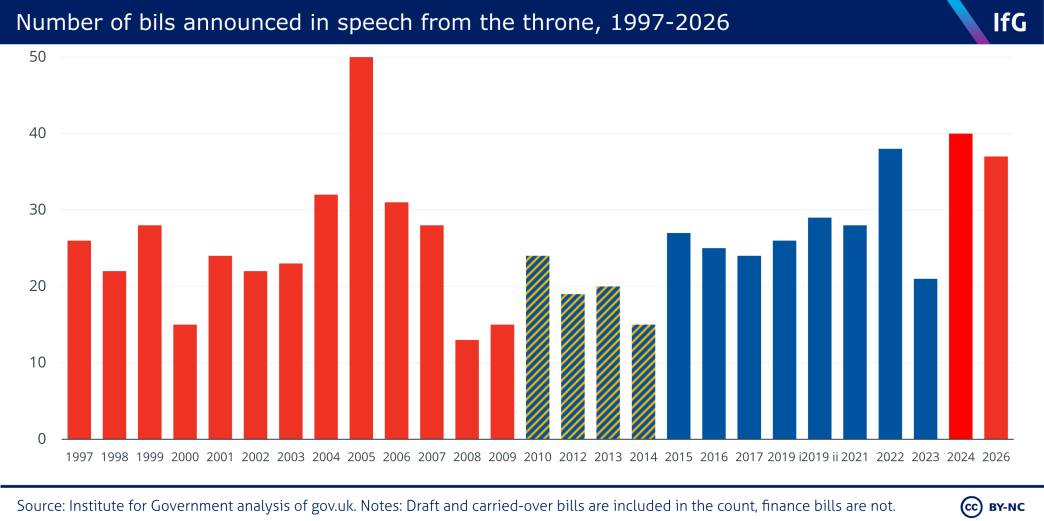
An IfG bar chart to show the number of bills announced in the King's Speech between 1997 and 2026.

The number of bills also doesn’t take into account how big or complex they are, nor the political capital the government will need to expend to get them through parliament. Relationships with backbenchers will be one problem – a problem with which this government is already well acquainted – but so too will the House of Lords where the Removal of Peerages Bill is likely cause issues, coming as it does hot on the heels of the legislation to remove hereditary peers.
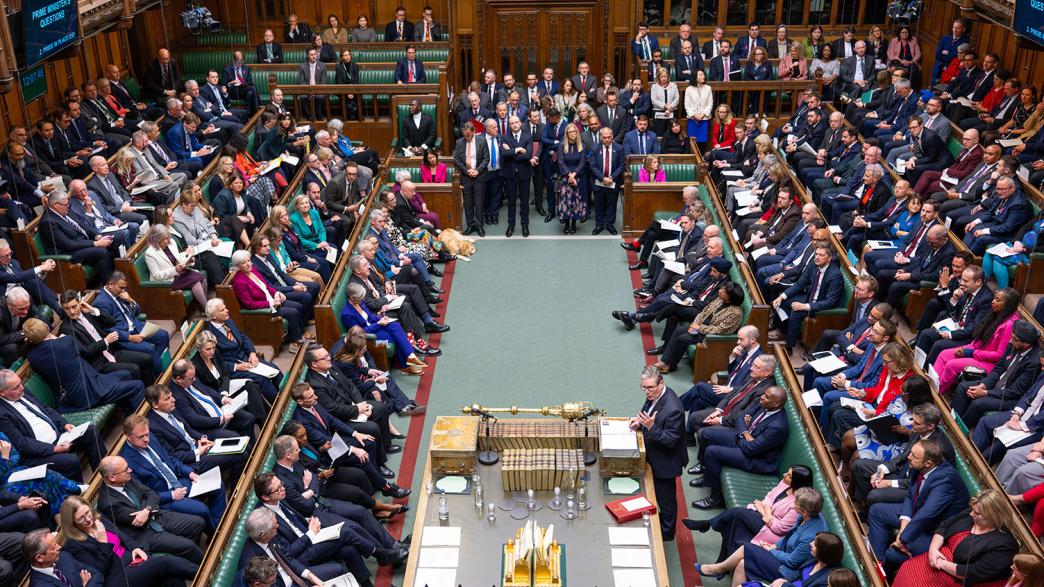
MPs sitting in the House of Commons
Relationships with backbenchers will be one problem for the government in passing its legislative agenda.

2. Several bills are back

The government had an ambitious legislative agenda in its first session. But even with an extended 21-month session, seven bills have been carried over because they failed to complete all stages in time. These include the Public Office (Accountability) Bill, known as the Hillsborough Law. This is a personal priority for Keir Starmer, though disagreements between the government and campaigners over exemptions for the intelligence services have stalled progress for several months.

Others to return are the Railways Bill, Armed Forces Bill, Cyber Security and Resilience Bill, Courts and Tribunals Bill, Northern Ireland Troubles Bill and the Representation of the People Bill. They are joined by the hybrid High Speed Rail (Crewe – Manchester) Bill, first introduced in January 2022. The government has said it will amend this bill to become the Northern Powerhouse Rail Bill to build a new trainline between Liverpool and Manchester via Manchester airport.

The Prime minister, Keir Starmer and leader of the Conservative Party, Kemi Badenoch walk through the Central Lobby of the Houses of Parliament in London to the House of Lords to hear the King's Speech during the State Opening of Parliament.

The prime minister, Keir Starmer, and leader of the Conservative Party, Kemi Badenoch walk through the Central Lobby of the Houses of Parliament to hear the King's Speech.

3. Civil service reform is a welcome inclusion in the speech

From being accused of being too comfortable in the ‘tepid bath of managed decline’ to seeing a succession of cabinet secretaries shown the door, the civil service will be watching on closely as the government brings forward proposals to strengthen civil service performance and protect its independence.

That was not quite a promise to introduce legislation – though the IfG has argued that the government should do this, and has drafted a Civil Service Bill to put the institution on a statutory footing. Whatever happens amidst the current political turbulence, cabinet secretary Antonia Romeo needs to press ahead with a white paper and new legislation to define the role of the cabinet secretary and particularly address flaws in the accountability of the civil service. We too will be watching closely to see what happens.

The government adopts IfG plans for civil service reform

The King’s Speech promised proposals to strengthen and safeguard the civil service – an essential and overdue commitment which draws on long-standing IfG recommendations.

Read the comment
An aerial view of Whitehall and Westminster.

4. Public services reform featured heavily – but one big player is now out of government

The government has set out a whole suite of legislation for ‘strengthening public services and reforming the state’ and has said it will ‘push forward with significant reforms’ to policing, the NHS, criminal justice and education. This includes an NHS Modernisation Bill to implement the commitment to abolish NHS England and introduce further reforms set out in the government’s 10-Year Health Plan.

There was already some risk for the government here. It has set itself a stretching target to pass this bill by March 2027, so that it can merge NHS England into the health department from the start of the 2027/28 financial year. The lesson from the 2012 Health Act is that legislating for the NHS can often be more fraught than expected – and this time around will have been made more complex still by Wes Streeting’s resignation as health secretary on Thursday and the subsequent replacement by James Murray.
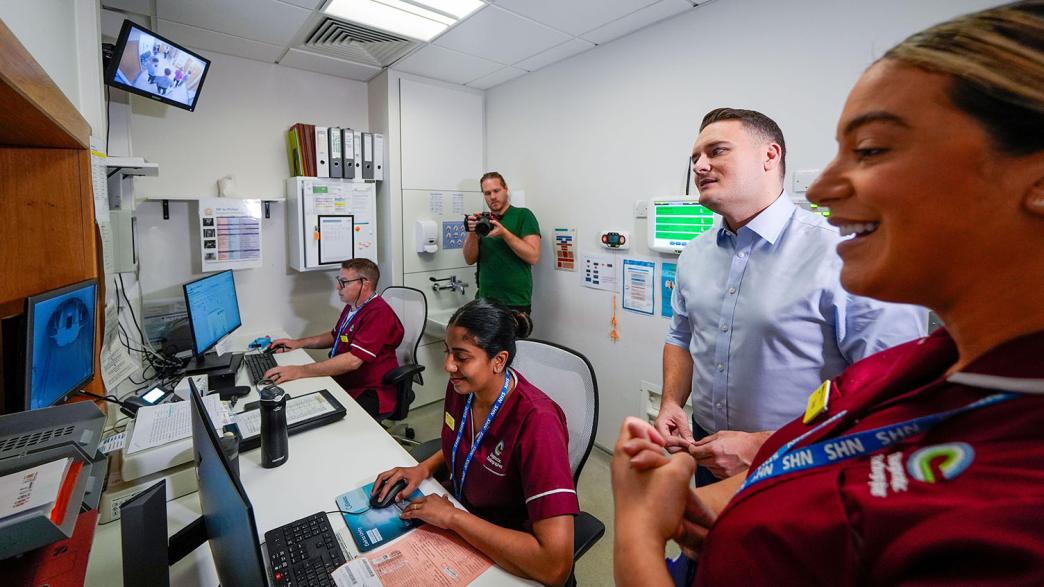
Health Secretary Wes Streeting Inside the MRI room during a visit to Paddington Community Diagnostic Centre in Liverpool.
Wes Streeting has resigned as health secretary, saying he has lost confidence in Keir Starmer's leadership.

A Police Reform Bill follows January’s white paper and will legislate for a new national police service, bringing together national responsibilities on fraud and counter-terrorism and providing more national leadership for the police. It will also reduce the number of local police forces, merging them into larger forces, and abolish police and crime commissioners (created by the coalition in 2012). 
A magistrates court
The Courts and Tribunals Bill is awaiting its third and final reading in the Commons before moving on to the Lords.

Court reform has also been carried forward from the last parliamentary session, with plans to substantially reduce the number of cases eligible for trial by jury and severely restrict rights to appeal from magistrates’ courts. This legislation is awaiting its third and final reading in the Commons before moving on to the Lords – where the government can expect serious pushback from peers.

Reforms to the special educational needs and disabilities (SEND) system will be delivered through the Education for All Bill. The government opened a consultation in late February and, so far, has avoided the level of backlash some had anticipated. But ministers are not yet out of the woods.

Some of the most contentious aspects – particularly around who will get access to the most intensive tier of support – have yet to be set out in detail. As the legislation begins its journey through parliament, these issues will come under close scrutiny from parents, campaigners and MPs. And again Wes Streeting’s resignation could also further complicate the government’s SEND agenda, given he co-signed the proposed reform plan as health secretary.

Line of police officers guarding Downing Street during a protest march

The Police Reform Bill will legislate for a new national police service.

5. Government reviews are shaping the legislative agenda

This government has set up several independent reviews to help it tackle knotty policy problems. At best, reviews set out useful recommendations and lay the groundwork for their implementation – at worst, they are pure ‘kicking the can down the road’ exercises that lead to little change. This King’s Speech has some of both.

It is encouraging that some of the bills reflect recommendations from various independent reviews. The Cunliffe review has shaped proposals on water regulation, for example, while the Representation of the People Bill includes proposals from Philip Rycroft to tackle foreign financial influence in UK politics. Others, on nuclear regulation and national security, also pick up on aspects of recent reviews.

Although the Courts Modernisation Bill builds on Brian Leveson’s independent review, the policy prescriptions differ significantly from those in the review – and in ways that risk back-firing. Strong parliamentary scrutiny of the bill during its passage will be vital.

The absence of a bill on welfare reform also reflects the influence of independent reviews, with the speech itself explaining that the government will have more to say on welfare following the Milburn and Timms reviews due this year. Given the government’s ill-fated attempt at welfare reform last spring, a rush to introduce further legislation would be unwise.

6. For some of these policies, legislation is only the first hurdle

Some of the bills included in the King’s Speech will require extensive work even once the legislation has passed. Many of the measures in the Commonhold and Leasehold Reform Bill are not expected to come into force until the next parliament – with housing minister Matthew Pennycook noting in a keynote speech at the IfG that this technical and complex legislative agenda will also require several further pieces of primary and secondary legislation over this parliament to deliver. 

Watch our event with Matthew Pennycook

The government must also remain live to delivery risks, addressing them as they emerge. For instance, Pennycook is consulting on how and when to switch on the ban on new leasehold flats and houses, which carries risks of disrupting new supply if managed poorly.

The Representation of the People Bill is another example. This legislation, carried over from the last session, proposes lowering the voting age to 16, changing how electoral rules are enforced and introducing new restrictions on political donations. Implementation will be the real challenge; the changes affect the work of the Electoral Commission, local authorities, schools, civil society groups and others and will take time to embed (we will be discussing this with John Pullinger, chair of the Electoral Commission, and others next week at the IfG). 

7. Parliament will have a chance to relitigate Brexit when it debates the European Partnership Bill  

The government is taking powers to make good its commitment to “dynamically align” in certain areas with EU regulations once the negotiations set off at last year’s summit have concluded – powers it needs to keep pace with changes in the EU statute book without requiring new primary legislation every time. This will provoke a row with opposition parties over “Brexit betrayal”, allowing the government to make its increasingly vocal criticism of the impact of Brexit on the economy. 

Interestingly the legislation will also give ministers the power to extend the new regulation making power beyond the current three areas (agri-food, emissions trading and electricity) under discussion once parliament has approved new treaties.

Since most criticism of the prime minister within the Labour Party has been that he has been too timid in his reset, the bill will likely survive a leadership contest. It is however focussed on securing selective access to the single market rather than forming a customs union – which is what a certain Wes Streeting has previously advocated.

Prime Minister Sir Keir Starmer and President of the European Commission Ursula von der Leyen during a bilateral meeting at the European Political Community summit in Yerevan, Armenia.
Prime minister Keir Starmer and president of the European Commission Ursula von der Leyen during a bilateral meeting at the European Political Community summit.

8. There will be battles ahead on immigration and asylum 

The Immigration and Asylum Bill aims to simplify the asylum system – moving towards a “core protection” model, where protection will be time-limited rather than permanent. This brings forward legislation on some but not all the government’s plans for the immigration and asylum system. Changes around settlement in the regular migration system will, if carried out, be done through secondary legislation.

This legislation is significant because of the removal of indefinite protection and because the asylum system will be pivoting towards one of “contribution”, where refugees in effect ‘earn’ their place in the UK. This model is not unusual in the regular migration system, where migrants who might contribute more are chosen over others, but it is unusual for an asylum system historically built simply on the greatest need.
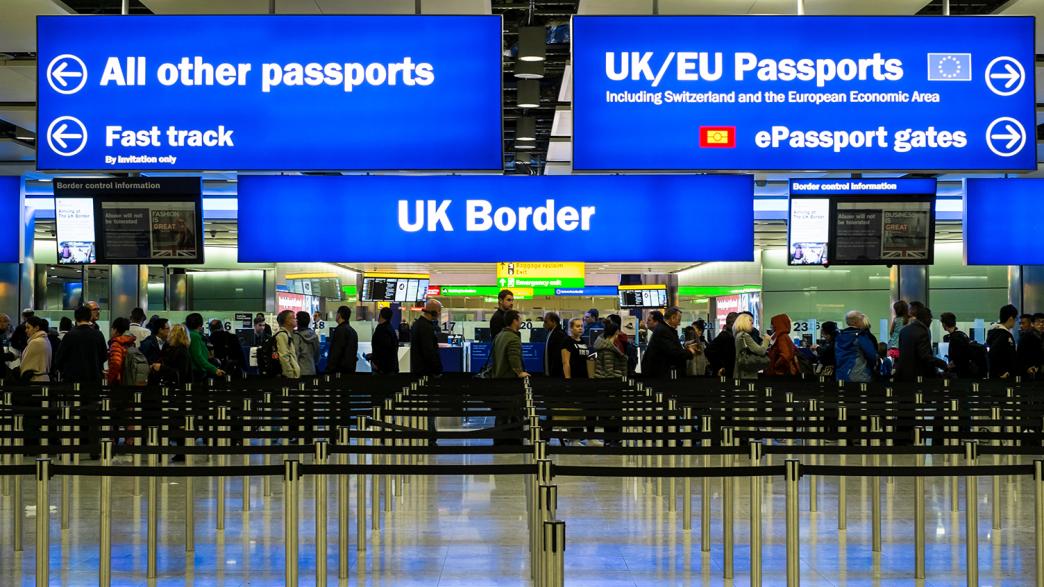
Immigration and passport control at Heathrow airport.

The government intends to “tighten” the application of Article 8 of the European Convention on Human Rights, concerning the right to family life – a watershed moment, not least for a Labour government run by a former human rights barrister.

As home secretary since the September reshuffle, Shabana Mahmood has personally driven these changes, describing them as necessary to restore order and bring down costs in the asylum system. But they are very unpopular among Labour members and MPs, and No.10 has indicated that other changes to the immigration system may be watered down to quell anger among backbenchers – the same may well happen here.

And once again the shape of the government in the near future may have an impact here too. Were any leadership change, or reshuffle, to result in a new home secretary from the soft left of the party it is unlikely many of these proposals are retained in full.

9. Few of the proposals on energy are new but brought into sharp relief by the conflict in the Middle East 

Although there are three energy bills listed – on energy independence, nuclear regulation and the electricity generator levy – most of the specific proposals have already been announced and the legislation seems more aimed at giving the government the powers to deliver the reforms it has already promised. 

One thing that jumps out is the Energy Independence Bill’s promise to ‘expand the government’s toolkit to protect low-income and vulnerable households when needed by enabling the provision of targeted support for energy bills’. This is notable in the context of the current energy crisis. It is not clear what the timetable for this bill will be but it would be interesting to know what the government thinks it might be able to do in terms of targeted support for households before this legislation passes – and what impact that might have on the kind of support provided, if any, assuming the effects of the Middle East conflict on energy prices are still being felt by the autumn. 

The energy secretary, Ed Miliband, has shown the value of having a committed minister who has been thinking about their preferred approach for a long time: the government’s energy policy agenda has been noticeably quicker off the mark than many other policy areas. The government will need to make sure it maintains this momentum in the event Ed Miliband leaves the Department for Energy Security and Net Zero amid the current political uncertainty.

Gas ring

The government’s energy policy agenda has been noticeably quicker off the mark than many other policy areas.

10. What is missing?

Very little in terms of what was expected or is in progress: as noted this was one of the largest King’s Speeches in history. Most government departments have at least one bill, with only DWP, the FCDO and the territorial offices of Scotland and Wales not submitting draft bills.

However, Jess Philips appears to disagree – she resigned this week citing difficulties in getting the government to legislate on specific measures to tackle online child exploitation (though violence against women and girls appears in some places, including the speech’s introduction and the Armed Forces Bill and Police Reform Bill). 

Another omission is anything in welfare reform. The government briefed out beforehand that it would not introduce legislation in this session, but in the speech has said it will respond to the Timms review (on PIP assessments) and continue to implement non-legislative reforms while developing other policy further. 

The scale of the legislative output from across government, the reaction to it, and the notable omissions are all perhaps symptomatic of the position Keir Starmer finds himself in. Despite the limited time to be able to take legislation through, he is having to ensure he is providing space for almost all departments, and yet still leaving others frustrated at lack of progress. It is a King’s Speech that has satisfied few, and leaves many questions about whether the government can deliver on the plans set out. 

Related content