Devolution to West Yorkshire
Who is the mayor of West Yorkshire and what do they do?

On 2 May 2024, Tracy Brabin was elected for the second time as Mayor of West Yorkshire with 50% of the vote. Brabin heads the West Yorkshire Combined Authority (WYCA) which controls a budget of over £1.2bn.
What is the result of the 2024 West Yorkshire mayoral election?
Tracy Brabin was re-elected as mayor of West Yorkshire and now starts her second mayoral term. She represents the Labour Party and was first elected in May 2021, the first woman to be elected as a metro mayor in England.1 BBC ‘Election results 2021: Tracy Brabin elected West Yorkshire mayor’, BBC, 9 May 2021, retrieved 7 January 2022, www.bbc.co.uk/news/uk-england-leeds-57048269 She was formerly MP for Batley and Spen.
Brabin’s highest share of the vote was 57% in Wakefield, and her lowest was 44% in Kirklees.
Turnout across the region was 32%, lower than in the 2021 election where turnout was 36%.
The Conservative party candidate was Leeds-born Arnold Craven, head of external affairs at Cadent Gas Limited.2 Natasha Meek, ‘Who is Arnold Craven, Conservative West Yorkshire mayor candidate?’ 26 February 2024, retrieved 14 March 2024, www.thetelegraphandargus.co.uk/news/24144288.arnold-carter-conservative-west-yorkshire-mayor-candidate/ Other candidates included Andrew Cooper, a Green party councillor in Kirklees, Stewart Golton, the leader of the Liberal Democrats on Leeds City Council, Bob Buxton of the Yorkshire Party and independent candidate Jonathan Tilt.
What is the history of devolution to West Yorkshire?
WYCA was established in April 2014, bringing together Leeds and four neighbouring local council areas. As a combined authority, it has the ability to take certain collective decisions across council boundaries.
Attempts to include Harrogate, Craven and Selby in an expanded ‘Leeds City Region’ combined authority between 2015–17 failed due to local opposition.3 Helen Pidd, ‘Sheffield mayoral vote delay prompts calls for Yorkshire-wide deal’ The Guardian, 12 January 2017, retrieved 9 November 2023, www.theguardian.com/politics/2017/jan/12/sheffield-mayoral-vote-delay-prompts-calls-for-yorkshire-wide-deal. A ‘One Yorkshire’ devolution proposal put forward in 2017, which would have included West Yorkshire as part of a pan Yorkshire deal, was rejected by ministers despite local support, on the grounds that this large region did not form a coherent economic area.4 House of Lords, Hansard, ‘Yorkshire: Devolution’ HL Deb 12 February 2019, vol 795, cols 1738-39.
In March 2020, a new ‘devolution deal’ was reached between the UK government and WYCA. This transferred a set of powers from Whitehall and created a new directly elected ‘metro mayor’ of West Yorkshire, who would chair the combined authority. The first election was held in May 2021.
What is the West Yorkshire Combined Authority?
WYCA is a mayoral combined authority, established as a legal entity using powers under the Local Democracy, Economic Development and Construction Act 2009, with specific functions devolved to it using powers under the Cities and Local Government Devolution Act 2016.
WYCA has five constituent local authorities – Bradford, Calderdale, Kirklees, Leeds and Wakefield – and one non-constituent member, City of York. The combined authority is formed of 10 representatives of these councils, with provision to ensure a degree of political balance, as well as a business representative. It is chaired by the mayor, who is elected directly by voters across the region.
Since the May 2026 local elections, Reform UK has majority control of two of the five constituent councils – Calderdale and Wakefield. The three remaining councils – Bradford, Leeds and Kirklees – are all under no overall control.

Local and mayoral elections 2024
On Thursday 2 May, voters across England and Wales headed to the polls in a major set of mayoral and local elections. Keep up with our latest content, events and analysis.
Find out more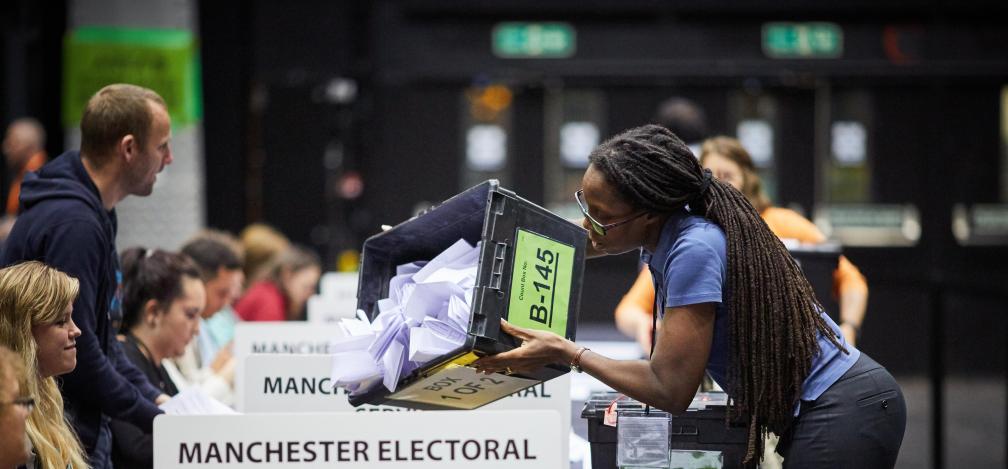
What is the West Yorkshire Combined Authority budget?
In January 2026, the combined authority approved a £1.2bn budget for the 2026/27 financial year, split between £487m revenue (i.e. day-to-day) spending and £767m capital investment.1 https://westyorkshire.moderngov.co.uk/documents/s34851/Item%205%20-%20Appendix%203%2024-25%20total%20budget%20by%20corporate%20objective.pdf
On the revenue side, £250m was allocated to transport programmes including ‘transport operations’ and ‘passenger experience’. £165m was allocated to economic development, skills and business support activity, including the £86m adult skills and employment support budget. £30m supported policing, environment and place functions, excluding the separate operational budget for the police.
The bulk of the capital investment spending also relates to transport investment, with a total of £645m allocated to projects including road maintenance, zero-carbon buses, bus franchising assets and the planned mass transit system. Other big capital spending items include £29m of brownfield housing spending and £17mfor capital schemes that strengthen life sciences and health tech clusters in Leeds, Bradford and Kirklees.2 https://westyorkshire.moderngov.co.uk/documents/s34852/Item%205%20-%20Appendix%205%20indicative%20capital%20budget.pdf
In addition to the above figures, WYCA is responsible for setting the separate West Yorkshire police budget, which is estimated to total £828m for 2026/27, including both revenue and capital spending.3 www.westyorkshire-pcp.gov.uk/meetings/2024-meetings/friday-2-february-2024/
Since April 2026, WYCA has received an ‘integrated settlement’ which consolidates over 20 of the separate grants provided by government departments into a single, flexible pot, allocated across a spending review period. This new funding model giving local leaders greater medium-term funding certainty along with flexibility to move money between functional areas and financial years. WYCA’s integrated settlement for 2026–30 is £1.96bn.