John Healey needs a reality check on civil service cuts
Ambitious budget announcements need to be backed up.
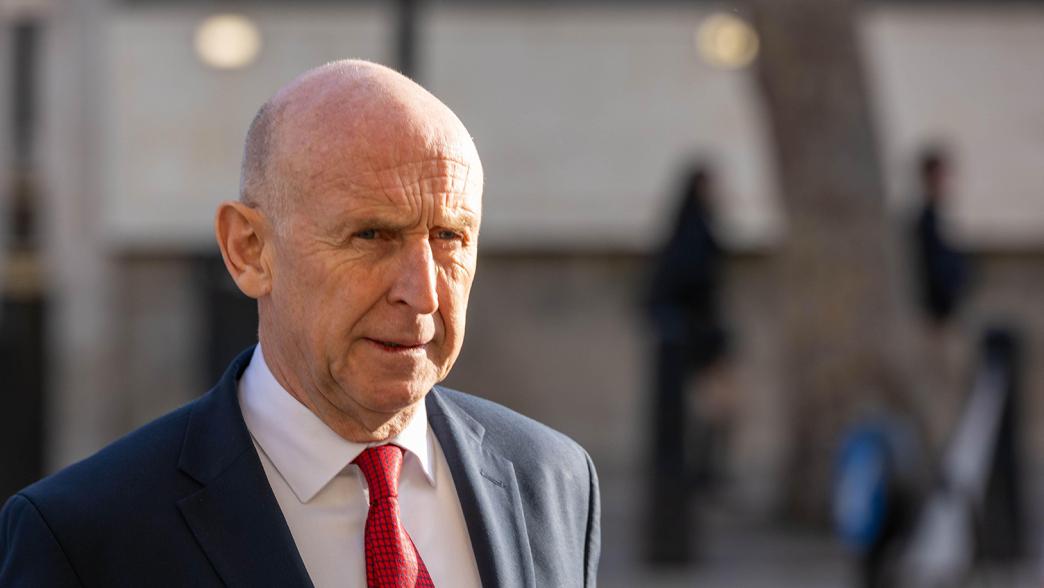
The chancellor has announced an ever-tighter squeeze on departmental administration budgets – most of which fall on staff costs. The civil service was not, however, on track to meet its earlier targets. It needs a bolder approach to cost savings, and AI is no silver bullet, say Hannah Keenan and Heloise Dunlop.
At the 2025 spending review, then chancellor Rachel Reeves announced ambitious administration budget savings targets for departments (16% by 2029/30). Because administration budgets are mostly made up of staff costs, this was ultimately a drive to reduce staff numbers. It was a welcome one – far better to reduce staff numbers by squeezing budgets than through distortive and arbitrary headcount numbers.
It meant a similarly ambitious target of somewhere between 29,000 and 40,000 fewer civil servants by 2029/2030 (there are currently 523,185 civil servants). 6 https://www.instituteforgovernment.org.uk/publication/whitehall-monitor-2026/part-2-state-civil-service#departmental-spending-and-efficiencies Bearing in mind that when this target was announced the civil service had only not grown in two quarters since 2016 (Q2 2022 and Q4 in 2024), it was a bold move.
The chancellor has pledged to go still further on a target government was already failing to meet
The civil service was very much not on track to meet Reeves’s target. John Healey has now announced an even more ambitious version – to reduce administration budgets by 20% by 2029/30. So how does he get there?
If you want headcount to fall, you need to let fewer people into the civil service, or have more people leaving. Ideally more of the latter than the former, unless the civil service wants to close itself off to any external talent – something the Institute has warned against and that the government, who want more exchange between central and local government, will not be keen on.
The problem is, the number of leavers has been going down, not up. Some 37,945 people left in 2025/26, compared to 38,610 in 2024/25, and 2025/26 is the third consecutive year that exits have fallen. Dedicated voluntary exit schemes to reduce the size of the civil service have started, but the roughly 2,800 leavers through those schemes in 2025/26 was more than offset by fewer leavers through other routes compared the previous year.
Looking only at the most recent data available, for Q2 2026, the civil service did get smaller, but by a mere 450 people. It is too early to tell if Reeves’s target is starting to bite, or whether that is merely a blip. But it seems quite clear either way that the scale of changes will need to be ramped up.
Burnham’s government needs sharper tools to cut headcount
The current trajectory is clearly insufficient to achieve the scale of change that this government wants. Two things would help here.
First is around devolution. The government has already said that devolution will see powers and functions transferred out of central government, and not duplicated at the centre – something Healey repeated in the budget. This requires ‘completing the map’ of devolution so smaller nubs of policy teams aren’t left in Whitehall. It also requires a culture shift, for central government to ‘let go’ of the civil servants who can serve them on some of these policy areas – and avoid a knee-jerk response when something inevitably goes wrong to stand up a team in the centre to fix it.
Second is better tools to make the cuts. Existing voluntary exit schemes are clearly insufficient in scale and, despite assurances that there are guardrails in place to keep high performers in the civil service, anecdotal evidence seems to be that government is losing many of its best people. Being voluntary they also rely on people putting their hands up, resulting in patchy coverage and internal disruption.
The government could better target both poor performers and specific areas of work through compulsory redundancy rounds. Carefully, predictably run every two to three years, these could be far more intentional than the current mish-mash of restructures and volunteering, and far bigger.
GovAI needs to be driven by outcomes, not technology
Healey has a plan for some of these savings, should they be achieved. The budget promises they will be reinvested in a £50m ‘transformation fund’, run by a new organisation called ‘GovAI’ to help the civil service better make use of artificial intelligence. More investment in how the civil service adopts and responds to AI is good. But tying them to savings that are currently more imagined than real risks derailing an important, forward-looking investment.
If it is to be a worthwhile investment, GovAI will need to get to grips with diffuse and muddled thinking about AI adoption in the civil service. Currently, the approach being taken is a tech-first one, the underlying assumption of which seems to be ‘add in AI, and productivity will improve’. But adopting a new technology is not this simple. It also does not account for the problems that AI is starting to cause for government – such as increased volumes of complaints or requests to public services. 8 Freedman S, ‘Drowning in slop’, blog post, Substack, 14 October 2026, https://samf.substack.com/p/drowning-in-slop
Therefore, the starting point for GovAI must be the work that civil servants do and why they do it, the outcomes that the government is seeking from that work, and then a grounded but assertive plan of how AI will help the civil service to get there.
Better procurement and in-house AI capabilities are sorely needed, and it is good that GovAI will focus on them. It must do so, as with all its other work, by forcing departments to first look at where they are trying to get to.
- Topic
- Civil service
- Keywords
- Civil servants Budget Public spending
- Political party
- Labour
- Administration
- Burnham government
- Project
- Budget 2026
- Public figures
- John Healey
- Publisher
- Institute for Government