Working to make government more effective

Comment

The government should back up its impressive savings and efficiencies figures by showing where they have come from

The chancellor should commit to publishing the same level of detail on savings and efficiencies as the last government.
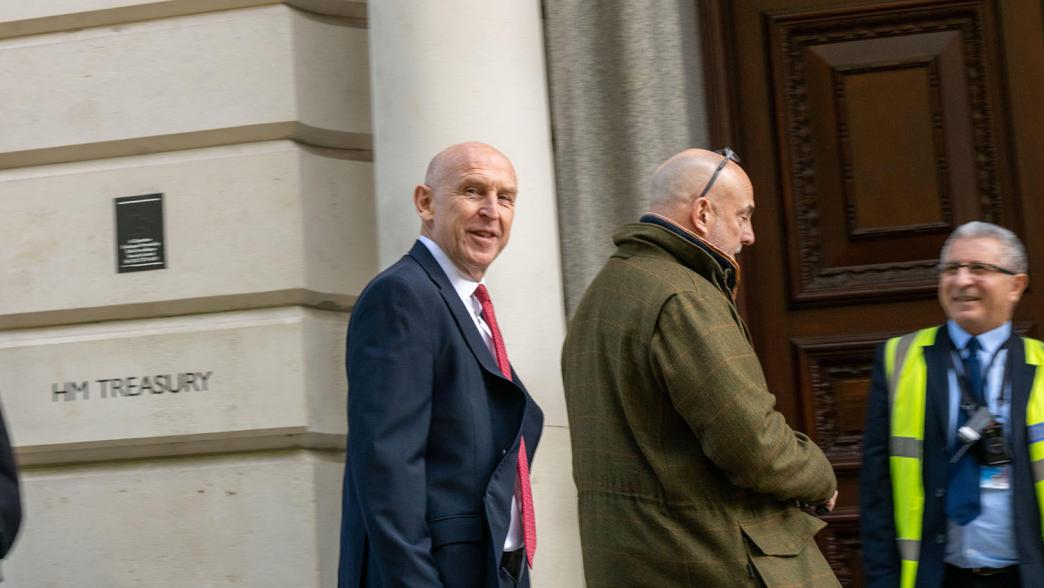
 John Healey, Chancellor of the Exchequer, walks to the Treasury from 11 Downing Street
John Healey, chancellor of the Exchequer, outside the Treasury.

The publication of savings and efficiencies figures is welcome, but the government’s credibility will be undermined if it does not publish further details on how these were made, argues Ben Paxton.

Last week, the Treasury published departments’ performance against the 2% efficiencies and saving target for 2025/26 that was set at the autumn 2024 budget. 19 HM Treasury, 2025–26 departmental efficiency and savings performance, 21 October 2026, https://assets.publishing.service.gov.uk/media/6ad8c4e14e6a61c502e89fd0/Departmental_efficiency_performance_2025-26.pdf  This is welcome. More transparency around departments’ efficiency and savings targets, and progress against them, can improve accountability and galvanise efforts in departments.

The headline numbers are also impressive: efficiencies of £9.2bn and savings of £7.2bn, together worth 4.1% of day-to-day spending. 20 Excluding depreciation and overseas development aid, as per HM Treasury’s calculations.  But the credibility of these figures is undermined by a lack of detail on where these are coming from.

Different departments took very different approaches to savings and efficiencies

Measuring public sector savings and efficiencies is tricky. The Treasury defines them as: 21 HM Treasury, 2025–26 departmental efficiency and savings performance, 21 October 2026, https://assets.publishing.service.gov.uk/media/6ad8c4e14e6a61c502e89fd0/Departmental_efficiency_performance_2025-26.pdf   

  • “Efficiency is defined as the ability to spend less to achieve the same or greater outputs, or to achieve greater outputs for the same spend. This definition explicitly excludes decisions to reduce costs where the intended result is a reduction in outputs or service quality.”
  • “Savings are reductions in planned expenditure that do not arise from efficiency improvements as defined above – for example, reductions in demand, policy changes, or decisions not to proceed with planned spending.”

The efficiencies included in this analysis have had to meet the ‘Government Efficiency Framework’ criteria. 22 HM Treasury, ‘The Government Efficiency Framework’, 2025, www.gov.uk/government/publications/the-government-efficiency-framework/the-government-efficiency-framework--2#data-and-reporting  But on savings, it is far less clear what counts as a saving, or the level of ‘planned expenditure’ against which they are measured. Having clear definitions is important, both for scrutiny and for making sure targets are incentivising the right kinds of activities. A lack of detail on where savings and efficiencies have been found further brings undermined their credibility. Going forward, the Treasury should be clearer about what counts as a saving, and where both savings and efficiencies are coming from.

All departments have met the target of 2% savings and efficiencies from the day-to-day budgets, but some have exceeded it by a long way. 63% (£10.3bn) of their overall cash-value comes from DHSC – which reportedly found 3.2% efficiencies and 2.0% savings.

Despite the blanket 2% savings and efficiencies target, the balance of savings versus efficiencies varies. MHCLG, for example, found £588m of savings, but just £7m of efficiencies. DfT found £190m of efficiencies but zero savings. This suggests that different approaches have been taken across government to meeting this target (or at least reporting against it) – rather than, for example, all departments using technology to improve productivity (which makes up just 4% of reported efficiencies).

This range of approaches should have produced lots of lessons about what does and does not work well in finding efficiencies. The Treasury must ensure these lessons are shared in the future, particularly given the lack of published detail on how savings and efficiencies were found.

The Treasury should focus on reforms that improve long-term value for money

Not all efficiencies and savings are equal. Identifying cuts or streamlining processes to free up cash or capacity in the short-term is important, but government should be careful to avoid changes which compromise long-term value for money.

A classic example of this has been successive governments cutting back-office management capacity in order to re-direct funding to ‘frontline’ public services. But this is often a false economy. Many public services are chronically undermanaged, which makes it harder to allocate resources effectively and improve productivity in the long run. 24 Hoddinott S, Performance tracker 2026: Cross-service Analysis, Institute for Government, 2026, www.instituteforgovernment.org.uk/publication/performance-tracker-2026/cross-service-analysis  The government’s current NHS reforms, halving staff numbers across DHSC and NHS England, as well as in all NHS integrated care boards, are repeating this counterproductive pattern.

The Treasury must ensure departments focus on the changes that will deliver better long-run value – and should use greater transparency to do this.

Budget 2026

John Healey's first budget as chancellor will be the biggest indication yet of the priorities of Andy Burnham's government.

Explore our work
John Healey

Greater transparency would enhance Healey’s credibility

The Treasury has provided very little detail on where these savings and efficiencies have come from, except for a few examples and an aggregate breakdown of efficiencies by broad categories such as ‘Policy and service redesign’ (28.2%) and ‘Workforce and organisation’ (21%). This lack of transparency undermines the credibility of these seemingly impressive figures.

The Starmer government put in place ‘Departmental Efficiency Plans’ as part of the 2025 spending review, which set out in more detail than before how efficiency targets would be delivered. Departments also committed to reporting their efficiency savings in annual reports and accounts from 2026/27, with explanations of how programmes and activities have released efficiencies. 27 HM Treasury, ‘The Government Efficiency Framework’, 2025, www.gov.uk/government/publications/the-government-efficiency-framework/the-government-efficiency-framework--2#data-and-reporting  The Burnham administration, however, has so far only said that “large ministerial departments will disclose efficiency performance against targets”.

John Healey should be ambitious on finding efficiencies and savings. Spending plans are under pressure, and he will want to find cash for higher defence spending and Burnham’s other priorities.

At tomorrow’s budget, he should commit to publishing the same level of detail on savings and efficiencies as the last government, and to updating ‘Departmental Efficiency Plans’ at the next spending review. This would bolster the credibility of both existing savings and efficiency plans, which are already ambitious compared to historical productivity performance, 28 IFS, The Outlook for Public Sector Productivity, 2025, https://ifs.org.uk/sites/default/files/2025-09/IFS_Report_The_Outlook_for_Public_Sector_Productivity_0.pdf  and any further measures he announces tomorrow.

Political party
Labour
Administration
Burnham government
Department
HM Treasury
Project
Budget 2026
Public figures
John Healey
Publisher
Institute for Government

Related content