Working to make government more effective

Comment

John Healey’s underwhelming budget punts big decisions into 2027

The chancellor’s short-term giveaways can't continue indefinitely.
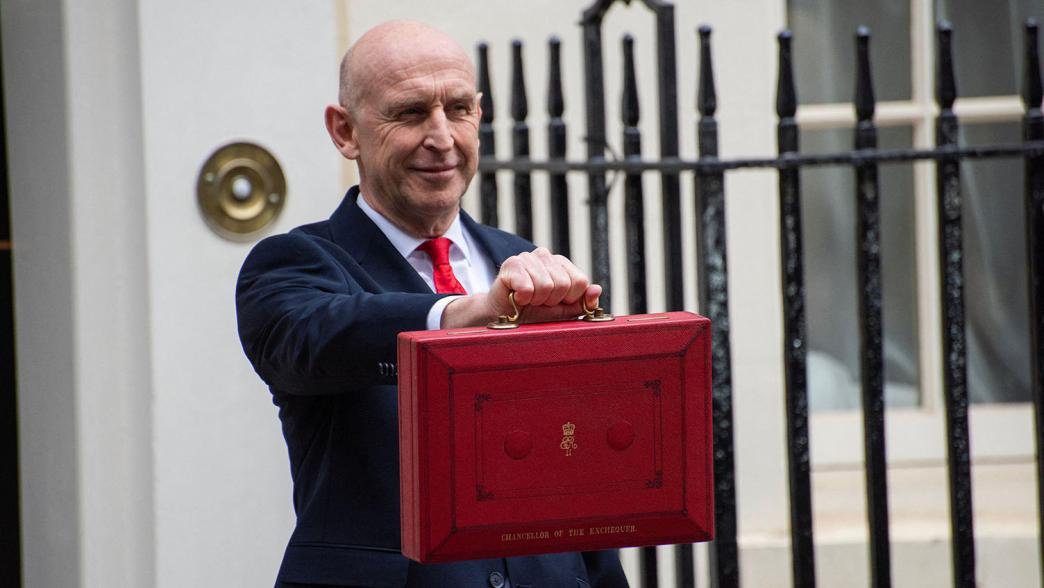
John Healey with the budget case outside No.11 Downing Street.
John Healey has deliberately delayed big decisions – on defence, public services, welfare and tax – until next year.

John Healey's packed budget was big in size but small in ambition. He and Andy Burnham will need to make difficult political arguments and economic decisions in 2027, argues Tom Pope
We were promised John Healey’s budget would be a low-key affair. With the scorecard stretching to almost 100 policies, by some measures this budget over-delivered. And yet there is no doubt this was a small budget in macro terms. Most of those measures were very small, and the overall fiscal picture is mostly unchanged.

In keeping with this government’s approach so far, the chancellor set out more short-term support for households, principally focused on energy bills. But Healey has deliberately delayed big decisions – on defence, public services, welfare and tax – until next year. He and Andy Burnham will either need something to change that rescues them – or steel themselves to open up the political space that they evidently do not think they currently have to make big choices that will inevitably mean (bigger) losers alongside some winners.

A budget of many measures but a mostly unchanged fiscal picture

Despite a record scorecard, Healey’s budget contained few policies of fiscal importance. Only one tax measure – a change to capital allowances – either costs or saves more than £1bn in the last year of the forecast, which is very unusual. And spending changes were almost all modest or (in the case of the Defence Investment Plan) pre-announced.

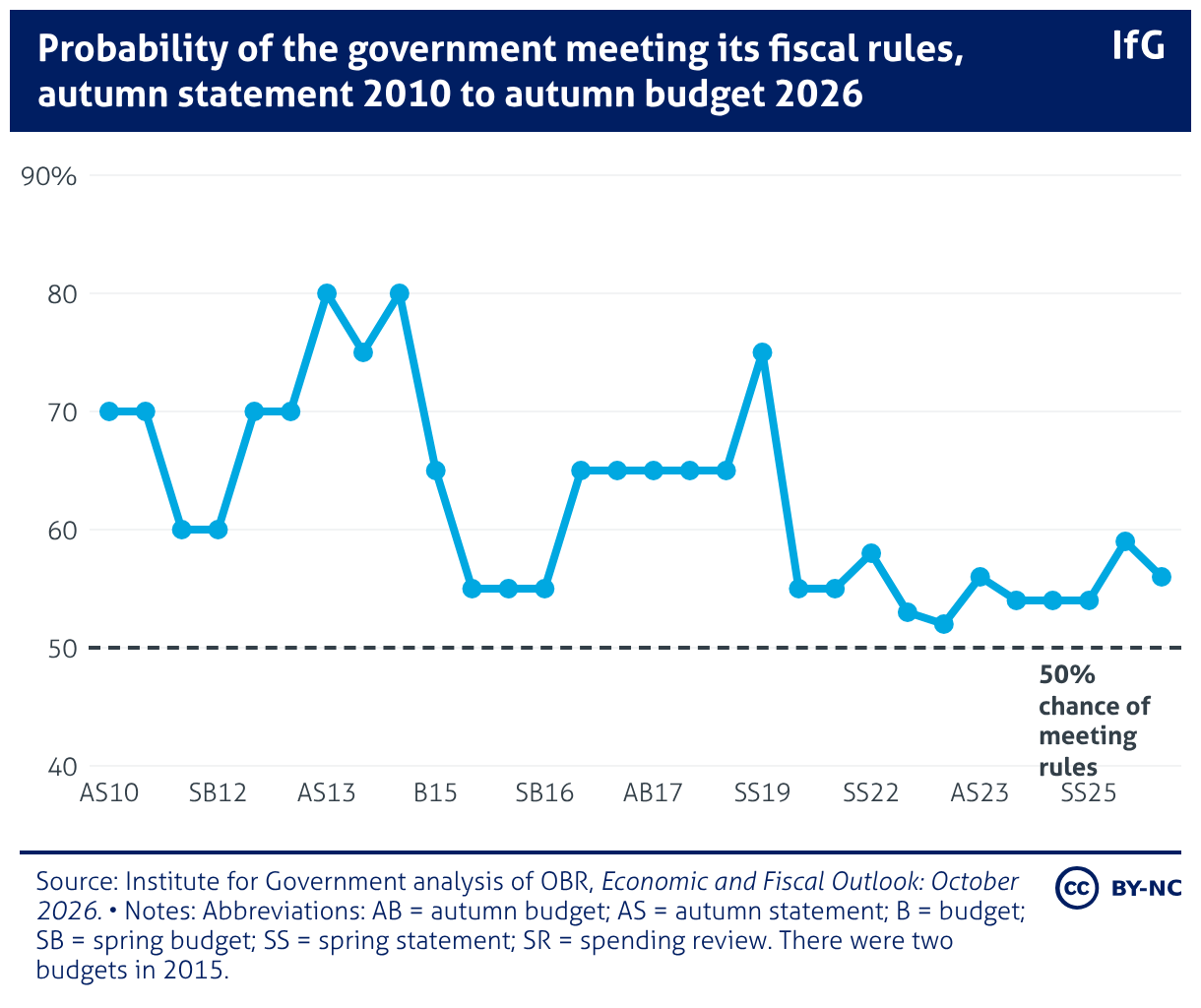
Many small changes could have cumulated to a big overall change in fiscal stance. But they mostly cancelled out. On the forecast, the cost to the exchequer from slightly lower real growth is offset by higher tax receipts, helped in large part by tax thresholds remaining frozen. Higher interest rates means forecast borrowing increased, and Healey allowed the bigger fiscal buffer Reeves had built up to fall to absorb that shock. That leaves him only a 56% chance, based on past forecast errors, of meeting his main fiscal rule of a current budget surplus in 2029/30, down from 59% at the last budget.

Budget 2026: What do John Healey’s choices mean for the economy and the government?

The IfG set out its expert analysis of the chancellor’s budget and what it revealed about Andy Burnham’s government.

Watch or listen to the event
John Healey on stage at the Labour Party Conference.

Energy support for households prioritised breadth over targeting

One clear focus for the chancellor across a range of measures was directly supporting households with cost of living pressures over the next year or two. The most significant part of this was help to deal with the higher energy bills households will face this winter. Among other measures the chancellor extended the temporary VAT cut on domestic electricity, announced a £100 council tax rebate to households in bands A-D and announced a plan to abolish the gas standing charge. These policies mean that all households will receive at least some support, and around 80% will receive the £100 rebate this winter. However, this was not enough to change the overall picture on living standards, with the OBR forecasting that real household disposable incomes will be only 2% higher in 2030 than before the pandemic.

The chancellor’s choice to give most households a modest amount of highly visible support might help with the prime minister’s campaign to show he is on people’s side. A rebate is likely to be quite noticeable. However, the cost of breadth is that the support is not especially targeted at those most in need. Poorer households struggling with bills will receive the same amount as wealthier households who happen to live in houses that were not unduly expensive in 1991 (the year council tax values are still based on).

Burnham and Healey will need to change the politics in 2027

With Healey and Burnham deciding this budget was not the time to make tough political and economic choices, 2027 is set to be a difficult year for government. Decisions on welfare and defence will need to be made, and the spending review is – on current forecasts – set to be challenging. Spending plans were topped up a little, counteracting some of the effects of inflation, but most of this extra money went to defence leaving other services squeezed. Those spending plans already looked hard to deliver, and Healey reiterated commitments for further defence spending that would imply cuts to many other budget lines. If the spending envelope proves undeliverable, and it is hard to see how it will be compatible with the government’s promise to substantially improve public services, that will probably mean higher taxes are needed.

These problems are apparent now, and Healey and Burnham have only postponed rather than avoided a set of tough political and economic decisions. The question, then, is what will change between now and the next fiscal event to make these choices deliverable.  

One option is that the forecast improves and makes trade-offs easier. This could happen, but most chancellors who have hoped for fiscal windfalls over the past 15 years have been disappointed. It is as likely that forecasts go in the other direction, and Healey is now only an average bad forecast revision from being on course to miss his fiscal rules.  

If tough trade-offs are still present, Burnham and Healey will need to change the political environment. If they did not think the cabinet, parliamentary party and the country would accept tax rises or welfare cuts this time, how will they be able to do this over the next year? They might hope various reviews – from Alan Milburn, Steven Timms and Louise Casey – will open up the ground for reform, though it is just as likely they narrow options down. But they will also need to start making a stronger political argument that the current fiscal position requires tough policy choices, and short-term giveaways cannot continue indefinitely. They may come to regret not making those arguments today. Tomorrow would be a good time to start.  

Related content

06 OCT 2026 Project

Budget 2026

John Healey's first budget as chancellor will be the biggest indication yet of the priorities of Andy Burnham's government.