Working to make government more effective

Comment

What should be in the fiscal devolution roadmap?

The fiscal devolution roadmap will set out changes to how mayors raise and spend money.

(left to right) Liverpool City Region Mayor Steve Rotheram, Prime Minister Andy Burnham and Chancellor of the Exchequer John Healey on the new Royal Daffodil Ferry.
The fiscal devolution roadmap will be a key milestone in Andy Burnham’s agenda.

The fiscal devolution roadmap will reveal how radical the Burnham government intends to be on devolution. Thomas Pope sets out his key tests

Alongside his budget, John Healey will unveil a new fiscal devolution roadmap, setting out how income tax and business rates revenues will be assigned to mayors, replacing grants that have funded them historically. This process was originally initiated by Rachel Reeves at her Mais lecture earlier this year, but it has gained momentum and ambition as a key plank of Andy Burnham’s wider emphasis on speeding up and deepening devolution.

Control over tax revenues for strategic authorities would be a radical development for the UK, although it is commonplace in other countries. While the roadmap is unlikely to set out the full details, it will set the broad parameters of the new system. But the policy changes are not without risks and trade-offs, and an early test of the document is how it deals with these. The roadmap needs to lay out the government’s case for the change, explain how it will deal with national and local shocks, and how the government intends to ensure the wider system, including accountability arrangements, allows mayors to take advantage of the new flexibilities it should offer.

Andy Burnham’s devolution announcement is a strong start on his priority agenda

Changes on tax, new powers and institutions show Burnham means business.

Read the comment
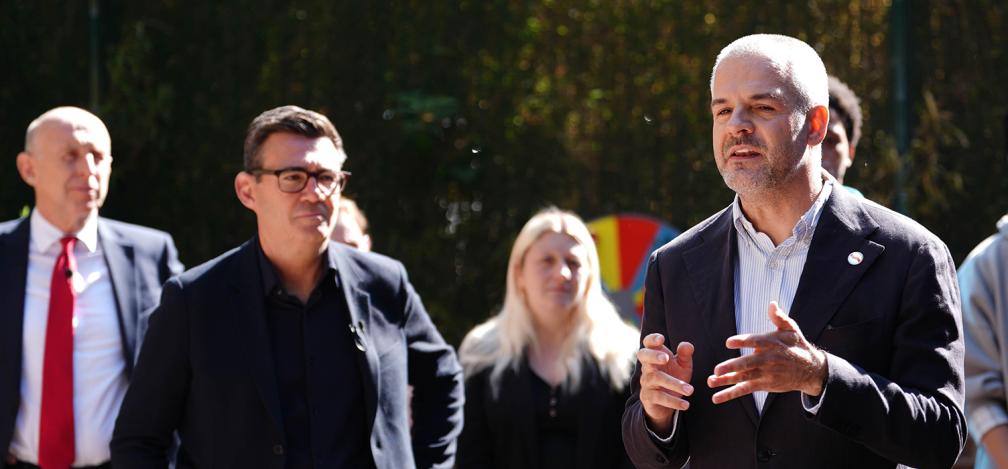
Andy Burnham and Oliver Coppard

The government should be clear about why it is pursuing fiscal devolution

Rachel Reeves’ Mais lecture was clear that she wanted to pursue fiscal devolution as a route to higher growth. There is some support for this in international evidence. But neither Reeves’ lecture nor the international evidence are clear about the mechanism. There are broadly two possible approaches. One approach is based on the idea that allowing local leaders to keep more of their own tax revenue provides an incentive to pursue growth-enhancing policies that might otherwise falter if local people see costs without benefits. The second idea is that a guaranteed share of tax, rather than dependence on grants set in spending reviews, gives subnational government more long-term certainty, allowing them to plan and commit to projects outside short funding windows.

Of course, both approaches, and the incentives behind them, could be important. But the government’s judgment of which is more important matters. A key decision for the roadmap will be how far to allow places to keep their own revenues, and how much equalisation will happen through countervailing grants that take from the highest-income authorities and give to those with less. If growth incentives are the key driver of good outcomes, a strong equalisation system would undermine them, effectively taking away any local benefit. If what matters is long-term certainty, having a credible commitment of tax revenue sharing beyond the next few years will be more important than making sure mayors keep revenue growth.

Others would favour fiscal devolution for non-economic reasons – for example, democratic legitimacy. If this is your priority, it might lead the government to prioritise local autonomy, for example changing rates or allowing total freedom over how the money is spent. The roadmap should clarify the government’s position.

The system needs to be robust if it is to be durable

A move away from grants to income tax and business rates as the main form of mayoral strategic authorities (MSA) funding will be a major shift. Most local funding in England is currently allocated according to formulas based on need, not taking account of local revenue raising power. Shifting away from that will mean difficult political decisions, and if the system is not set up well future politicians may be tempted to reverse course.

One risk is that equalisation mechanisms are too weak, so badly performing places see big reductions in spending power compared to places that grow more quickly over time. Such a system may not be politically viable over the longer term. This suggests equalisation is an important part of the system.

A second risk concerns national economic downturns. MSA spending is currently insulated from such downturns because central government normally maintains spending and accepts higher borrowing in the short term. However, if MSA spending depends on their tax take, by default MSAs would spend less in recessions. Given MSAs spend heavily on long-term economic investments like transport, this is the opposite of sound economic policy. The roadmap will need to address this situation: will central government step in, or will MSAs be able to borrow in bad years and pay it back in good?

The chancellor should ensure the wider system allows benefits to be realised 

The rules around how finances will flow is just one part of how fiscal devolution will change how MSAs operate. A shift from grants to tax revenue should also mean less Whitehall influence over how money is spent, which will in turn allow MSAs to make decisions appropriate for their areas. That means a shift from the current, onerous outcomes frameworks MSAs must abide by, which in practice limit their policy freedom. If funding flows change but wider accountability relationships do not, many of the potential benefits of fiscal devolution will not be realised.

The government needs to design a system that balances providing MSAs freedom with ensuring there is good scrutiny and accountability of their choices. More details on the government’s plans for a stronger local scrutiny and accountability system to replace some of the current accountability to Whitehall is expected in the Rewiring the State white paper later this year, and will be crucial to making fiscal devolution work. 

One aspect the roadmap next week should cover is how MSAs can borrow: either to deal with economic shocks or to allow major investments now that will be paid back from future tax revenue. This will be an early test of the government’s approach to MSA accountability. A system without checks and balances would not be appropriate, but nor is the current system of extensive Whitehall oversight and approval working.

Another is whether the money can be used for tax rebates, as well as spending on core MSA functions. This will make it clearer how far the government’s commitment to local autonomy extends even to mayors and policies they disagree with.

Budget 2026

John Healey's first budget as chancellor will be the biggest indication yet of the priorities of Andy Burnham's government.

Explore our work
John Healey

The pace of fiscal devolution will reveal this government’s appetite for risk

Some MSAs are more advanced, with greater institutional history and capability, than others. And almost half of England still does not have a mayor at all. Fiscal devolution implies a new level of autonomy and freedom for local decision makers, but with it comes a risk of failure, especially in places with less capacity. The government will, rightly, prioritise capacity building in these institutions, but not all will be ready by the proposed April 2028 fiscal devolution start date.

This poses a key early choice that will tell us much about this government’s approach to devolution, and views on the relative balance of the risks and possible benefits of devolving much more quickly and widely than previous governments. Should fiscal devolution be available everywhere, or at least for all places with a mayor? Or should only those who are ready get full freedom, in which case how does this fit with the government’s commitment to growth in every postcode?

As both a key plank of the devolution agenda, and an early sign of how radical this government will be, the fiscal devolution roadmap will be a key milestone in Andy Burnham’s agenda. It probably won’t be the biggest story, but it may be John Healey’s most consequential announcement on budget day.

Related content