Working to make government more effective

Comment

How John Healey should approach his budget headache

IfG experts set out how the chancellor should approach a difficult budget.
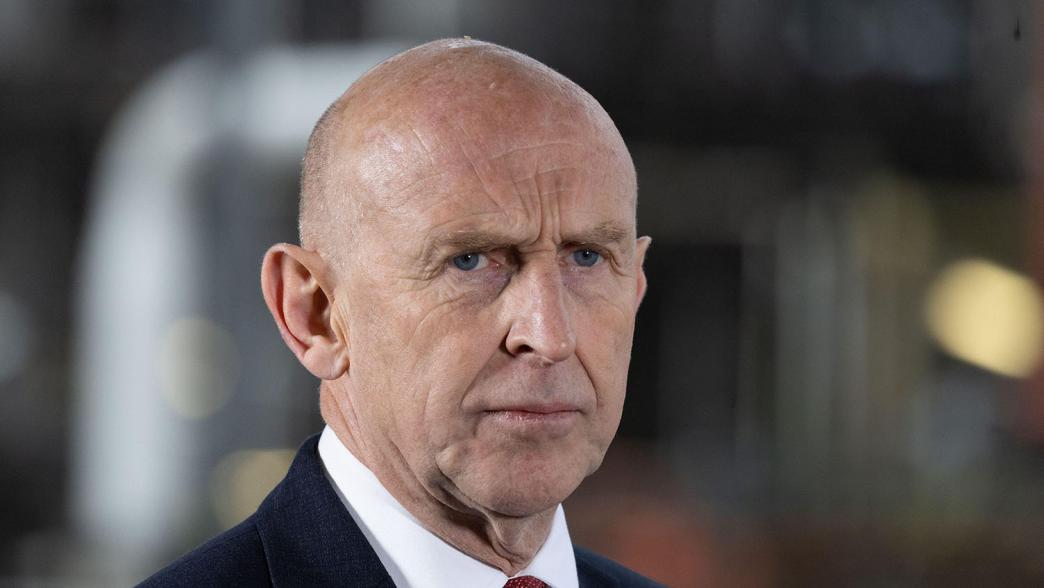
Chancellor of the Exchequer, John Healey during a visit to Shell UK's St Fergus Gas Terminal in Peterhead
On 28 October John Healey will deliver his first budget as chancellor.

From fiscal rules to spending promises, tax plans to energy support, this budget will reveal much about Andy Burnham and John Healey’s priorities for government. Tom Pope, Dan Haile, Rosa Hodgkin and Jill Rutter set out the approach they want to see

John Healey’s first budget as chancellor is a chance to define the fiscal approach of the Burnham administration. The prime minister has said he will “pull every single lever” to ease the cost of living, while Healey has insisted that he and Burnham are “lockstep in our commitment to meeting the fiscal rules.”

Having inherited the tight spending plans of his predecessor and recommitted to Labour’s 2024 manifesto commitments on personal taxation, Healey also faces high borrowing costs and unfavourable international headwinds. The budget challenge is a particularly difficult one. This is how IfG experts think that the chancellor should approach his task.

Fiscal headroom is not the best test of this budget’s credibility

Conflict in Iran, Ukraine and Russia has resulted in higher global energy prices which will reduce the buffer the chancellor has against his fiscal rules (as will lower than forecast levels of net migration). These are an indicator of fiscal sustainability both in terms of what they measure and as a reflection of whether the government can deliver on its fiscal commitments. At the spring forecast, the government had a buffer against the current budget rule of £24bn. 14 https://obr.uk/efo/economic-and-fiscal-outlook-march-2026/  A margin of this size should normally mean the government does not feel forced to respond to shocks just to meet its fiscal rules. 

However, on this occasion the government should not allow ‘headroom’ to fall by much. This is for two main reasons. First, now is not a good time to increase borrowing, especially for day-to-day spending. The interest rates on UK government debt are already high, and the government could see further increases in its cost of borrowing if it chose to aggressively loosen policy now. Second, taking corrective action on the buffer now, however politically painful, will be much less painful than at future budgets close to an election.

It would also be wrong to promise a bumper ‘headroom’ number based on a tight spending envelope that the government is unable to deliver. The credibility of this budget should be judged against whether the chancellor addresses the medium-term challenges the government faces in terms of spending pressures, high costs of servicing government debt and a tax system in dire need of reform.

Healey should not delay tough spending choices 

Healey should use this budget to set out an overall envelope for next year’s spending review that reflects the spending needed to deliver the government’s priorities, and what he judges to be affordable. 

Of course, Burnham may prefer to avoid surfacing difficult decisions at his administration’s first budget or have more time to work out his priorities and roll the pitch for tax rises to fund them at a future fiscal event. This would be a valid political choice, but it would come with a cost. Departments need to match their spending plans with Burnham’s political vision, a job which is only complicated by prolonging uncertainty over their future budgets. Delay also means leaving the inevitable difficult spending decisions to date closer to the general election.

The choices facing Burnham and Healey are far from easy. They inherited tight spending plans for 2029/30, with last autumn’s budget cuts leaving total day-to-day spending plans flat in real terms between 2028/29 and 2029/30 (though Rachel Reeves then topped up funding for special educational needs and disabilities [SEND] in March 2026). 

The spending plans for 2029/30, which rely on ambitious assumptions about productivity improvements from upfront investment in the first half of this parliament, look under further pressure from policy announcements since the Spring. June’s Defence Investment Plan left £900m of cuts in 2029/30 from other departments still to be found, and in the shorter-term Burnham’s summer policy spree was not fully funded. 

Increasing defence spending further from 2.7% to 3% of GDP by 2030 would cost around £7bn in 2029/30. The IFS also estimate that higher forecast inflation will erode the real-terms value of departmental budgets by £8–15bn in 2029/30.  16 Boileau B, Harvey-Rich O, Snape D, Public service spending: plans and pressures, Institute for Fiscal Studies, 2026, https://ifs.org.uk/publications/public-service-spending-plans-and-pressures  Add in other pressures – such as 2.7% annual increases in NHS spending and SEND reform not reducing demand by as much as expected  – and pencilled-in cuts to unprotected departments in 2029/30 look substantive.

Delivering improvements to public services within these spending plans, while also finding extra funding for Burnham’s priorities such as adult social care or youth employment, is unrealistic.

Burnham and Healey cannot avoid confronting these pressures. The only question is whether they do that now, or at the upcoming spending review in summer or autumn – when departments’ budgets for 2028/29, 2029/30 and 2030/31 will be set. 

Budget 2026

John Healey's first budget as chancellor will be the biggest indication yet of the priorities of Andy Burnham's government.

Explore our budget analysis
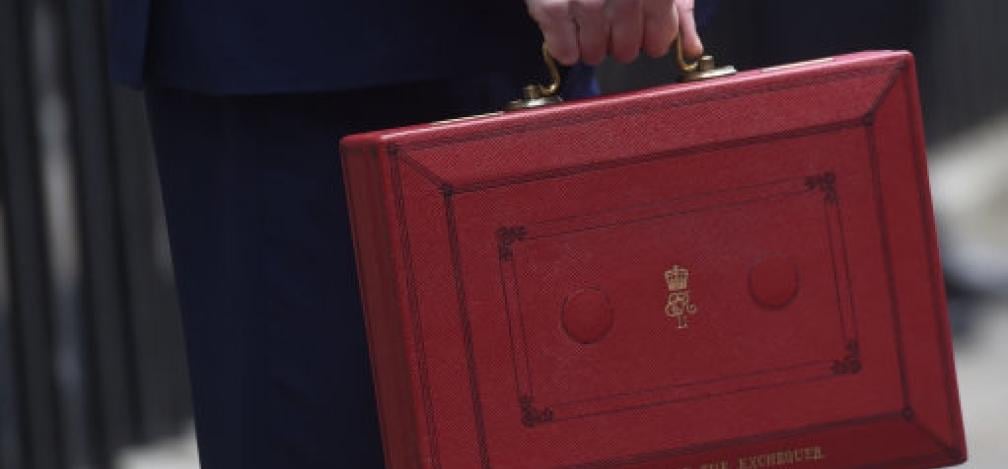
budget case in hand

The chancellor should use this budget to set out a tax strategy

Previous chancellors have far too often adopted an un-strategic approach to tax, looking for convenient revenue raisers that the public won’t notice and introducing ill-thought through giveaways into the system. 21 http://instituteforgovernment.org.uk/publication/john-healey-tax-budget-2026  The result is a messy system that undermines growth and the government’s other objectives much more than it should, while unmoored speculation damages confidence.

Healey should use his first budget to lay out a tax strategy setting out:

•    This government’s views on the current system and its weaknesses
•    Principles he will use to shape the future system
•    His priority areas for reform
•    A confirmation of what won’t change

The chancellor doesn’t need to specify exactly what measures he will introduce in future budgets, but sharing a higher-level set of principles and priorities will provide more certainty and allow Healey to articulate how his tax plans are contributing to the government’s broader priorities, like growth in every postcode. The alternative is a repeat of the same disconnection between rhetoric and policies seen from his predecessor and many before her. 

Healey should set out a targetted and time limited energy support plan

As winter approaches, global energy markets remain disrupted by conflict in the Middle East, Ukraine and Russia. As a result, energy bills facing businesses and households are set to rise. Cornwall Insight have estimated that the Ofgem price cap will rise by £276 (16%) in January and more recent estimates suggest the increase could be even greater. 22 https://www.cornwall-insight.com/predictions-and-insights-into-the-default-tariff-cap/  Bills are approaching, but still below, the level at which the government capped prices in 2022-23 through the Energy Price Guarantee (without which bills would have been much higher) and the risk of further disruption remains high. 

We have argued that the chancellor should provide support to households who are struggling to pay energy bills 23 https://www.instituteforgovernment.org.uk/publication/managing-economic-consequences-iran-war , but that this should be targeted and time-limited to avoid the expense of previous schemes (£35bn in total across 2022-23) 24 Levell P, O’Connell M, Smith K, ‘Urgent need to learn lessons from expensive energy support packages: better design could have saved £4.5 billion’, Institute for Fiscal Studies, 31 January 2025, https://ifs.org.uk/news/urgent-need-learn-lessons-expensive-energy-support-packages-better-design-could-have-saved  and to preserve the price signal for those who can use less power. This should be delivered alongside support to encourage electrification of heating and cars, which is the best way to reduce dependence on fossil fuels. Cuts to government support in these areas would not help households cope with rising energy costs. The government also needs to consider businesses that face high energy costs, and as prices rise it may feel it needs to further on the support offered in April for energy intensive businesses. 

A package for households will be the headline-making test of Burnham’s promise to pull every possible support lever at this budget, but it is the choices about helping businesses and the policies to build energy resilience that will reveal the coherence of the government’s strategy on energy security and net zero.

Budget 2026: What do John Healey’s choices mean for the economy and the government?

The IfG will set out its expert analysis of the chancellor’s budget and what it reveals about Andy Burnham’s government.

Register to watch online
John Healey

Related content