How John Healey should approach tax in his first budget
The 2026 UK budget is fast approaching.
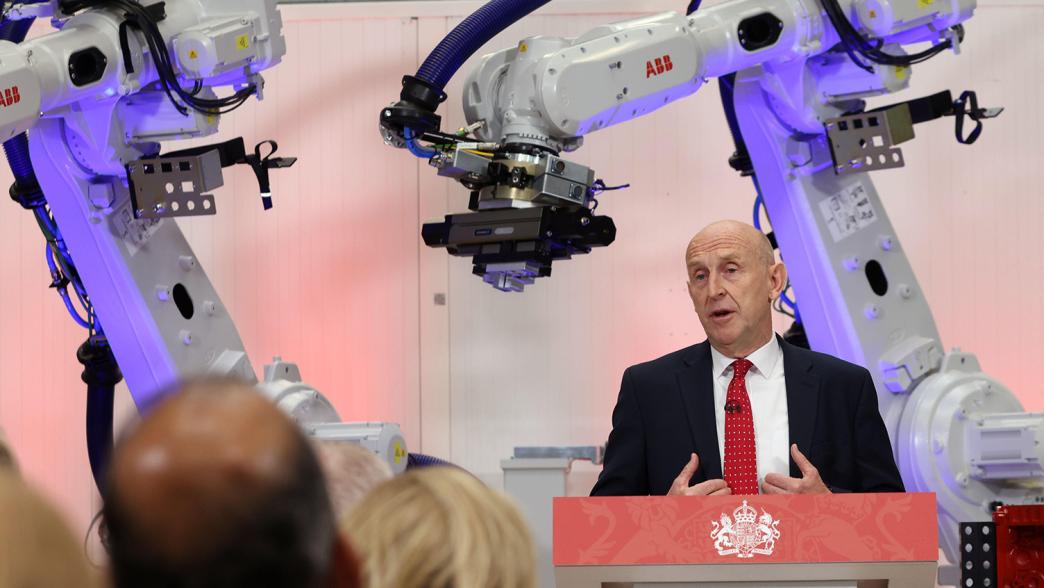
The prime minister has announced that the 2026 autumn budget will be on 28 October. This will be a significant moment for the Burnham government, just three months in office, and for John Healey as chancellor.
Healey has worked in the Treasury before, as a minister, but that experience will not prepare him well for the difficult choices he will face as chancellor. Back when he was last at the Treasury, between 2005 and 2007, 40 Hughes N and Stelk I, John Healey, Ministers Reflect, Institute for Government, 2016, www.instituteforgovernment.org.uk/ministers-reflect/john-healey the economy was booming and the bigger issue was how to distribute the dividends of all that growth. Things are quite different now: he has inherited an economy where living standards have stagnated for the best part of two decades, unemployment is rising slightly and the public finances are precarious.
Healey’s task for the budget is threefold. He will need to use the statement to set a clear course for the rest of the parliament, reassure the markets, and show that the government both has a convincing story on growth and can fund additional spending – likely against the backdrop of continued geopolitical instability. The OBR’s forecasts that will accompany the budget are likely to have deteriorated since March, and even those assessed that the then chancellor’s plans were tight, and that’s before accounting for additional priorities announced by the new prime minister. 41 Paxton B, Hoddinott S and Pope T, Andy Burnham needs a new fiscal strategy that deals with the tax lock, Institute for Government, 17 July 2026, www.instituteforgovernment.org.uk/comment/burnham-starmer-reeves-tax-lock-manifesto
Healey must also use this budget to set out his stall on tax, which could involve announcing unpopular measures to fund other commitments. 42 Pope T, Rachel Reeves’ first budget is a clear break from the recent past, 30 October 2026, www.instituteforgovernment.org.uk/comment/rachel-reeves-first-budget Andy Burnham taking over mid-term means as well as this being his government’s first budget it is also his last not shortly before an election. That means this event is the last opportunity to do substantial (necessary) tax reform this parliament. In doing this he will want to learn from Starmer’s and Reeves’ mistakes in how they approached tax policy and tax reform.
This insight draws on past Institute for Government research on tax policy making to set out how Healey should approach tax this autumn, setting himself up to succeed where many predecessors have failed.
Healey must avoid the damaging speculation that preceded Reeves’ budgets
The run-ups to both the 2024 and 2025 budgets were characterised by feverish speculation. Endless talk of “black holes”, and how she would aim to fill them, dogged the chancellor in the weeks before – particularly given Labour’s manifesto commitments not to raise rates of income tax, national insurance or VAT.
In 2024, Reeves was a victim of her unenviable inheritance – one she had not really addressed in the election. And then in 2025 she was the victim of her own decision, in 2024, to leave a wafer-thin amount of headroom against her fiscal rules which evaporated post-budget.
Speculation during these periods was damaging. Partly this was because there was little indication about what taxes Reeves would consider, and so a very wide range of options seemed plausible. But the choice to moot changes asset taxes – like on property 49 www.spf.co.uk/insights/market-insights/rumoured-property-tax-reforms-and-the-autumn-budget/ and pensions 50 www.xpsgroup.com/news-views/insights-briefings/quarterly-pensions-watch-autumn-budget-speculated-changes-fail-emerge/ – was even more damaging because these are the types of taxes where people will adjust their behaviour in expectation of a tax change that does not materialise. In the run-up to both budgets there was evidence of a dip in business confidence. 51 www.icaew.com/about-icaew/news/2026-news-releases/icaew-bc-drops-into-negative-double-digit-territory-amid-unprecedented-tax-woes-january-2025
Communicate with purpose
Fast forward to this July and Andy Burnham, just days into the job of prime minister, seemed surprised that his musings to lobby journalists about a potential freeze in personal tax allowances set lots of hares running. 52 www.bbc.co.uk/news/articles/c935g67wyvgo It is good that he seems much more interested in tax policy than his predecessors – not least having made proposals for reforming property taxation as mayor of Manchester. 53 www.tax.org.uk/andy-burnham-s-tax-agenda-early-signals-for-a-probable-premiership
The UK would definitely benefit, as we have argued before, 54 Tetlow G, Pope T, Marshall J, Rutter J, Sodhi S, Overcoming the barriers to tax reform, Institute for Government, 2020, www.instituteforgovernment.org.uk/publication/overcoming-barriers-tax-reform from a better public debate about the tax system. But while it is unrealistic to expect a return to old-fashioned style budget purdah, prime ministers (or chancellors) airing their fiscal thoughts like this can affect actions and the economy.
Political advisers are also often a source of speculation. Burnham’s ban on special advisers (spads) speaking to journalists suggests he is aware of the damage this can bring. But this need not mean total silence. Rolling the pitch for sensible reforms and building support for the chancellor’s plans is an important way to deliver successful tax reform.
Instead, communication and ‘kite flying’ should follow a few simple rules. First, it should be consistent and based on genuine plans under consideration. Second, it should be clear about what the chancellor is trying to achieve from the tax system to explain why these reforms are under consideration. And third, speculation should not include plans on asset taxes – such as capital gains, stamp duty or pensions – as these are where people are most responsive to the possibility of tax changes and so likely to change behaviour.
Overcoming the barriers to tax reform
The UK tax system needs substantial reform, but recent governments have shied away from it because of public resistance.
Read the report
The chancellor should lay out a tax strategy
There were two reasons why Reeves’s budgets were subject to so much advance speculation. One was that she left herself so little headroom while also swearing that she would stick to her fiscal rules, come what may. But another was that she failed to lay out any principles to give any guidance on what her tax policy choices would be, beyond sticking to the letter (if not the spirit) of the manifesto’s “tax lock” and its other limited tax commitments on, for example, VAT on private school fees.
That meant everything that was not specifically ruled out was potentially in play. And by ruling out the most economically effective tax options she was forced to scrabble around for a menu of second-order revenue raisers. This tinkering damaged business confidence, alienated other groups, and drew Reeves into various political rows for minimal revenue benefit.
John Healey should consider an alternative approach which would inform this and subsequent budgets (a maximum of three this parliament, if he sticks to a single fiscal event a year). 57 Better Budgets: Making tax policy better, Institute for Government, 2017, www.instituteforgovernment.org.uk/publication/better-budgets-making-tax-policy-better That approach would be to depart from past practice and publish an explicit tax strategy.
While some previous governments, including Starmer’s, have published business tax or corporation tax strategies, or ‘road maps’, none has covered the whole system, while recent examples have failed to project a positive vision for reform. This government should be different.
The risk of behavioural impacts and forestalling inevitably limit the extent to which this can be a highly detailed route for tax reform, but a good tax strategy should include:
1. An overview of current system, likely evolution on current policies and problems with the system
This should be the starting point for any strategy – with an analysis of where it is going on current trends and providing an insight into problems and the consequences of existing trends. The OBR already does some of this in its EFO and its annual Sustainability and Fiscal Risks report, but in neither case does this provide an insight into the chancellor’s thinking about the issues with the current system.
The benefit of publishing an official analysis of issues in the tax system is not that it would highlight unidentified problems, but it would force ministers to share their analysis of those problems and help prepare the ground for reform – not least with MPs.
2. Principles for shaping the future tax system, linking where appropriate to wider government objectives
Treasury ministers like unconstrained discretion on what they can do to the tax system – but that means that much tax policy making is unpredictable and policies can move in different directions (frequent changes of prime minister and chancellor have not helped here).
The chancellor should set out the guiding principles that underpin tax policy. That could for example focus on shifting the burden of tax from earned to unearned income; to reduce high marginal tax rates that disincentivise work across the spectrum; to align the treatment of income whether employed or self-employed; to ensure the system does not disincentivise business investment; to maintain the real tax base by ensuring indexation is as widespread as possible; to reduce reliefs that offer poor value for money. One principle could (and given how hard they are to withdraw arguably should) be to minimise the creation of new tax reliefs.
3. Priority areas for reform – and potential routes for getting there
Guided by the analysis of current issues and the impact of future trends, the chancellor can then set out priority areas for reform emerging from the principles. Some may be acted on immediately, some later. Reeves finally addressed the long-term decline in fuel duties and announced plans for Electric Vehicle Excise Duty (eVED) to reflect miles driven to ensure that variable motoring taxes continue as part of the tax base even as petrol and diesel sales decline. But there was no wider look at the impact – or indeed, role – of the tax system in meeting the government’s shift to decarbonise and electrify the UK’s energy system. Similarly, her minor reform to property taxes was made without setting it in any context of wider problems with property taxation.
Governments have produced road maps before, but those have been confined to business taxation. The first corporate tax road map was widely welcomed by businesses for showing how the government proposed to change the tax over the parliament. Subsequent road maps were largely restatements of the current system, and were less useful. 58 Better Budgets: Making tax policy better, Institute for Government, 2017, www.instituteforgovernment.org.uk/publication/better-budgets-making-tax-policy-better
As part of this prioritisation, the government can also indicate the types of changes it would like to see, and would prioritise delivering, when tax increases are needed or tax cuts were affordable. If, for example, a government wants to prioritise cuts in the basic rate of income tax (like the Conservatives in the 1980s and 1990s) it can say that. Or it can indicate a desire to shift from direct to indirect taxation: Gordon Brown set an early objective of shifting the burden of taxation from “good” things like employment to “bad” things like carbon emissions; the coalition clearly wanted to remove lower earners from tax so focussed on raising the tax threshold (a move since reversed).
Ministers might want to set out a comprehensive vision for the future tax system, but even if they do not want to do that, a less than complete set of objectives would still help more coherent policy making.
One helpful thing about setting priority areas for reform is they can link to the government’s wider agenda. We already know that the Burnham government is keen to underpin devolution of powers with more certain revenues through some form of fiscal devolution – and that it is also happy for authorities to levy overnight visitor taxes and retain the proceeds. But it has other agendas, for example on growth, tackling NEETs and boosting technical education. The tax system could be used to push these too.
Specifying those priorities is for the government of the day. However, any chancellor looking to ensure the tax system can better support growth might prioritise some or all of the following:
- Improving the way property is taxed. Stamp duty acts as a break on growth by making it harder for people to move, reducing labour mobility as well as making people less likely to downsize. The UK’s main property tax, council tax, is particularly outdated and regressive.
- Moving to tax all income on a similar basis. This would reduce incentives to distort behaviour to minimise tax. The current approach – of taxing self-employment, partnership income and capital income far less than employment income – makes businesses operate inefficiently and causes waste through the effort and time taken on administration. There is also unequal tax treatment of the earnings of those below and above the state pension age.
- Moving to a uniform rate of VAT. This would avoid vastly different rates distorting decisions towards buying some goods and services over others (in a way that does not serve a clear purpose) and leading to a waste of resources as producers strive to prove they are in a lower-taxed category – for example, the ongoing legal wrangle over whether giant marshmallows should or should not be liable for the standard rate of VAT.
- Reducing tax disincentives for businesses to grow and workers to earn more. The UK’s high VAT threshold (by international standards) encourages businesses to stop expanding when turnover reaches that level; a much lower level would bring most businesses into the VAT regime and remove the cliff-edge. Similarly, there are currently several disincentives to people earning more than £100,000, including a sudden loss of free childcare entitlement and a marginal tax rate of over 60%.
4. A confirmation of what won’t change
As important in many ways as identifying areas for reform is to signal areas where the status quo will be preserved. This may create the impression that everything else is up for grabs – though no more than is the case now – but stability enables people and businesses to make decisions without fear of tax changes over the lifetime of a parliament and would be extremely useful.
Clarity in particular on areas where pre-planning is necessary – like pensions, housing and corporation tax investment allowances – would be especially valuable, if the government does not intend to reform them. On the other hand, income tax, national insurance and VAT rates (where ironically the government has ruled out changes this parliament), generate among the smallest behavioural responses and so commitment there reduces flexibility for little economic benefit.
As we have argued previously, the tax lock was a foolish pledge that has made effective tax policy making much more difficult. Healey appears to have ruled this out again in his first economy speech, but a bold chancellor would use this budget and a tax strategy to explain why that pledge is no longer a sensible one to maintain.
The chancellor should adopt a more strategic approach to tax reform
The current UK tax system is deficient in many ways – as any good tax strategy would indicate. 65 Tetlow G and Marshall J, Taxing times: the need to reform the UK tax system, Institute for Government, 2019, www.instituteforgovernment.org.uk/publication/reform-uk-tax-system Perverse incentives emerging from the system hold back growth while untargeted reliefs cost taxpayers money with no clear contribution to the government’s objectives. Reforming the system is the best way to support Burnham’s pledge to deliver “good growth in every postcode” while also spending more on the various areas he has personally earmarked, like social care, and other pressures he will soon face whether he likes it or not, like defence. Yet delivering tax reform, especially while trying to raise tax overall, has bedevilled successive chancellors.
Rachel Reeves managed to sustain most of her tax changes (some backtracking on inheritance tax for farm owners notwithstanding) while failing to deliver her two big welfare cuts, on winter fuel allowance and personal independence payments. It has yet to be seen whether her two reforms – on EV taxes and the high value council tax surcharge – emerge unscathed from their long introduction process.
If Healey and Burnham are to succeed, they will need to approach tax reform strategically, starting at this budget. Past IfG work has set out several lessons for how this can be done well. 66 Tetlow G and Marshall J, Taxing times: the need to reform the UK tax system, Institute for Government, 2019, www.instituteforgovernment.org.uk/publication/reform-uk-tax-system
1. Be bold about the case for reform (or, ‘set fire to the platform’)
There is a widely held view that crises should not the wasted and that a “burning platform” is necessary for significant change. It could be argued that the UK’s lamentable economic performance since 2008 and the political consequences already constitute a burning platform that should give politicians a licence for reform – but although voters may be repeatedly willing to punish incumbents, it’s far from clear that they are ready to make sacrifices in the name of long-run economic improvement. Part of the appeal of populists is that they offer solutions without pain.
Andy Burnham is already using some language to ignite the platform. He talks repeatedly of a “broken” system and says the UK took a wrong turn in the 1980s. He has been more specific on social care, where he has drawn attention to the appalling consequences of the current system for those who need care. This is likely to be a big theme of Louise Casey’s “National Conversation” on social care.
Ministers could consider going further and consider a national conversation on tax. Since 2014 Ireland has held a public event every June called the National Economic Dialogue, 67 www.gov.ie/en/department-of-finance/publications/national-economic-dialogue-2025/ organised by the Ministry of Finance and attended by the cabinet. The forecast is presented and ministers set out what the aims of the budget will be, and the finance department produces papers to inform the discussions in plenary and in breakouts – with the discussions captured by rapporteurs. The event is also attended by lots of NGOs, businesses, unions and academics and broadcast live by RTE on their equivalent of iPlayer. Ministers see this as an important part of engagement with social partners where they can highlight the need for trade-offs.
In Australia, the Albanese government convened a big multi-day “economic reform roundtable” in summer 2025. 68 https://grattan.edu.au/news/how-to-build-a-better-tax-system-economic-reform-roundtable-recap/ That allowed ministers, businesses and unions and think tanks opportunities to put forward options and was informed by papers produced by officials. Both offer the UK government ideas for how it could open up the process of tax policy making – and reform.
A less radical option would be to resurrect the Office for Tax Simplification as an Office for Tax Reform with a remit to study areas of the tax system, point out problems and propose solutions. 69 Tetlow G and Rutter J, What should succeed the Office for Tax Simplification?, Institute for Government, 29 March 2023, www.instituteforgovernment.org.uk/comment/office-tax-simplification
2. Forget the tinkering and go big
Some of the most contentious changes have also been the most minor. Singling out areas for reform, like pasties or static caravans, make it hard to make a general case for reform while allowing concentrated losers to mobilise. Bigger reforms are often easier to sell as dealing with a hot-button issue – and can generate larger numbers of gainers as well as losers. Singling out pensioners for the change in winter fuel allowance to help fill the black hole that Reeves’s initial fiscal audit identified made the move simply look penny-pinching and mean-spirited, rather than setting it in a wider reform programme or show how others were also being asked to contribute.
3. Create compelling packages
Some changes have floundered because they have been presented in isolation. Philip Hammond attempted to increase self-employed NICs in 2017, and was forced to U-turn. But self-employed people had already benefited from equalisation of their benefits with employed people at a previous fiscal event. If the two changes had been made simultaneously, they would arguably have been much easier to sell. The Pensions Commission in the 2000s made sure that it crafted a balanced package so that there were shared benefits and costs that people could see and used that as the basis for their Pension Day events. 70 /www.instituteforgovernment.org.uk/article/comment/turner-prize-five-lessons-policy-makers Persuading people that the benefits they see are worth the price they are being asked to pay will be critical to any reforms of social care, for example.
4. Find a way to crystallise benefits
One of the problems with reform is often that it creates concentrated losers who naturally resent their losses but that gainers do not always appreciate their (perhaps more distributed, or less identifiable) gains. Where there is not an explicit redistribution, some people do not value the losses that they have avoided. That makes it hard to create a constituency for reforms to counter those who lose from changes to the status quo and this contributes to policy inertia.
The government must be smart in its comms and find a way to make benefits (or avoided costs) more real to people – perhaps by articulating counterfactuals of the consequences of not making a change or making it differently. That could allow a better explanation of the reason choices have been made.
5. Prepare to ride out the (initial) storm
For any of this to happen a chancellor, and their prime minister, needs their MPs on side. Poor parliamentary management was one reason the Starmer government struggled so badly with its attempts at tax changes and Healey and Burnham will need to work on the relationship with the PLP.
But there are examples where initial outrage subsides and the change simply becomes part of the status quo, perhaps with some softening of the edges. Even while the Starmer government struggled, it did bring a substantial number of farms into inheritance tax – even if not as many as originally intended – by sticking with but modifying its proposal. Looking back further, the main rate of VAT has been increased several times in the past five decades and never required a government reversal.
But Healey will have to act fast. As noted, this is his last budget not near an election, and few governments risk sparking rows without adequate time to see other benefits accrue before people start thinking about where their next vote goes.
Conclusion
The autumn budget is the first big test for the Burnham government. As a surprise pick as chancellor, John Healey needs to use the occasion not just to build confidence in the fiscal management of the new government, just three months in, but also to set out the approach it intends to take on tax.
We already know that fiscal devolution will play a big part in the budget – the prime minister has also promised to unveil a 10-year plan 72 www.gov.uk/government/speeches/andy-burnhams-first-speech-as-prime-minister-20-july-2026 in the autumn, while actual changes announced to date have largely been bite-sized temporary interventions. The chancellor and prime minister will need to show that they have a convincing, coherent and deliverable plan for the rest of the parliamentary term (and beyond) and introduce a budget that is consistent with those ambitions. This should come with a clear tax strategy.
- Topic
- Public finances
- Keywords
- Tax Budget Public spending Economy
- Political party
- Labour
- Position
- Chancellor of the exchequer
- Administration
- Burnham government
- Department
- HM Treasury
- Public figures
- Andy Burnham
- Publisher
- Institute for Government