Working to make government more effective

Comment

Jackdaw was well handled – but government needs a coherent net zero strategy

Miatta Fahnbulleh made a good case for the government decision on the Jackdaw gas field.

(left to right) Scottish Secretary Douglas Alexander, Energy Secretary Miatta Fahnbulleh and Chancellor of the Exchequer, John Healey during a visit to Shell UK's St Fergus Gas Terminal in Peterhead, Aberdeenshire, following the announcement of the UK Government's long-awaited decision on the future of the Jackdaw gas field, a new gas drilling operation off the coast of Aberdeen.
Scottish Secretary Douglas Alexander, Energy Secretary Miatta Fahnbulleh and Chancellor of the Exchequer, John Healey during a visit to Shell UK's St Fergus Gas Terminal in Peterhead, Aberdeenshire.

The government has set out its case for approving Jackdaw clearly, but it needs a more credible roadmap for getting the UK off fossil fuels, write Jill Rutter and Rosa Hodgkin

The secretary of state for energy security and net zero finally retook the decision on the exploitation of the Jackdaw gas field. It was a decision long in the making after the Scottish courts found that the initial decision by the then Conservative government had failed to take proper account of the impact of licencing the field on the UK’s ability to deliver net zero.

The government aced its Jackdaw communications

The announcement itself was testament to the political skill of the Burnham operation. It made clear that the decision was – as it had to be – for the secretary of state. Miatta Fahnbulleh was clear about the implications – this was about energy security, tax revenue and jobs, not reducing gas prices set by the international market. She, the chancellor and the secretary of state for Scotland shared the press release, and the publicity, with the prime minister, emphasising the positives for the Scottish economy.

Meanwhile, hypothecating future revenues to an “Energy Wealth Fund”, which will sit within the National Wealth Fund and invest in green energy infrastructure, made it clear that exploiting UK supplies for residual gas could (in theory at least) help speed the reduction in fossil fuel dependence. Jackdaw’s shelf life means that the UK will stop using gas quite some time after the field has to be decommissioned.

The government lined its ducks up – and they quacked appreciatively. And this is useful in the run-up to the budget to show what “Burnham pragmatism” means in practice and that government is prepared to listen to business concerns.

Critics of the plan missed the target 

Authorisation has inevitably triggered criticism from green campaigners and Green politicians. Some has been about the UK losing ground on climate leadership. This is a genuine concern, but the UK was already on shaky ground after cuts to the aid budget and a raid on international climate finance paid for the bus fare cap two days into Burnham’s premiership.

But the second criticism was that there were alternatives – more investment in electrification, decarbonising power, upgrading homes, all of which could create wider benefits, more jobs and speed the green transition.

That posed a false dichotomy: Jackdaw or the green transition. But in truth they were not competing: all net zero scenarios still have the UK using gas into the 2040s. The choice on Jackdaw was UK or imported gas. That was the supply side question the secretary of state had to answer. The government now has – at the margin – a little bit more resource to put into the transition that matters which, looking ahead, is primarily on the demand side.

Jackdaw and Rosebank

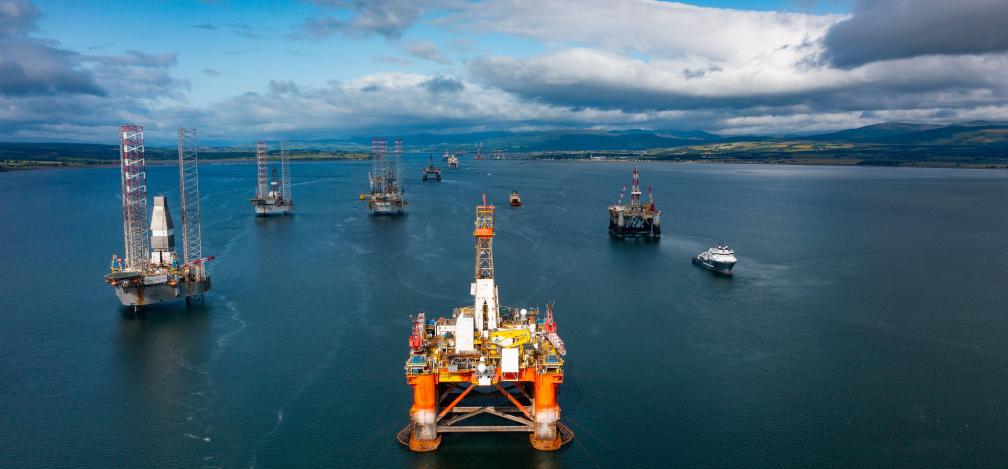
What are Jackdaw and Rosebank, and what position has the government taken on North Sea licences?

Read our explainer
Oil rig North Sea

Rosebank is a very different decision

There have been two readings of the implications of the Jackdaw decision for the bigger one on the new oil field at Rosebank. One is that the secretary of state will be able to use similar rationales, and it would not be worth establishing the Energy Wealth Fund for Jackdaw alone. The other is that Miatta Fahnbulleh has been emphasising the differences – not least the lesser domestic security angle when it comes to oil versus gas, and she is rolling the pitch for a no. The key thing is that this is a separate, and quite different, decision which she needs to show she has taken on the merits.

The bigger issue is a credible net zero strategy

Jackdaw should not be a distraction from the much bigger issue of whether the government has a coherent strategy to get the UK off fossil fuels in the longer term. Jackdaw alone does not blow a hole in that strategy, but the strategy had numerous holes already and will look even more patchy if the government rolls back on some of its key levers to drive electrification. There are stories that the Boiler Upgrade scheme may be cut to pay for the uplift in defence spending and that the EV mandate may be watered down (and if getting inside Made in Europe means applying EU style tariffs to Chinese EVs that change may slow anyway).

The government has made a good case for why approving Jackdaw makes sense in the short term, but a plan for getting off fossil fuels that actually adds up when combined with concerns on energy security and affordability – and fits with a strategy to adapt to the climate change that is already baked in – is the real issue. That needs to be the secretary of state’s next priority.

Political party
Labour
Administration
Burnham government
Publisher
Institute for Government

Related content

22 OCT 2026 Explainer

Jackdaw and Rosebank

What are Jackdaw and Rosebank, and what position has the government taken on North Sea licences?

29 MAY 2026 Explainer

The UK electricity market

How does the electricity market work, and how is the government seeking to change it?

29 MAY 2026 Explainer

Domestic energy bills

Rising bills have the biggest impact on lower-income households since price rises. So what is the government doing to lower energy bills?