Brexit at 10: Parliament
Much of the battle over what Brexit meant was fought out in parliament.

The Brexit years saw some of the most fraught exchanges in the Commons for a generation as parliament, and parliamentarians, struggled to work through an issue not aligned to political parties.
Parliamentarians had offered the decision on whether the UK should remain in or leave the EU to the people of the UK. The referendum bill itself passed third reading in late 2015 with a big majority – with Labour abstaining rather than oppose. Although most MPs in the 2015–17 parliament supported Remain, they recognised the supremacy of direct democracy (that is, a referendum) over representative democracy, and the need to honour the vote to leave. Very few opposed the bill allowing the government to serve notice to leave under Article 50 – a bill the government had tried to avoid introducing.
But despite that consensus on leaving, parliament struggled with the shift to an issue not aligned with political parties. On the positive side, Brexit catalysed new cross-party alliances. On the downside, parliament showed it was good at deciding what it did not want to see, but MPs – collectively – lacked the mechanisms or the capacity to make a positive decision on a Brexit that could command majority support. ‘Indicative votes’ showed that there was no outcome which a majority of MPs would back. Binary decision-making processes proved unsuited to debating options for exit and considering trade-offs.

Prime minister Theresa May makes a statement in Downing Street announcing a snap general election to be held on 8 June 2017.
Parliament takes centre stage
Theresa May had called her ill-fated June 2017 general election with the aim of giving herself a big enough parliamentary majority to enable her to command support for her version of Brexit. That did not happen. Instead, with authority weakened as she squandered David Cameron’s already small majority, she found herself a hostage to the Democratic Unionist Party and factions inside her party.
She was forced to concede a ‘meaningful vote’ on her Brexit deal – a requirement introduced by opponents of Brexit which ultimately became a weapon in the hands of Brexit hardliners. The shadow Brexit secretary, one Keir Starmer, unearthed the ‘humble address’ as means of forcing the government to disgorge unwelcome information (something that has come back to bite him as prime minister). MPs discovered that they could – with an accommodating Speaker – wrest control of the order paper from the government. It was a time of parliamentary innovation and imagination.
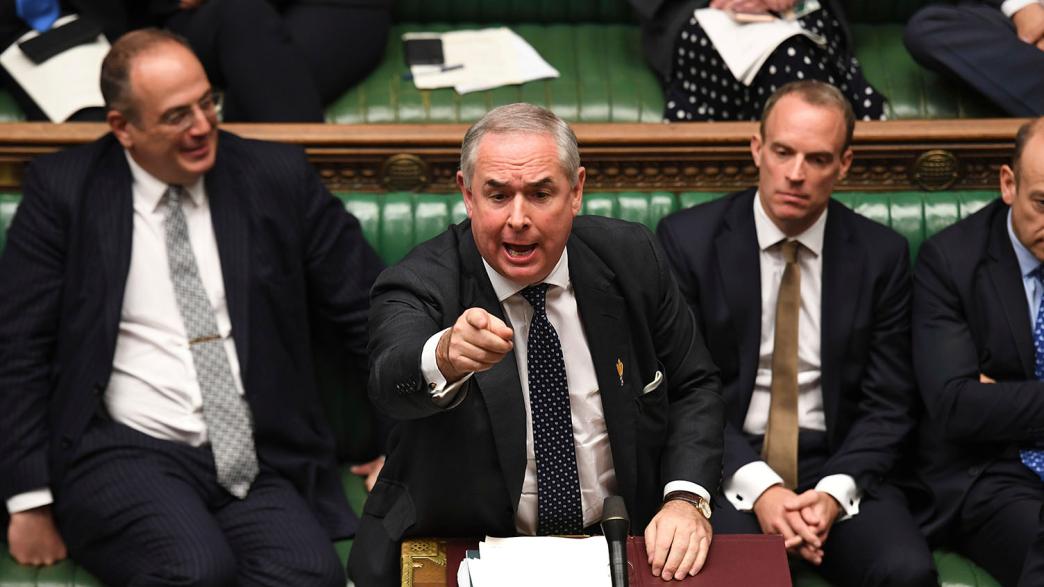
But the inability of parliament to deliver an acceptable Brexit undermined its legitimacy in the eyes of some. May herself was sufficiently frustrated to lash out against a parliament whose refusal to back her deal and potentially overturn Brexit risked “causing potentially irreparable damage to public trust – not just in this generation of politicians, but to our entire democratic process”. 7 Prime Minister's Office, 10 Downing Street and The Rt Hon Theresa May, PM statement on Brexit: 20 March 2019, GOV.UK, 20 march 2019, www.gov.uk/government/speeches/pm-statement-on-brexit-20-march-2019 That view was echoed a few months later by Boris Johnson’s attorney general, Geoffrey Cox, as he railed against a “dead” parliament. 8 UK Parliament, Legal Advice: Prorogation, 25 September 2019, https://hansard.parliament.uk/commons/2019-09-25/debates/F3541B98-D4E9-487F-BE17-D51C6EF870F2/LegalAdviceProrogation
Brexit at 10
To mark the 10th anniversary of the EU referendum, the IfG has reflected on how leaving the EU has changed UK government.
Explore the series
Parliament is sidelined
If the 2017–19 parliament saw the Commons take centre stage over Brexit, Johnson’s general election victory in December 2019 saw parliament to all intents and purposes exit stage right. It passed the withdrawal treaty and the new Trade and Cooperation Agreement in double quick time – the latter being allowed less than half a day of parliamentary time between Christmas Eve and New Year’s Eve (the EU parliament, in contrast, allowed only provisional application until they had a full vote in April 2021).
The temporary committee that had been established in 2016 to shadow the Brexit department and then morphed into the Future Relations Committee was disbanded – and successive governments have shown reluctance to give MPs a forum dedicated to scrutinising their handling of the EU relationship. Serious scrutiny has since been reserved to the Lords.

Under current arrangements MPs are likely to know less and less about how the EU operates over time.
But backbenchers have become more assertive internally
But there is one lasting parliamentary legacy of Brexit. During the turbulent years of 2017–19, the Conservatives European Research Group had a much more effective whipping operation than the government. The taste for effective backbench organising and pressure made Theresa May’s life a misery, but has also forced retreats by her successors with much bigger nominal majorities.
The Brexit years were dominated by Conservative infighting and cost at least two of five Conservative prime ministers their jobs. But Keir Starmer now also finds himself forced to govern like a minority as a generation of newly assertive backbenchers, on both sides of the house, show their willingness to rebel and organise against the wishes of the executive.
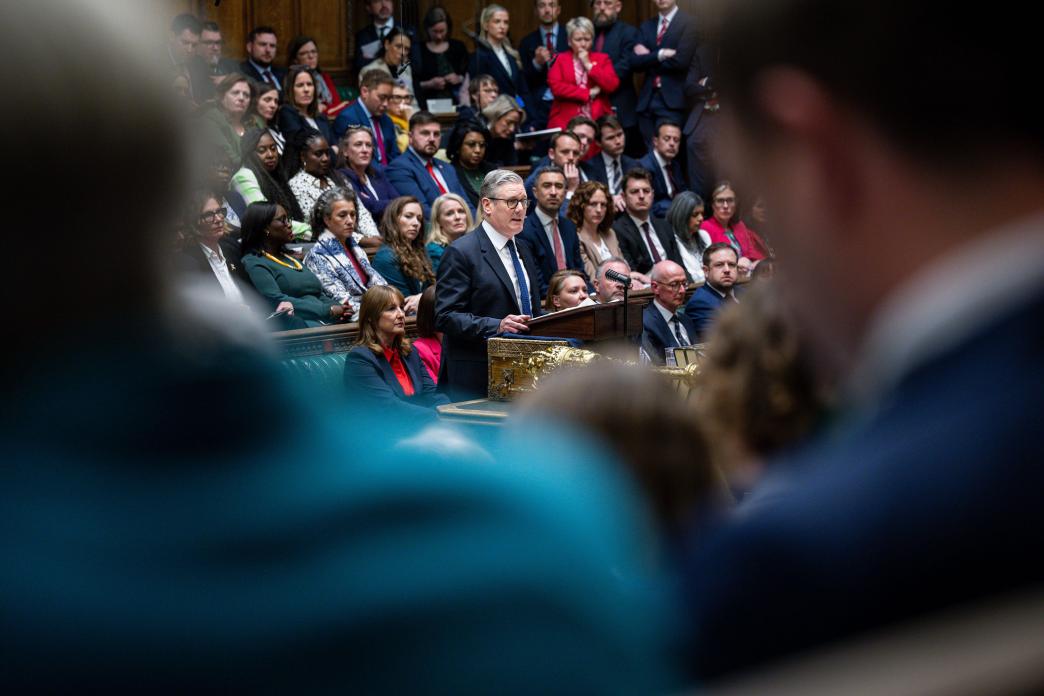
In the event, MPs did ‘take back control’ – not from the EU but from their own party leaders.