Brexit at 10: The Conservative Party
Brexit accelerated the Conservatives’ collision with long held tensions in its political coalition.

Henry Hill says this description allows one to acknowledge the deep and damaging divisions Brexit opened inside the party without indulging the forlorn fantasy that these could have been avoided indefinitely simply by not doing Brexit
The end of the Cameroon order
Cameron certainly maximised the damage by holding a referendum in which the leadership backed the status quo; there is a difference between meeting a problem head-on and falling onto it head-first. His approach meant that pro-Leave forces never had to take responsibility for a particular vision of Brexit nor, in their defence, ever had the opportunity to try and deliver it as a majority government. It would have been better for both party and country had the Tories eventually sought a mandate to leave under a leader who wanted to.
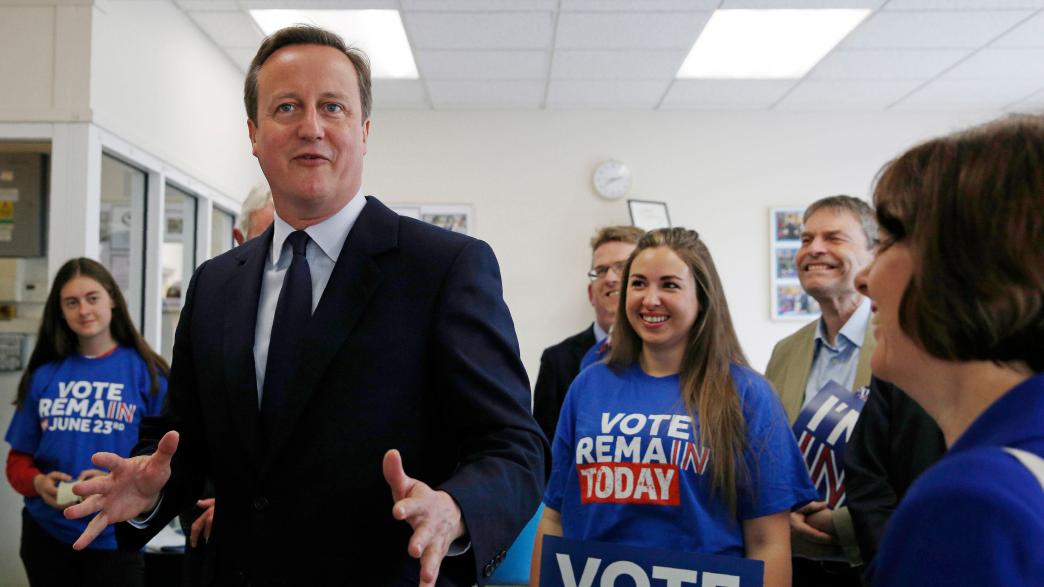
But retrospect makes obvious the doomed character of the Cameroon order. On all the significant issues which have divided the Conservatives since 2016, its method consisted simply of saying one thing and doing another: constantly striking Eurosceptic postures without wanting to leave; repeatedly pledging to slash net immigration and replace the Human Rights Act and making no attempt to do either. Such politics offers no long-term victory condition.
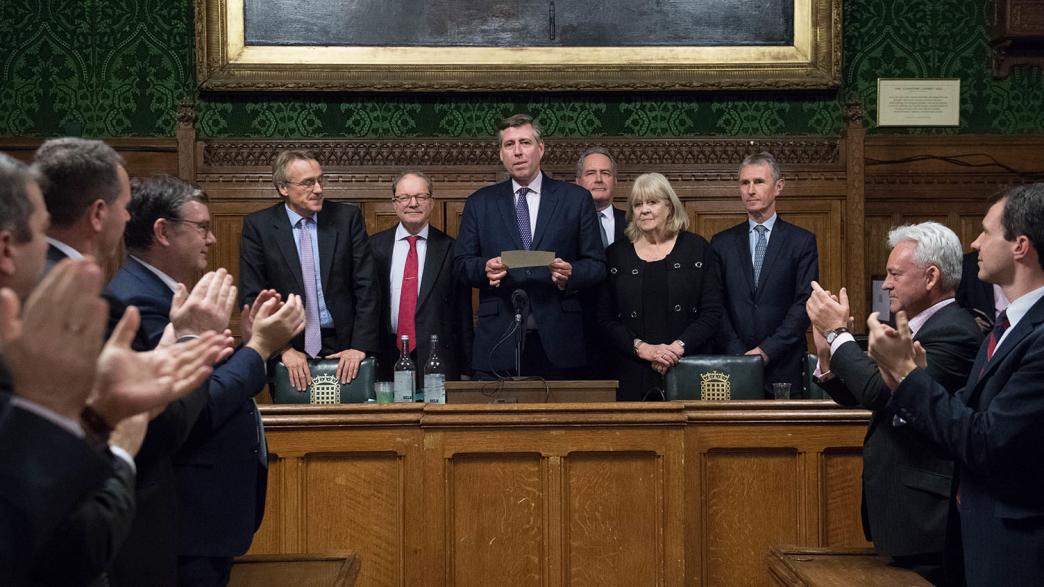
That is not to say the other wing of the party was armed with a coherent agenda; we are talking after all about Boris Johnson and Priti Patel, who decided that what Brexit voters really wanted was an extravagantly liberal immigration regime. It is unusual to have an existential political battle waged between two sides, neither of which have their intellectual affairs in order – unless, as in this case, that battle is stumbled into by accident, by a prime minister who didn’t take seriously the prospect of losing it.

Then home secretary Priti Patel visiting the docks in Dover after a fact finding mission onboard Border Force boat.
The worst of all worlds
The result of all this has been the worst of all worlds. The party alienated a significant section of its pre-2016 coalition and then of its 2019 coalition, in neither case in service to any positive vision. There has been plenty of division, but ironically not enough division to actually solve anything. Kemi Badenoch secured the leadership by positioning herself as the alternative to a long-overdue ideological row the party urgently needed, and has since had to try and half-inch the Tories towards new positions on things such as the ECHR in a manner which allowed Reform UK to seize first the initiative and then first place in the polls.
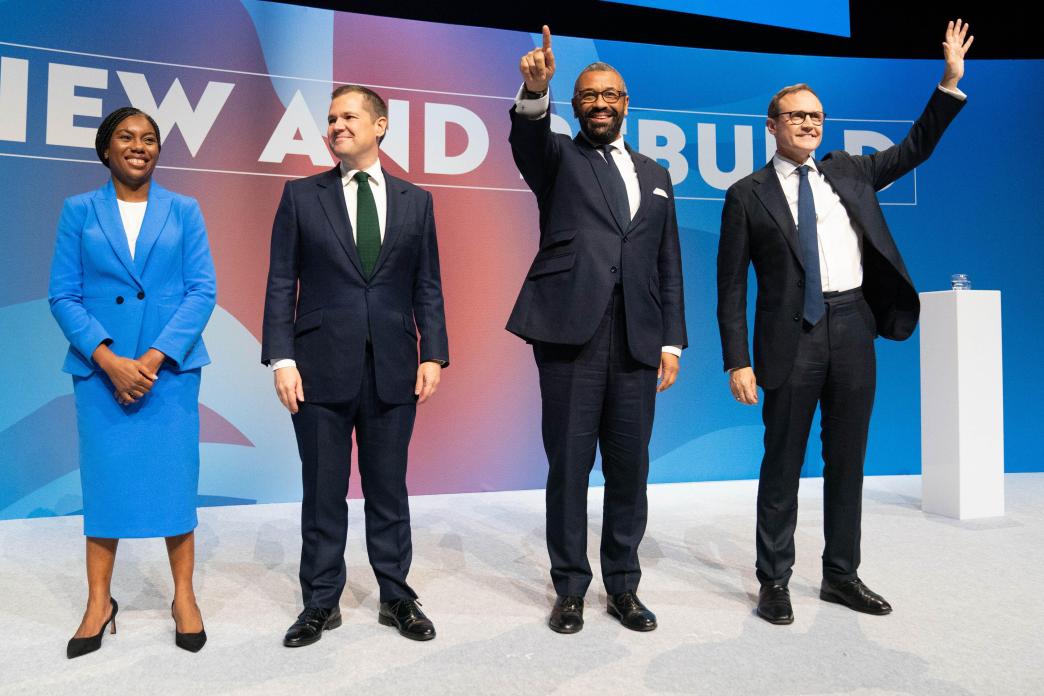
On the question of Brexit itself, the Conservative Party is no longer meaningfully divided, because most of those Tories who were most committed to Remain, let alone Rejoin, have left and, much as ‘Never Trump’ Republicans are a species of Democrat who can’t yet admit it, are on an exit trajectory from the Tory fold. Rejoining the EU will now play for some the role that it played for Brexiteers before we left – a road-not-taken universal palliative that allows one to ignore the extremely painful choices waiting at the bottom of this country’s economic problems – but that case is not remotely suasive enough to take the bulk of the party back across the Rubicon.
They will likely be followed in due course by others on the leftward flank of the current party as the realignment of the British Right continues to take its course on issues such as immigration, the ECHR, and the issue that combines both: how to handle Reform UK. Some MPs on the party left envision the Tories serving as part of a cordon sanitaire, with Labour and whoever else, to keep Nigel Farage out of power; such illusions will not survive a parliament which puts them to the test. (Although we should acknowledge the slight possibility that they somehow win internal control of the party, most of which then eventually defects rightwards, and the Conservatives end up a trivial party of the centre-centre-right, finally fulfilling David Owen’s very specific vision for what the SDP might have been.)

Boris Johnson in the House of Commons.
The Conservative Party does not hold the keys to its own future
What the future holds for the Conservative Party depends a lot on factors outside its control, most obviously Reform UK’s performance. Current Tory polling would be sufficient, if maintained, to keep the party alive; but contra the rather complacent assumptions of some of its MPs, there is no obvious or automatic path back to being the hegemonic party of the Right, and certainly not to that hegemony being based on yesterday’s definition of ‘sensible’ politics.
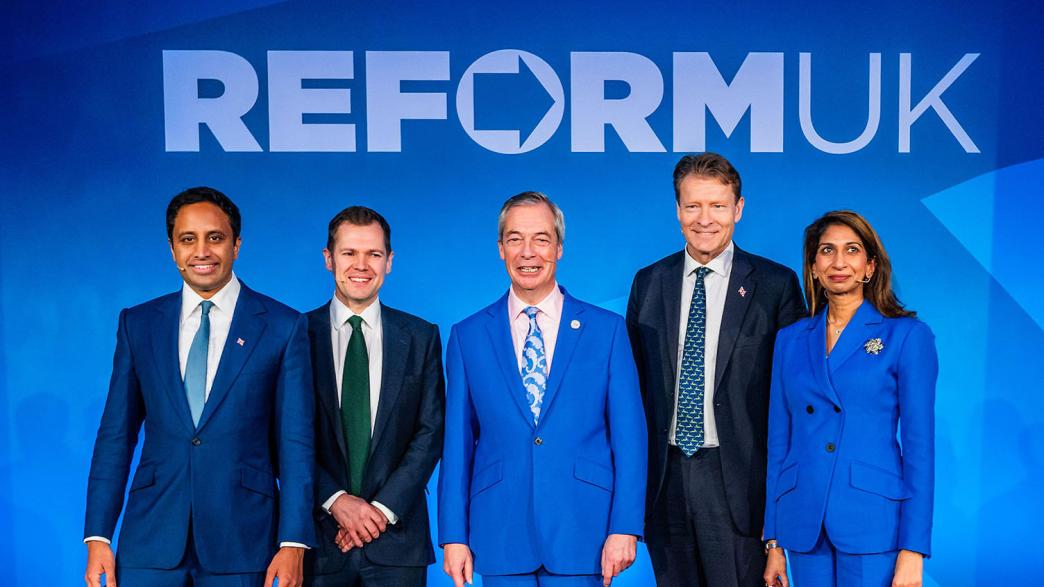
At present, then, the question is whether or not the eventual settlement on the Right ends up most closely resembling that of New Zealand (separate parties which typically ally post-election), Australia (a permanently-constituted multi-party alliance), or Canada (a full merger), and the relative strength of each party when that deal is struck. A change in the voting system – again, entirely beyond the party’s control – would also dramatically change this picture.
None of that has much to do with Brexit; that is, I suppose, the point. The 2016 vote wasn’t a bolt from the blue that destroyed the otherwise hale and viable coalition of the Cameroon Right, but a direct product of the cognitive dissonance (or perhaps, less charitably, lies) upon which that entire project was based.
A world in which Cameron ruled out any significant change on Europe and made the case for freedom of movement is simply a world in which he swiftly lost power in some other fashion. The right wing of the British electorate wants less immigration than freedom of movement produced and more deportations than the ECHR permits; the major party of the Right (whatever it ends up being) will reflect that, and was always going to.

Kemi Badenoch's shadow cabinet on the front benches of the House of Commons..
Brexit at 10
To mark the 10th anniversary of the EU referendum, the IfG has reflected on how leaving the EU has changed UK government.
Explore the series