Working to make government more effective

Comment

How to rebuild trust inside government after the Mandelson affair

The prime minister and senior civil servants must take urgent action to repair relations.

ir Keir Starmer listening to a response after giving a statement in the House of Commons, London, on security vetting.
Keir Starmer listens to a response after giving a statement in the House of Commons on security vetting. Photo credit: House of Commons.

Fallout from the Mandelson scandal has caused serious damage to the relationship between ministers and civil servants. Alex Thomas and Hannah Keenan set out what needs to happen to fix it

The actions of the prime minister and No.10 over the past week have unnecessarily harmed an already bruised relationship between ministers and civil servants. On finding out that the Foreign Office had – in Keir Starmer’s understanding – not informed him about Peter Mandelson’s ‘failed’ vetting, the prime minister took the worst approach available to him. He sacked Sir Olly Robbins in haste, and will repent at such leisure as is granted to him by Labour MPs.

But once the Mandelson scandal is over, the shadow it has cast on the relationship between ministers and civil servants will remain. Given the serious questions about how Robbins was able to be so rapidly dismissed without process or a fair hearing, former officials have called for him to be reinstated. That will not happen, and those calls risk entrenching the growing sense of ‘us-and-them’ between civil servants and ministers. It is imperative now to focus on what ministers and civil servants need to do to repair the damage.

The Mandelson vetting blame-game is causing serious damage to ministerial-civil service relations

The sacking of Olly Robbins has been badly handled by Keir Starmer.

Read the comment
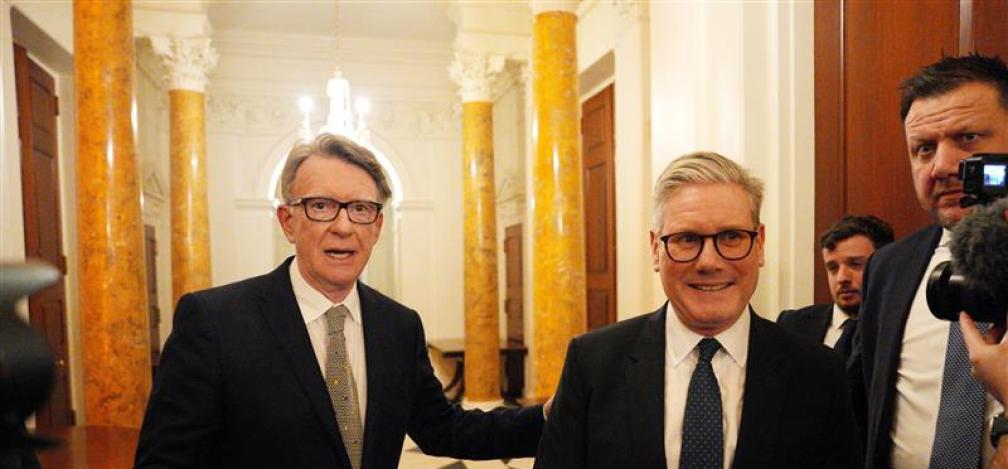
Keir Starmer and Peter Mandelson.

Confused accountabilities need to be addressed to reset relations between ministers and officials

The Starmer-Robbins mess is a manifestation of the problem we identified in 2022, that

“ill-defined accountability within the service and between ministers and senior officials is damaging the relationship between elected politicians and the administrators who serve them. Each group blames the other for the problems of UK government, ultimately to the detriment of the public.”

Ministers and civil servants exist in a haze of unclear responsibilities and slippery accountability. Ministers are in theory accountable to parliament, and civil servants to ministers, but who actually does what is a muddled mess. There is no clear articulation of the definition, purpose, remit or standing of the civil service. Nobody, including the cabinet secretary, has the executive authority to directly manage the institution, and the governance of the civil service itself is thin and internally focused, undermining the confidence and legitimacy of the institution.

The Mandelson affair should be a prompt to re-examine all of this. There is an opportunity to be much clearer about those responsibilities that should sit with the civil service – meeting proper standards of finance and procurement, project management, legal advice, all the work that adds up to the capability of the state to deliver for a government – and those that sit with ministers, on policy decision-making and setting direction. Of course there is a complex interaction between the policy a government pursues and its capacity to deliver it. But in resolving a complex relationship, clarity and precision is needed rather than confusion and ambiguity.

Watch our webinar on the Mandelson scandal

Caricatures obscure a proper diagnosis about what has gone wrong

Addressing the underpinning structural problem is a necessary but not sufficient condition. Too many ministers – including it seems the prime minister – have lost confidence in the civil service. That is not unique to this government, and the relationship has been on a downward spiral since 2016. 

But instead of a proper diagnosis of the problem, discussion reverts to caricature. The response to a broad and generalised frustration with the ‘system’ metastasises into paranoia about the ‘blob’. In this view the civil service is either intentionally undermining the will of politicians or – as an unwieldy and incompetent bureaucracy – is just unable to deliver. Another error is to focus too much on individuals. If only a particular person was sacked, or could be brought in to fix something, then all would be well.

Individual leaders matter, and systemic inertia certainly exists. But these quick mental shortcuts have become more troublesome than helpful. They put ministers and civil servants in superficial boxes and set the two tribes against each other. Everyone working in government needs to recognise that success comes from working together to solve difficult problems in an environment of trust, and that getting to that point requires a more accurate diagnosis about what has gone wrong and why trust has been lost.    It is time to break the negative spiral of blame and to build a positive feedback loop where problems get solved when colleagues have clear responsibilities that enable them to work effectively together.

Starmer vs Robbins: Why the Mandelson row keeps getting worse

Former Foreign Office permanent secretary Peter Ricketts joins the team to work out where a week of blame and counter-blame has left the government.

Listen to the podcast
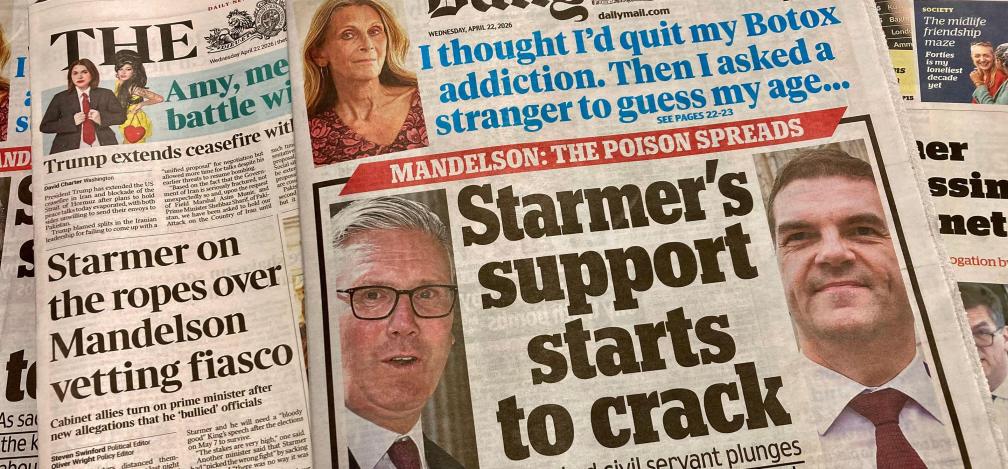
British Newspapers widely report Olly Robbins accuses No10 applying huge pressure to approve security vetting of Peter Mandelson during interrogation.

It is the job of the civil service to step up – even though the prime minister has made it harder

Before the Mandelson saga exploded again the government had been showing some signs that it understood and wanted to address this problem of trust. Darren Jones and Richard Hermer were making efforts to tackle ‘sludge’ in Whitehall – not through performative briefing but with a systematic exercise to identify what held civil servants back and frustrated ministers. The still-new cabinet secretary Antonia Romeo’s mission to make the civil service ‘curious’, and for officials to take pride in high performance, pointed towards a more confident civil service, as well as a more competent one.

There is no one big bang moment that can resolve a crisis of trust, and there will also of course always be tensions inside government. This is not a relationship that can simply be ‘fixed’. But as well as getting underpinning responsibilities and accountabilities right, and building trust through successful joint work, there are concrete steps to take straight away.

The civil service must change to address the challenges it faces, with improved performance management, better recruitment practices and a focus on professional skills. That should go alongside confidence in understanding ministers' goals – to then deliver creative, flexible solutions. Ministers must repay this by investing political capital in supporting reform and to work with the civil service to seek solutions together. This means consistent political backing for the real work of civil service reform, not frustrated lashing out when things go wrong.

It will seem difficult for some in the civil service to step up in an environment of tension and political turbulence. But that is their job. Each generation of civil servants needs to win the trust of each generation of ministers, and those ministers should in return work to strengthen that relationship. It is one of the many tragedies of the Mandelson affair that the prime minister has, not for the first time, sent the opposite message. 

Political party
Labour
Administration
Starmer government
Department
Number 10
Public figures
Keir Starmer
Publisher
Institute for Government

Related content