Brexit at 10: The Labour Party
Labour inherited a government machine still reeling in large part from the effects of Brexit.

Ten years on and the ruptures of Brexit remain unresolved for the Labour Party and for the country. Even before the prospect of rejoining the EU was sent back to the top of the political agenda, the long-term effects of Brexit on Britain were shaping the choices this Labour government faces, says Claire Ainsley
The failure of the leaders of the Leave campaign to translate the result into a comprehensive and lasting settlement that delivered on the promise of a stronger economy has left the UK much worse off than we were before. And the social fractures that were exposed by the result have only intensified.
For a Labour Party returned to government after 14 years, in no small part due to public dissatisfaction with the political chaos after the referendum, the most significant impact of Brexit has been to constrain its ability to achieve stronger economic growth. Studies estimate that Brexit has meant a 6–8% hit to GDP, 12–18% lower investment, and 3–4% lower employment and productivity. 4 Bloom N et al, The Economic Impact of Brexit, working paper, National Bureau of Economic Research, 2025, www.nber.org/papers/w34459 It was hardly as if the UK economy was in great shape before Brexit, with chronic underinvestment and lower productivity than our competitors.
The structural deficiencies of the UK economy with its geographical inequality, persistent poor productivity, and under-developed workforce are the backdrop to the travails of this Labour government. Of course there are legitimate political leadership questions being asked following the May 2026 local and devolved administration elections. But it is also the case that sluggish economic growth and exposure to global shocks means the choices facing this government are greatly constrained.
Labour is not enjoying the greater sovereignty promised
There is a bitter irony that Brexit was sold as giving national government greater sovereignty, yet its detrimental impact on growth has left the government with more limited room to enact an expansive political programme. Lower economic growth has meant lower tax receipts than there would have been had the UK remained in the EU, which is part of the reason why the government is faced with unenviable choices of cutting services or raising taxes, or both, which in turn dampen the prospects of growth.
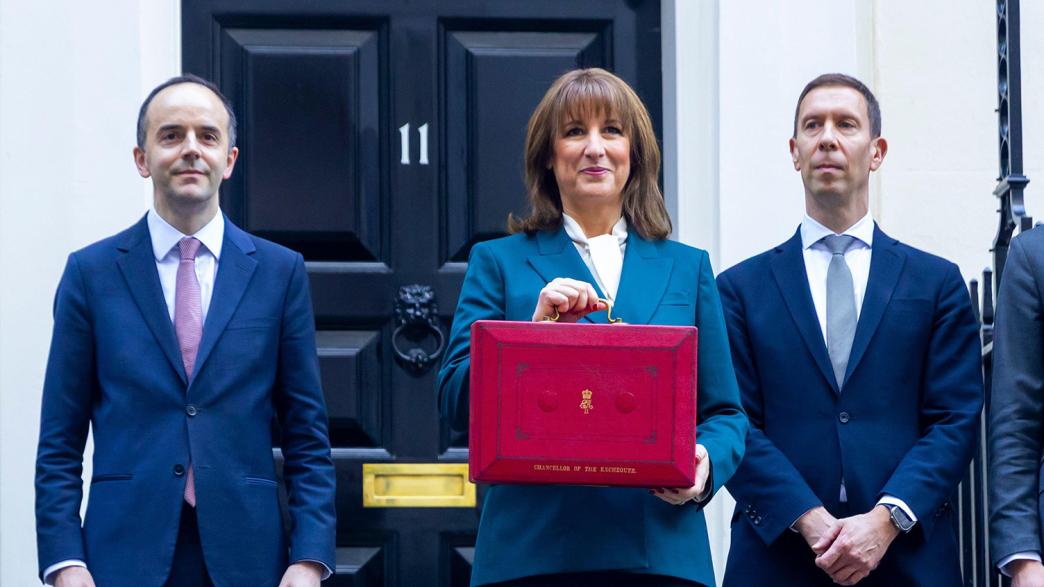
The attempts by the chancellor to restore fiscal stability in that context have had some success, with interest rates starting to come down, but the Middle East conflict now looks to threaten progress. It is the persistent lack of sustained economic growth, experienced in rising living standards and business confidence, that is shaping perceptions of the government more than anything – and acting as a drag on its ability to deliver change for the people who voted for it.
Despite the claims of the Leave proponents, Brexit has not suited the UK economy to greatly diverge from the EU and maximise the apparent benefits of Brexit because our economy was already so intertwined with the EU. The trade deals that have been done have been small change in comparison to the value of remaining a member of the EU. And the global insecurity of an unpredictable US, the Russian invasion of Ukraine, and Chinese expansion makes the case for the UK to reforge its European alliances for defence and economic security.
While the geopolitics and the economics nudge the UK closer to our European allies, it still does not present a straightforward long-term destination. A full-on ‘rejoin’ strategy would take more than one parliament, which cannot be assured given the domestic volatility, even if the EU was willing to contemplate it. A single market or customs union negotiation is not much nearer. A creeping alignment looks most likely for now, but progress is painstakingly slow with little yield.

What does Brexit mean for the future of this Labour government?
For Labour in government, this makes the business of creating a long-term destination for the country’s economy – which includes but is not limited to our relationship with the EU – even more complex. Pro-European sentiment, manifested in a pledge to re-enter the single market or customs union, or even rejoin the EU, could be a means to galvanise Remainers behind Labour. But even that is fraught with problems, and proponents have to answer how they would avoid perpetuating the idea that political parties promise things that can’t be delivered. There is, after all, no guarantee that the EU and the UK could reach a deal that would be acceptable to all sides and maintain domestic public support.
What of the 17 million people who voted to Leave the EU in 2016? Opinion polls suggest a sizeable chunk regret their vote, having seen its consequences. The referendum represented so much more than the UK’s relationship with the EU. It revealed the discontent that had gone overlooked, the places and people who felt that the status quo wasn’t working for them anymore. The Labour Party understood that they had to connect with their desire for change – as did Boris Johnson, whose ‘Levelling Up’ election slogan promised a domestic agenda to match getting ‘Brexit Done’.
Yet the domestic transformation to spread power and opportunity throughout the country was never seen through, and Brexit only made things worse for the regions and nations as well as for London and the South East. And advocating for rejoining the EU, the single market or the customs union doesn’t by itself answer how that transformation will be brought about for those people and places who are restless for change.
Labour in government has a window of opportunity to come good on the pledge of change that was promised in 2024 – of economic progress, controlled immigration and investment in public services. That is unlikely to come, at least in the short term, from its relationship with the EU, even if closer alignment plays a small role. It will come from asserting its sovereign national vision for our country’s future, which is perhaps what it was all about in the first place.
Brexit at 10
To mark the 10th anniversary of the EU referendum, the IfG has reflected on how leaving the EU has changed UK government.
Explore the series