Working to make government more effective

Report

How to improve the ministerial submissions system

The submissions system is outdated and dysfunctional. It needs a shake-up.

Someone carrying a ministerial red box.

How ministers make decisions matters. But the submissions system – their primary mechanism for doing so – is outdated and dysfunctional.

Current practices produce mountains of paperwork and waste inordinate amounts of officials’ and a ministers’ time. The standard submission format is inflexible, resulting in advice which is poorly tailored to the issue at hand. This all makes it harder for ministers to make well-informed decisions.

This report digs inside this system, examining its processes, strengths and weaknesses, and how it can be reformed.

Not all of the proposals are new, and indeed some will be familiar to ministers and private office officials. But in discussing both best practice and more creative options, this report sets out how the submissions system can improve. This includes:

  • Making delegations clearer
  • Improving commissioning
  • Shaking up the research and drafting stages
  • Streamlining processes
  • Modernising private office systems and practices
  • Supplementing written submissions where necessary

None of these changes would replace the submissions system. Written advice to ministers, and a written record of decisions, remain vital. But even simple improvements – and more consistent application of best practice – will improve the system and support minister to make better-informed decisions.

How to improve the ministerial submissions system

The submissions system is outdated and dysfunctional. It needs a shake-up.

Download
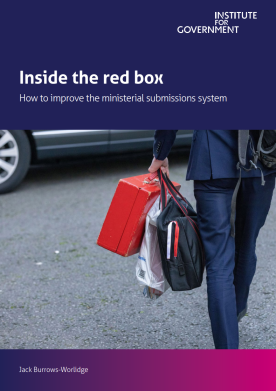
Front cover for an IfG report on ministerial submissions.
Keywords
Civil servants
Publisher
Institute for Government

Related content