A collaborative taskforce can help a government deliver its priorities
Andy Burnham and Louise Haigh have an uphill battle to overcome taskforce scepticism.
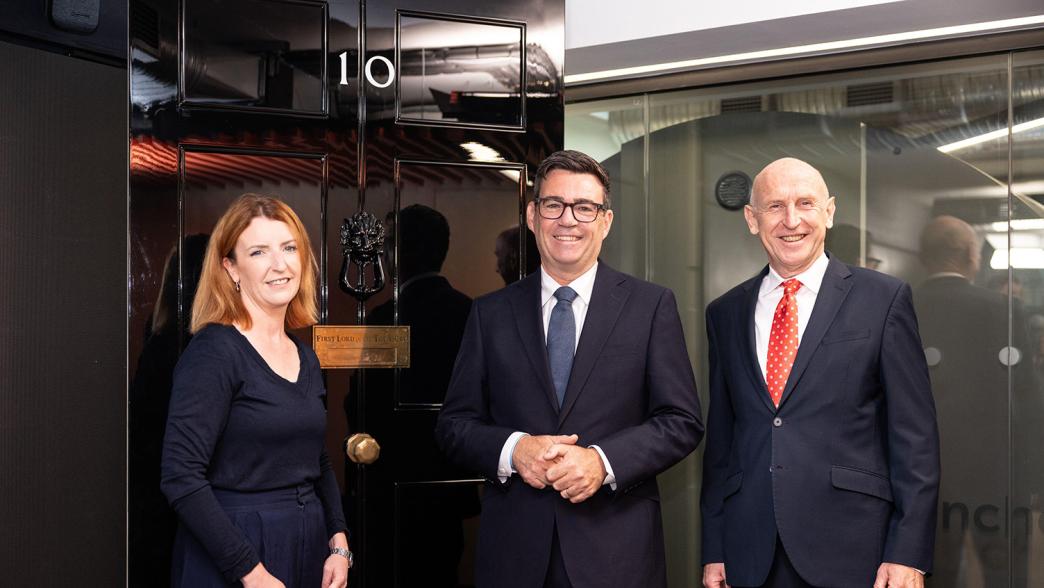
Taskforces come in many shapes and sizes. If Andy Burnham wants progress on his new priorities then he and Louise Haigh will need to show they can run these latest iterations collaboratively, says Hannah Keenan.
The prime minister has, in his first week back after recess, turned the government machine toward three priorities: the cost of living, public control, and community renewal. To make this happen, his first secretary of state, Louise Haigh, will be chairing three new taskforces – groups of officials in the new office of the prime minister and cabinet working across government to coordinate ministers and departments in these three areas. They will, claimed a government press release, “rewire the state”, come up with a "genuine plan to... rebuild Britain”, and address the “long term issues facing many families.” But government has, over many years, seen a proliferation of taskforce launches to much fanfare – and not all deliver on their promises. So how can Andy Burnham’s trio of taskforces succeed where many have fallen short?
There is no such thing as a taskforce
Taskforce is a slippery term. A taskforce usually refers to a group of officials housed in the centre of government (although often still technically working in their ‘home departments’), led by a high-ranking minister, and given a limited amount of time to coordinate work on a government priority for which no single department is responsible. But there is no formal designation – no single set of characteristics makes up a taskforce, no formal powers necessarily come with them, and, with no playbook on how to set one up, they are formed in many different ways.
Taskforces – in part because of that variation and in part because they are simply ways of organising people – are neither inherently good nor bad at getting stuff done in government. What matters for their effectiveness is how they are set up for the specific problems they are meant to be tackling.
There is real taskforce fatigue
Many officials – in particular, at the centre of government – are sceptical about another set of taskforces. This is because of a proliferation of taskforces recently that have felt confusing and frustrating to officials. That is usually for two reasons.
First is duplication at the centre. Officials working there are already coordinating departments and driving the prime minister’s priorities. Parts of that work will currently touch on bits of cost of living, public ownership, and community renewal. A badly designed taskforce parachutes a new group of people into the centre and, rather than building on or incorporating that existing work, layers their own new processes on top of it. The new Office for the Prime Minister and Cabinet (OPMC) is rightly trying to reduce that duplication.
Second is disempowerment. While ‘cost of living’ does not feel like one department’s job, there will be officials across government, not least the Treasury, who will have been doing deep work on parts of it. A badly designed taskforce risks using existing work only as an input to their own, or at worst brushing it aside or failing to seek it out in favour of starting afresh.
The new taskforces are a chance to show Burnham’s government can work differently
Despite any taskforce wariness, Haigh’s trio have the right base from which to succeed. They are housed in the centre of government, headed by a powerful first secretary of state, and are clearly priorities for Burnham. They are also cross-cutting, and not a priority for one single government department, so a central unit coordinating and driving work makes sense. Their launch is well timed, just as these policy agendas are being worked out. Previous research by the Institute has found that these are all necessary factors for a successful unit.
But further steps are needed to ensure success. The taskforces should each have a small, agile core team at the centre of government, and then co-opt people already working at the centre on adjacent issues to support the taskforce, without full repurposing those roles. For example, desk officers in OPMC who work closely with MHCLG should have a foot in the taskforce camp without having their existing work carved out or repeated. The taskforces will also need to empower those outside the centre as well as bringing in new voices and ideas. It is welcome that the government has said the taskforces will work across central and local government and with mayors, and Haigh now needs to set a culture of working openly and constructively with these leaders.
Even with the highest performing officials and the best intentions, taskforces can often slip into centralising, inward-looking, ways of work working. Each taskforce leader should therefore be actively asking how it feels for those working alongside or outside the taskforces, as well as for those in them. Or better yet appoint an insider-outsider chief of staff type figure across all three to do so.
Getting it right is an uncomfortable position for a new unit, and one which involves giving up some control and accepting a blurred line around some responsibilities. The trade-off, if managed well, is a taskforce that acts as a catalyst and amplifies other good work in government. Taskforce fatigue is understandable, but taskforces have the potential to bring energy and purpose to the heart of government.
- Topic
- Civil service
- Keywords
- Cabinet Civil servants
- Political party
- Labour
- Position
- Prime minister
- Administration
- Burnham government
- Department
- Number 10
- Public figures
- Louise Haigh Andy Burnham
- Publisher
- Institute for Government