Working to make government more effective

Comment

Northern Ireland’s “government in name only” is failing to deliver

Dominant parties in Northern Ireland don't seem to pay a price for their inability to deliver better outcomes.
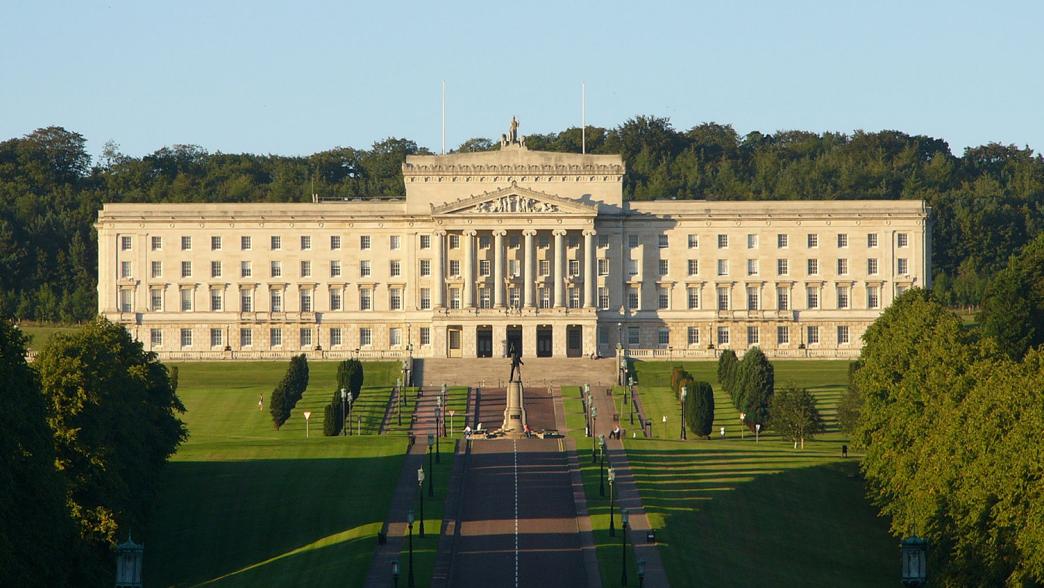
Stormont House
Stormont is the home of the Northern Ireland Assembly and Executive, but both government and parliament need to work better in Northern Ireland.

The budget stand-off between Stormont and Westminster and a deterioration in relationships between the DUP and Sinn Féin highlight that the restoration of the Executive was not enough to guarantee good government in Northern Ireland, writes Jill Rutter

The last Conservative government finally persuaded the DUP to re-establish the Executive in February 2024 – two years after it collapsed when the DUP withdrew over the implementation of the then Northern Ireland Protocol. Rishi Sunak had failed to persuade the DUP that the Windsor Framework was sufficient reason to return, and it took almost another year for the DUP to extract enough concessions to agree to go back in. 

Initially it looked as though relations between Sinn Féin First Minister Michelle O’Neill and deputy First Minster Emma Little-Pengelly were going well, as the new team launched with a spirit of optimism, common purpose and a willingness to get to grips with deep-seated policy problems. But initial progress has since stalled and relations have deteriorated to such an extent that the DUP are now refusing to join joint activities with the First Minister. This left Northern Ireland with no political representation at the prime minister’s recent National Economic Council with the leaders of the devolved governments. 

But a bigger problem is what Sam McBride of the Belfast Telegraph termed “government in name only” at our webinar on Northern Ireland. Decisions are not being made. The much poorer performance of the health service in Northern Ireland than in the other parts of the UK is still not being addressed, despite years of reports detailing how it needs to be rationalised. The NI Executive is rejecting the latest bail out offer from Westminster – and refuses to contemplate extra local revenue raising, preferring instead to look to UK taxpayers to underwrite them. They know the UK government usually blinks first and the moral hazard merry-go-round of failing to take tough decisions continues. 

There is a lack of accountability when voting is little affected by delivery 

In theory, Northern Ireland should have politicians capable of facing up to long-term decisions because power sharing means they face minimal electoral jeopardy. Indeed, identity voting reduces the electoral penalty for poor performance. But so far there is no evidence that the dominant parties pay a price for their inability to deliver better outcomes in Northern Ireland. 

Sinn Féin have benefited from Michelle O’Neill’s decision to stand with the citizens of the Garvaghy Road in opposition to the controversial Drumcree march, even if the DUP’s response has hamstrung the Executive. A recent LucidTalk poll put the party at an impressive 28 per cent, despite the other main nationalist party, the SDLP, being seen to have been making a good fist of Opposition. The incentives to play to the base will only increase as the next elections approach.

On the other hand, accountability may finally be catching up with the DUP, who are shedding votes to a reenergised UUP (who they displaced in the mid-2000s as the principal unionist party) on one side and to the even harder line TUV (Traditional Unionist Voice) on the other. That same poll showed the three unionist parties all in the lowish teens, with the UUP just edging ahead. Advocacy of Brexit, failure to deliver in government and the move from insurgent to party of government all seem to be catching up, and the battle over Assembly seats is hotting up for next May.

Andy Burnham’s Brexit reset should reduce the tension over the Windsor Framework

Any search for stability is also dependent on decisions in Westminster over relations wit the EU. The move for GB to dynamically align with EU sanitary and phytosanitary rules, expected to be signed off, should reduce the divergence between NI – still following most single market rules –and the rest of the UK. If Andy Burnham aims to go further when he sets out his options, the differences would diminish – though so too would any “best of both worlds” advantage. But if the Conservatives or Reform UK looked like approaching government, Northern Ireland would be forced yet again to address the consequences of a breakdown in UK-EU relations over their desire to leave the ECHR. It is far from clear any Executive could cope with those pressures. 

Northern Ireland needs its institutions to work better

The Good Friday Agreement set up institutions (with slight modifications since) designed for power-sharing arrangements, but both government and parliament need to work better in Northern Ireland. In our webinar, David Sterling, the former head of the Northern Ireland Civil Service, pointed to the possibility of the three smaller parties going into opposition when the next Executive is formed. Ann Watt explained what Pivotal, Northern Ireland’s independent policy think tank, would be looking at in their new project on possible reforms to make Stormont more effective. Andy Burnham has hinted the government is looking at that too. And Ulster University’s Deirdre Heenan asked (somewhat plaintively) what level of divergence in public service standards between different parts of the UK a responsible government in Westminster could really tolerate – a great issue to throw back at a prime minister whose big idea is devolution. 

Whatever his answer, Andy Burnham will, at least, face scrutiny for his decisions. For now, Northern Ireland’s politicians seem to keep getting away without making any.
 

Related content