John Healey’s speech: continuity is no crime
The summer’s Reeves to Healey switch was more continuity than change.
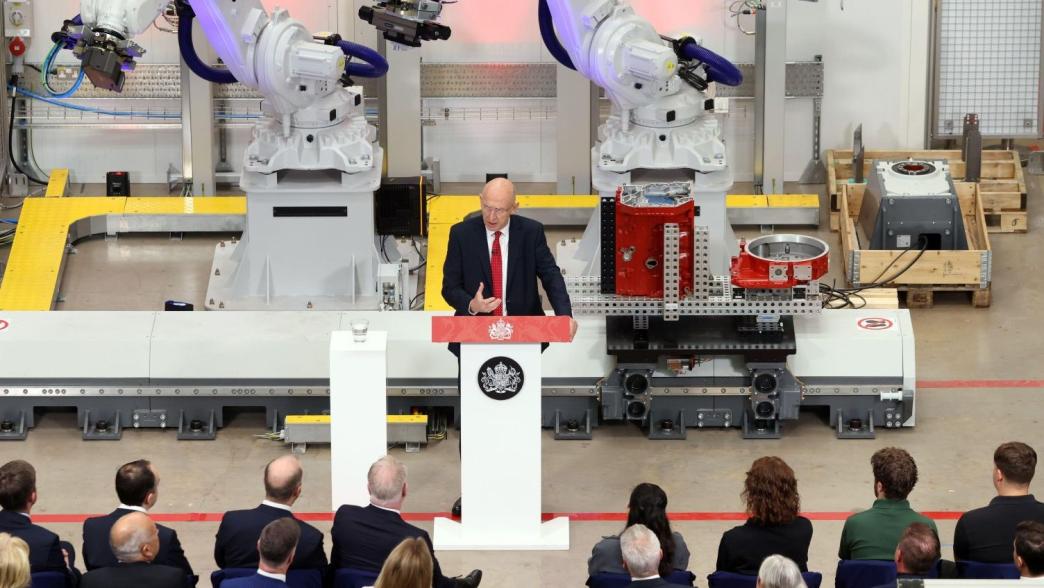
Judging by today’s speech the new chancellor is not a radical departure from the last. And that is not necessarily a bad thing, says Giles Wilkes
The past two decades have seen enough chancellor transitions to support a categorisation into two sorts: radical change and gentle evolution. In the first sits the shift from Alastair Darling to George Osborne in 2010, and to and from Kwasi Kwarteng in 2022. The rest were more continuity than change. And this includes this summer’s changing of the guard.
Yes, more of the same
John Healey’s speech on Monday has accordingly been damned as “more of the same” by opposition parties, no doubt confident that associating the new chancellor with Rachel Reeves will do him no favours.
But it was already apparent that Andy Burnham’s takeover from Keir Starmer represented a change of style and personnel more than a revolution in ideas. He accepts most of the constraints and choices that defined his predecessor’s time in office: 4 https://gileswilkes.substack.com/p/how-to-be-fresh-and-radical-when the need for fiscal rectitude, a refusal to touch the most electorally salient taxes, higher defence spending, support for Ukraine and a shift towards Europe.
Healey confirmed that this continuity extends to the basic diagnosis of what hampered growth over the past 15 years: weak investment, a lack of the necessary reforms to free business to innovate, regional underperformance, poor or mismatched skills.
We don’t need no (more) elucidation
Those hoping for a wholly new diagnosis are misguided. First, as we have argued at the Institute for Government, the problem of UK growth does not consist of some puzzle about the nature of the problem. Most of the above-mentioned chancellors have been on broadly the right track. A radical new assessment is the last thing we need.
Second, business audiences have been “treated” to more than enough Economy Vision Speeches since the pandemic. It is less than five years since Rishi Sunak gave his Mais lecture (“People, Capital and Ideas”), four since Jeremy Hunt unveiled “The Four E’s”, three since the first Mais of Reeves (“Stability, Investment and Reform”), and a mere six months since her second. Nobody is demanding another.
Reeves believed, a little more than her Conservative predecessors, that the state can actively help to fix the broad ailments identified by chancellors of all kinds. She felt this power was limited by the willingness of bond markets to grant the necessary resources, but tweaked her fiscal rules to create room for more public investment. The government thought regulation had become burdensome (albeit it had little idea what being more growth-friendly meant, beyond a curtailment of administration). Healey goes along with all of this and is right to. Continuity is therefore no bad thing, and business sentiment would not benefit one jot from a more longwinded statement of what Healey-ism means, a mere fifty days into the job.
Doing the same better
That does not mean there was no point or substance to the speech at all. If the Starmer government’s broad diagnosis was basically fine, it never satisfactorily demonstrated what it meant to choose growth above other considerations; the former PM himself appeared averse to taking a lead on the choices this involved. What is needed now are signs of how Burnham’s team will deliver the government agenda more convincingly.
Healey provided some helpful indications. He wants investment impeded less by Whitehall rules and took aim at “habitual, box-ticking consultation” and nervousness about the risk of judicial challenge. Consultation is too often a first resort for the indecisive, rather than a procedural requirement. He has also tweaked the calculations deployed in the Green Book to evaluate spending, with a lower discount rate hopefully tilting the case towards long-lasting investments. There will also be something he called “economic potential analysis”, which sounds very like a willingness to be generous when assessing the possibility of positive, dynamic change.
These changes are not guaranteed to work. Consultation and judicial review may be impediments but are also helpful guardrails against arbitrary, badly-thought-through ideas. One person’s economic potential is another’s optimism bias. But the government promised a tilt towards action, and these measures should help with that.
Healey has also indicated progress on the PM’s signature ambition: greater devolution. One of Rachel Reeves’s last big announcements was a plan to produce a Fiscal Devolution Roadmap. Healey has now promised one at the budget this autumn. The suspicion is that this will be a more ambitious effort than whatever might have been extracted from the Treasury before. His argument is that putting power and resources with local leaders will be a boon for private investment, unlocking activity that Whitehall can’t. At present, this is a theory more than a fact, but again such risk-taking is what those demanding a fresh tilt at growth should welcome.
Missing parts
Some absences are worth noting. The chancellor had nothing to say about flagging economic dynamism: job moves, business growth, entry and exit are the best way to shift an economy to a more productive place, and these have slowed markedly. Trade and Brexit gained barely a mention, likewise skills. We are still in the dark about the Treasury’s real attitude towards industrial strategy – the term only came up alongside the word “local”. The current attempt is surely too large to be neglected or dropped, covering forty-or-so industries and about a fifth of the economy. Immigration was also entirely overlooked, as was tax reform. As a new IfG paper out today argues, a clearer steer on the chancellor’s approach to a tax – through a tax strategy – is critical to provide greater certainty and avoid the problems that afflicted Rachel Reeves’ budgets.
However, having wearily audited a half-dozen government growth visions since Covid, we cannot complain too loudly about a lack of a comprehensive strategy just yet. There is time enough for policy work to fill these gaps. If nothing else, Monday’s speech should reassure business that it ought not to expect any sudden, radical moves this autumn. In the meantime the chancellor’s overriding preoccupation must be to navigate what will be a difficult fiscal moment. Handling that well would be innovation enough, for now.
- Topic
- Public finances
- Keywords
- Budget
- Political party
- Labour Conservative
- Publisher
- Institute for Government