Working to make government more effective

Comment

Andy Burnham’s EU ‘reset’ deal highlights the problems of incrementalism

This prime minister has largely completed Keir Starmer’s EU legacy.
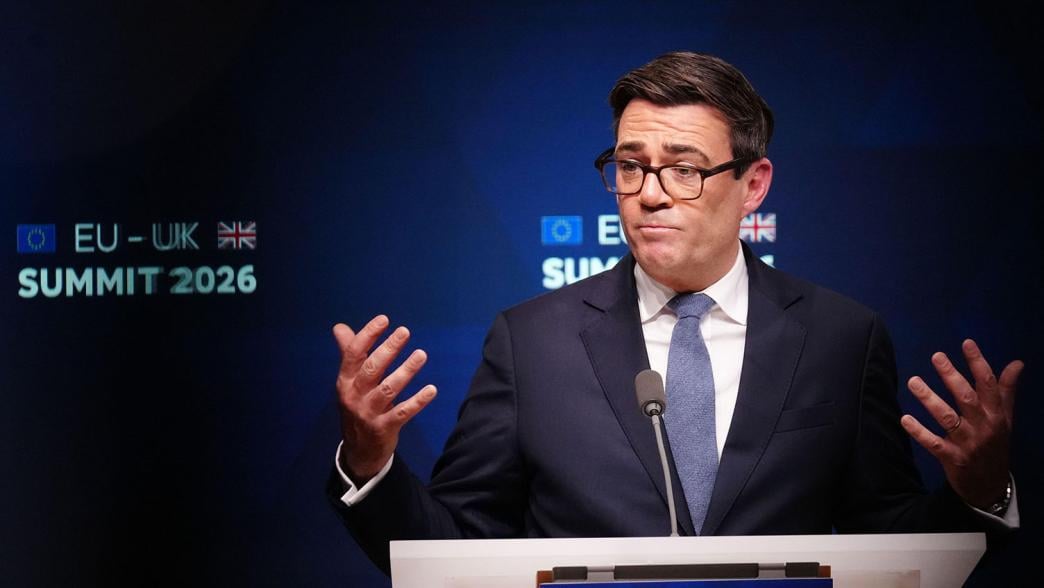
Britain's Prime Minister Andy Burnham addresses a media conference during the EU-UK Summit at the European Council building in Brussels
Prime Minister Andy Burnham addresses a media conference during the EU-UK Summit at the European Council building in Brussels.

Today’s summit on Brussels followed an agenda set by Keir Starmer, and one constrained by Labour red lines. But even these limited changes have reignited the Brexit debate, notes Jill Rutter, an outcome which may persuade the prime minister to be much less cautious than his predecessor

It may have been Andy Burnham’s cabinet lining up in Brussels today to shake hands with EU leaders, but this PM’s team have picked up the baton from Keir Starmer and his lead negotiator Nick Thomas-Symonds. Today’s “deals” mostly reflect the files opened at the UK-EU summit in May last year. The one which closed summarily at that summit, when the UK decided the price was too high to join the EU’s Security Action for Europe programme, has remain closed, but the UK announced last December that it would reassociate for one year with the EU’s Erasmus+ programme. 

Since then, negotiations have focussed on easing life for most agri-food exporters, through an agreement to “dynamically align” UK sanitary and phytosanitary laws with the EU, removing the need for checks at the EU border which have seen UK exports decline very substantially since Brexit. The UK will also link its emissions trading scheme (ETS) with the EU’s, allowing UK exporters to avoid the bureaucracy and costs of the EU’s Carbon Border. And there will be a new Youth Experience Scheme (YES) which will allow up to 100,000 young EU citizens (aged 18-31) to work or study in the UK every year for a maximum of three years – with the same number of young Brits able to move to individual EU countries. The prime minister explicitly lauded this scheme as bringing hope to a generation that policy-makers had neglected (and who, by implication, were victims of a Brexit vote they could not participate in). 

None of these “deals” come into force yet. The language on both agreements is that “negotiations have been concluded”, and that the agreements aim to be applied in 2028. The precise language speaks of “looking forward to the conclusion of these agreements (SPS and ETS) along with the Youth Experience Scheme”.  

Opponents are arguing that these breach the UK’s red lines by effectively moving us inside the single market for agricultural goods, that the UK has become a rule taker by accepting the EU design of emissions trading, and that the YES is tantamount to freedom of movement through the backdoor. However, the UK parliament could still decide not to accept new EU rules (though at the price that access newly gained would be lost) and the YES is a souped up version of working holiday schemes that the UK already has with nations like Australia, Canada and South Korea. Indeed, the EU could say that 100,000 is proportionally very low compared to Australia’s 45,000 annual quota. The big concession will come when/if the UK discounts tuition fees for EU students at UK universities – something not conceded to any of these other countries. That remains to be negotiated within the next six months. The language in the joint statement avoids pegging agreement to charging domestic fees and it remains to be seen whether the EU will settle for less.

Burnham’s Brexit Mission: From Brussels with Love?

The FT’s Stephen Bush joins the podcast team to discuss a big week on the international stage for the prime minister.

Listen to the podcast
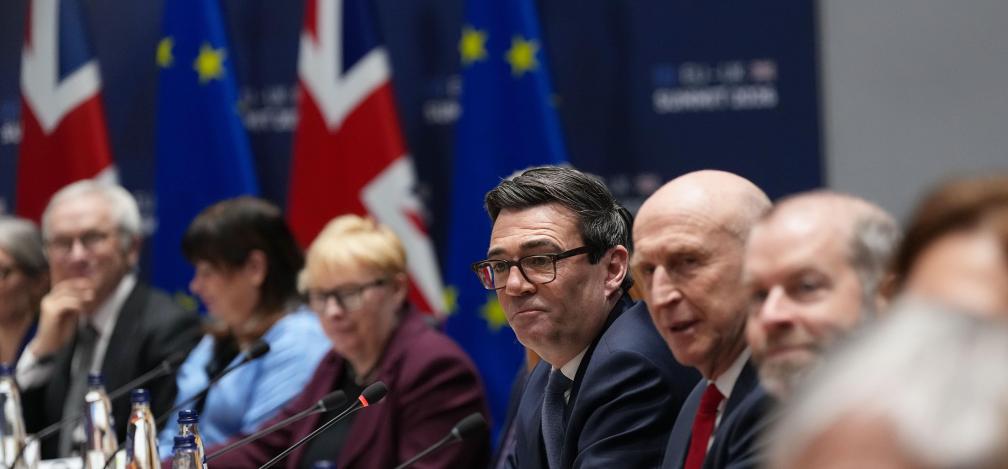
Britain's Prime Minister Andy Burnham, center, speaks during a plenary session during the EU-UK Summit in Brussels

Attention is now shifting to Made in Europe

But one of the major focus points in the negotiations was not on the table last year. Since Keir Starmer launched his reset, the EU’s “Made in Europe” agenda – designed to protect the EU’s industrial base from Chinese incursions – risked leaving the UK outside the EU’s procurement and subsidy wall and excluded from critical supply chains. The EU itself has been divided on whether Europe for these purposes includes the UK (and other friendly countries such as Canada, Japan and South Korea) or whether Europe should be interpreted more narrowly to comprise only single market members. 

The final joint statement contains a lot of commitments to work together in “a partnership for economic resilience” with a “Dialogue on Economic Security” (their caps) and to cooperate in managing critical supply chains. There is no explicit reference to the UK coordinating external tariffs – but quite a lot of implication that the UK needs to avoid becoming a backdoor to allow other countries to avoid EU controls.

We don’t know how Andy Burnham will manage the future EU options debate 

The UK government is going to move swiftly into action on getting the necessary legislation to allow the SPS and ETS deals to be implemented onto the statute book, with Burnham suggesting that job will be done this parliament when the agreements are completed. He then proposed “brainstorming” future options with the EU before the next summit, around this time next year – though quite how much time or inclination the EU has for that in the aftermath of a series of difficult election results in Spain, France and Poland remains to be seen.  

The 10 year plan, due this side of Christmas, may reveal more about what Burnham wants to say to the British public about his thinking on future options. The risk for the prime minister is the vacuum he has created is being filled by his critics who are already weaponising elements of these deals to argue that “control” is being handed back to Brussels. But it may make him think that if these limited moves trigger such a reaction, he might as well try to move further, faster after an election.

The UK and the European Union: What is the current relationship?

The UK-EU summit on 20 November 2026 concluded some new agreements between the UK and EU.

Read our explainer
Union Jack and EU flags waving outside the Palace of Westminster
Political party
Labour
Administration
Burnham government
Publisher
Institute for Government

Related content