Jeremy Hunt
Jeremy Hunt reflects on his time in government for the Institute for Government’s Ministers Reflect project.
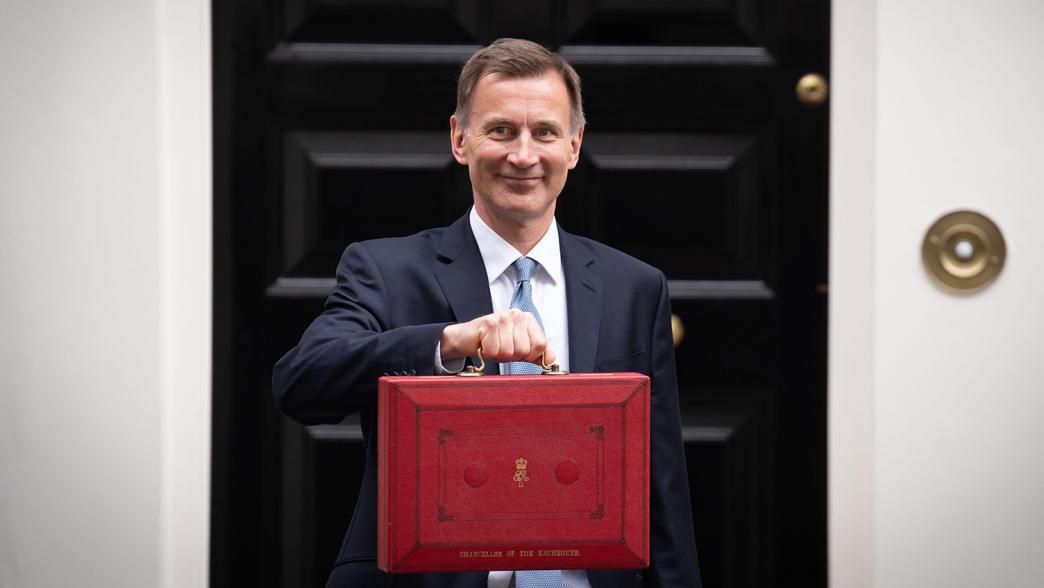
Jeremy Hunt served in cabinet between 2010 and 2019, including six years as health secretary (2012–18). He returned to government in 2022 and served as chancellor of the exchequer until 2024. He has been the Conservative MP for Godalming and Ash, formerly South West Surrey, since 2005.
Hunt was interviewed for the Ministers Reflect project on two separate occasions. The first interview took place in January 2020. The second interview was conducted in June 2025.
Jeremy Hunt's 2025 interview on his time as chancellor
GT: You were appointed chancellor in October 2022 in the aftermath of the Liz Truss-Kwasi Kwarteng mini-budget. In those early days, how did you choose your priorities?
JH: I think the number one priority was stabilising the markets – you know, they were crashing around our ears. I was appointed on the Friday night and over the weekend we spent a lot of time thinking what we needed to do to reassure the markets on Monday morning that we were taking the necessary measures to bring back fiscal and economic stability. So that kind of eclipsed everything.
There was a broader challenge that we had as well, which is that we knew that one of the reasons that the markets had taken umbrage was the lack of an OBR [Office for Budget Responsibility] costed autumn statement, and so we knew we had to do one – and we knew that that was going to require filling a £72 billion black hole, which was going to involve some very, very difficult decisions on both tax and spending. As soon as we realised – I guess by the end of Monday or Tuesday – that the markets were stable then our thinking started moving very quickly to that second challenge.
“the number one priority was stabilising the markets – you know, they were crashing around our ears”
GT: More generally, what was it like coming into government at that moment?
JH: Well, I actually do write about this in my book, but I think it helped that I had been a minister before. I will never forget the first meeting I had in the chancellor’s office in the Treasury, which was probably about six o’clock on the Friday evening. And you know, there’s a big table in that office and there were probably about 14 of the top civil servants from the Treasury there, led by the permanent secretary James Bowler, and that was their first chance to size me up, really.
My default is that you trust people until they prove you wrong, and this proved to be a completely trustworthy group of people – very smart. And what I really liked about them was that they were not afraid to say what they really thought and so we could have very open discussions. I’d say what I thought, they would give me their instant reaction – it was a proper discussion.
I think that I probably had to earn that trust because prior to me, literally a week earlier, Tom Scholar [Treasury permanent secretary, 2016–22] had been sacked by Liz Truss. And I suspect, with the benefit of hindsight, that one of the reasons that the mini-budget went so badly wrong was because officials didn’t want to tell Kwasi Kwarteng if they thought that elements of it were a bad idea, because their boss had just been sacked, and so, you know, there was a kind of nervousness there.
“what I really liked about them was that they were not afraid to say what they really thought and so we could have very open discussions.”
So I needed to establish a working relationship of trust, and the first thing I said to them was “we’re going to do what’s right for the country, even if it means that I’m a Ken Clark chancellor who bequeaths a healthy growing economy to his political opponents – we have to do the right thing for the country”. And I hope that contributed to the trust that built between us.
GT: You emphasised there that they felt able to tell you what they thought and to be quite frank – was that different from what you found as a minister at other points in your career?
JH: I think this is an essential part of our constitution, because ministers are generalists, and civil servants are specialists and they have the institutional knowledge. I had never had an economics portfolio as a minister before – my only background in the area was having set up and run my own business before I went into politics. So the system depends on civil servants being able to talk really openly to ministers about things that they know have worked in the past and things that they know have failed in the past. And as a minister, you have to have the confidence to listen.
I found Treasury officials brilliant at that, but I would say it was equally important when I was foreign secretary and I was talking to people who were experts, for example on policy towards Iran. By the same merit you need to listen but also be able to challenge and have a good discussion, and then you generally get the right outcome.
GT: You stayed on as chancellor when Rishi Sunak became prime minister. What conversations did you have with him about how to get government back on track at that point?
JH: We had very similar instincts, and so we didn’t have very many conversations. I mean, he saw when he decided to appoint me as chancellor that I had successfully stabilised the markets, that I’d taken some very difficult decisions and I’d been able to restore confidence. And I think he felt it wasn’t time for another change.
But I think he chose to keep me because he broadly agreed with what I’d done and therefore was willing to be supportive, and I think he also knew that I would be a team player and that was very important for him.
I think when he became prime minister he was very interested in the decisions that we took with respect to the autumn statement, so that was put off for a month as one of the first decisions that we took. Initially, we thought we needed to present this to the country within a matter of days, but having restored confidence in the markets we were able to have a little bit of extra time, and I’m sure that made it a much better autumn statement. Of course, as a former chancellor he was very interested in some of the decisions that I was taking in that and we had, you know, very open discussions.
GT: You’ve sort of touched on this already, but how much agency did you feel you had as chancellor at that time given the constraints from financial markets?
JH: I had massive agency. Because, first of all, I didn’t have responsibility for the decisions that had got us into difficulty – so as far as everyone was concerned, I was identified as being part of the solution, not part of the problem. But because there was a proper crisis, that unlocked the opportunity to do many more radical things than it’s possible to do in normal times. Of course I had the prime minister, who I had to persuade – but in those early days I think our instincts were very, very similar.
“in a period when you’re tackling a crisis you have, curiously, a much freer hand”
So I think I had a lot of agency, actually. In fact, in the period that Liz Truss was still prime minister, in retrospect people said I was the most powerful man in the country and the most powerful chancellor that there had ever been for that short week – it’s maybe true! I wasn’t really thinking that way at the time – I was just trying to concentrate on the problems at hand.
I think, in a period when you’re tackling a crisis you have, curiously, a much freer hand. No one’s talking to you about the next election or opinion polls or interest groups who are making their case very strongly, and so I think I had quite a free hand.
GT: What would you point to as the more radical things you did at that point and why did you pick those?
JH: So the first thing that we had to do was make the decision as to whether to bridge the gap through tax or spend, and we did a combination of both. But I think probably on the spending side I introduced some pretty tight overall caps on government spending and they continue to this day. You know, it’s quite interesting how that was much criticised by Labour at the time as a return to austerity, but actually we see Rachel Reeves [chancellor of the exchequer, 2024–] pursuing exactly the same path now. And I think we’re having the wrong debate – we’re defining austerity as whether there are cuts to unprotected departments, whereas I think the real definition of austerity is whether there are cuts to the services that the public value. And you can avoid those cuts if you have an ambitious productivity programme, and that was what I was in the process of putting in place – I put it in place for the NHS but not for the rest of the public sector. So I think that was a pretty big decision because prior to that, Boris Johnson and indeed Liz Truss, had planned very generous increases in public spending.
Obviously then, on the tax side the most difficult decision I took was to extend the freeze on income tax thresholds, which was much criticised as a back-door tax – in a way it was, but probably it was the most effective way of raising tax revenues in a way that broadly people could live with, although it was by no means popular.
GT: Liz Truss was obviously very critical of Treasury orthodoxy when she was prime minister. What was the mood of the department when you came in? And you talked a bit about rebuilding bridges with officials – could you expand on that?
JH: I think the Treasury had lost a lot of confidence – partly from its most senior, and a very respected, civil servant being fired, but also because the government had just announced a budget that had unravelled, and that’s the Treasury’s patch. You know, patently things weren’t going well and we were having a market collapse, so I think there was a lot of nervousness in the Treasury about all those things going wrong in its territory. But it’s full of very smart, very committed public servants. And you know, I found it was really easy to have very open discussions about radical changes that I wanted to make or was considering making.
I would say that the bit that I thought was missing at the Treasury is that – because it’s responsible for these two fiscal events that by law we have to have every year – the beating heart of the Treasury is what you might call its accountancy function. There’s a really big tax department and a really big spending team. And, basically, making sure that tax and spending balance within the chancellor’s fiscal rules – that is the bread and butter of the organisation. But I always felt there wasn’t enough discussion about growth, about how you actually grow the size of the pie.
So I spent a lot of time on growth initiatives and, you know, there is a big team in the Treasury focused on that and they were excellent. And we did the Mansion House reforms [in July 2023], my plans to turn the UK into the world’s next Silicon Valley. You know, we had a whole autumn statement in 2023 with 110 different growth measures. So there’s a lot of willingness to do this, but it took the chancellor of the time to want to do it, and I always slightly felt the default would probably be to get back into the accountancy function with growth as something that’s nice to do if you can.
“I always felt there wasn’t enough discussion about growth, about how you actually grow the size of the pie.”
GT: How much ability did you feel you had to really shift that focus within the Treasury, and how much effort were you having to put it into that?
JH: It was not a problem to make sure that growth got enough focus when I was chancellor, because I was the boss. And I would say this is how I’m going to spend my day, we’re going to have meetings – as we did every week – on different aspects of the growth agenda. But what I didn’t do was permanently change the institutional focus so that it remained that way after I left – it’s still, I think, a matter for the priorities of individual chancellors. I think Rachel Reeves, in fairness, is very interested in growth and I’m sure they’re carrying on having lots of discussions about things like planning reform. But I think it should be as much part of the DNA of the Treasury as the tax and spend side.
GT: Shifting focus a little bit, how did your previous experience as a spending minister affect your approach in the Treasury?
JH: A lot. Because, you know, I pushed through long-term workforce plan for the NHS, which the Treasury had been blocking. I pushed through an NHS productivity programme, which was a commitment from the NHS to 2% annual productivity growth in return for £3.4 billion to overhaul their IT systems. I think I was a lot more interested in public service reform than previous chancellors, having worked in a spending ministry, so it definitely really helped me.
GT: And you also chaired several cabinet committees, including the quite wide-reaching Home Affairs Committee. How would you describe your leadership role in government along with Rishi Sunak and Oliver Dowden as chancellor of the Duchy of Lancaster?
JH: I don’t think those committees are much more than rubber-stamping exercises. They’re kind of a formality, but in practice, you know, certainly the person chairing had a very strong steer before the committee as to what No.10 wanted the outcome of the meeting to be. And so we did our best to deliver it.
“I think the chancellor is, after the prime minister, the most powerful position in Whitehall and I think I used that to the maximum.”
I think in a different way, a chancellor who is interested in government policy across the piece can have huge influence because the Treasury has so many levers. You know, I’ve always been a big believer in the need to reform welfare, and so I made that a big feature in my fiscal events and had numerous discussions with Mel Stride [work and pensions secretary, 2022–24] about that. I obviously had a long-standing interest in the NHS. I had an interest in our economic infrastructure, so I took a big interest in all the decisions around nuclear power and rail and road infrastructure. So I think the chancellor is, after the prime minister, the most powerful position in Whitehall and I think I used that to the maximum.
GT: There are obviously different hard powers that the Treasury has in ultimately having sign-off on where the money goes in one place or another. Were there also ‘soft power’ approaches that you took?
JH: I think most of your power does revolve around the decisions you can make over money and the chancellor is the only person in the government who, if there’s a need for £50 million for XYZ project, can find it. So that puts you in a very different position to every other cabinet minister, including the prime minister – the prime minister can’t just find £50 million, they have to go to the chancellor. So you do have a big influence, it’s absolutely true, through that chequebook.
Although obviously I used that power to the max, I don’t think it’s an optimal system. I think that in other countries, once their budget is agreed with the finance ministry, providing they live within that budget, they have much more autonomy. They can roll over in-year underspends and I think we would get more long-term decision making through our spending departments, if they had more autonomy.
The level of financial control where the Treasury, for example, would sign off on a capital project for a new hospital, even if it was in the Department of Health budget, it would still sign it off. Or a new road scheme which was within the Department for Transport’s budget, but it would still be signed off by the Treasury. That always felt to me like the kind of control that a finance department would have in a company that was in distress at risk of going bust, but not what you would do in a company that was prospering and going from strength to strength and planning for the long term. Obviously if you’re in a situation where there’s a crisis in public finances and the Treasury needs to show an interest in every penny that’s spent, then in that situation it’s understandable, but the Treasury has that power all the time in the UK. My worry about it is that, in the end, we don’t make decisions strategically.
“I think the micromanagement by the Treasury of small amounts, to hit a number at a fiscal event, mitigates against the kind of long-term reforms that a lot of our public services need.”
So I think what happens is that the Treasury’s overwhelming interest in, for example, the spending review that’s being discussed at the moment is to get to a number which is the envelope that the chancellor has put for public spending. The envelope’s been set and the chancellor needs to deliver that number when she stands up in parliament on Wednesday. So if you’re Yvette Cooper [home secretary, 2024–] arguing for the police budget, then in the end funding for the Police National Computer is something which no one’s going to notice if it’s cut – or in fact, more likely, delayed by two years. The Treasury gets its number, but the police continue to operate totally inefficiently. Now in the private sector, funding for that police IT system will be the top priority because the management is always ruthlessly focused on cost control, so they would want that funding in and then they would want to say ‘and then we’re going to employ fewer policemen at the end of the process’.
I didn’t think that that kind of strategic cost reduction discussion happens as much as it should in Whitehall. And that is because I think the micromanagement by the Treasury of small amounts, to hit a number at a fiscal event, mitigates against the kind of long-term reforms that a lot of our public services need.
GT: Thinking about fiscal events, you announced cuts to National Insurance contributions in the autumn statement 2023 and the March budget in 2024. How did you come to those decisions?
JH: I very firmly believe that if you look around the world, there is a link between lower taxes and higher economic growth. There’s a big debate in the economics community about whether it’s correlation or causation, and maybe the reason that Switzerland has lower taxes than us is because it’s grown faster than us. But I think that there is causation, for all sorts of reasons. And I felt that to get our growth rate up, we needed to bring down the tax burden – even though I was the person who put it up to pay down our Covid debt.
But because the economy was basically flat when I was making these decisions, I wanted to reduce tax in the way that was most beneficial to economic growth. And all the evidence was that the National Insurance cuts – well, the OBR said that the National Insurance cuts that I introduced would get the equivalent of 200,000 more people into work, because if you reduce the tax on work, people work more. And so I thought it was a good measure for labour supply, good for economic growth – that was recognised in the way the OBR scored those budgets.
If you’re going to do that and you don’t want public services to deteriorate, you have to accompany it with a very ambitious programme of public sector productivity and public sector reform. And that’s the other side to the coin.
But I also think that employees’ National Insurance is a pernicious tax. I mean, lots of taxes have problems, but that particular one is a very bad one, because one of the biggest cultural problems we have at the moment is too many people being signed onto welfare and being told they don’t have to look for a job. And taxing people on low incomes through the payroll is one of the things that creates a very negative incentive for people not to engage in the world of work.
GT: Did the pre-election context affect your decisions about announcing tax cuts at that point?
JH: Well, obviously we hoped for as much electoral benefit as possible. And Conservative Party experts were very happy with the choice of National Insurance because they thought it would be popular in ‘red wall’ seats that we were defending. But my priority was economic growth – I thought it was good for economic growth, and that was backed up by the OBR that increased our GDP forecast for the end of the five-year period, as a result of those decisions. So there was a kind of agreement on the political side and the economic side that this was the right approach.
GT: How did the fiscal rules affect the fiscal announcements that you made or how you thought about those?
JH: I’d say two things. First of all, one of the things that I really regretted having to do, but I didn’t have a choice in when I was filling that £72 billion black hole, was to freeze capital spending in cash terms, which is a real-terms reduction. And I really didn’t want to do that because I think capital spending, particularly on economic infrastructure, is very important. In my own mind, I justified it because Rishi Sunak, at the start of the parliament, increased capital spending by 20% in real terms – so it was still higher than it would otherwise have been, even after my freeze in cash terms. So I actually support Rachel Reeves’s change to the fiscal rules that allows her to do more capital spending on economic infrastructure.
But there was one change that I made to the fiscal rules, which had a completely unanticipated benefit – in order to balance the books in 2022, I extended the fiscal period from three years to five years. This was widely welcomed by experts and independent economists because they recognised that, without that, I’d have been forced into much more savage cuts in public spending which could have got us into an economic doom loop, so no one criticised me for it at the time.
But it had a completely unanticipated benefit, because when a chancellor has a five-year fiscal period – I don’t know if we’ve ever had a five-year fiscal period before that – that means that you can do things like welfare reform or planning reform and you have long enough for it to feed through into the growth that you see at the end of a five-year period. So if you’re doing welfare reform, for example, you will have to pass an act through parliament, you then have to roll it out, you might have some pilots. And previously, none of the benefits of those difficult decisions would show through in a fiscal period, so there’s quite a strong incentive not to do that because you get a lot of political grief – but with a longer fiscal period you do make policy making more long-term.
GT: As you say, there was quite a strong argument in 2022 for extending the time period, because you were starting in quite a difficult position and needed to take time to adjust. Did you ever think about then shortening the time horizon back again?
JH: No, because I could see this huge benefit. And this started with the childcare reforms I introduced in March ’23 where the cost was about £6 billion a year but, after quite a lot of arm wrestling, I persuaded the OBR to score it, the economic impact of getting more mums and dads into work because of childcare reforms. And they concluded that the net cost to the exchequer was just £600 million a year. So they put that in their numbers and we were able to afford childcare reforms. We would literally not have been able to do that if there’d been a three-year fiscal period. So I think it’s a really positive thing.
GT: The current government is aiming to take a ‘mission-driven’ approach to spending, trying to work across Whitehall to deliver on its priorities. What was the approach you took to cross-cutting issues when you were chancellor?
JH: I think what you have to do is embrace policies that are sufficiently radical, so that when they end up being watered down by the Whitehall machine – because this person doesn’t like this element of them, or these people are sceptical at that element – that you still end up with something that represents meaningful change. And you have to be really focused on what those changes are, and then you have a chance of doing things that make a big difference.
I’m not really a fan of PR [public relations] constructs like ‘mission-led government’. I think you need to have a tangible target that you can really hold ministers to account, and it’s got to have the personal commitment of the prime minister and the chancellor – that’s much more important.
I’m also a little bit sceptical of the use of government targets to get results. I understand why we do them a lot, but I think in practice after a year or two, people find a way to game a target. A very good example is the targets on child poverty – I mean, first of all, child poverty as it’s commonly described is a relative measure. It’s not about children in absolute poverty, as most people understand, it is actually about children whose level of income has fallen further behind everyone else. On the current definition of child poverty, if two thirds of the country has a fabulously successful year in terms of their personal finances, then child poverty increases. So if you chase a target, then that gives you an incentive to do things like top up a benefit here and there – whereas actually the real route out of poverty is opportunity and work and jobs that allow people to stand on their own two feet. And so you could sometimes hit the target and miss the point, as a former chief executive of the NHS used to say.
“I’m not really a fan of PR constructs like ‘mission-led government’.”
I think the real thing that matters is that the prime minister and the chancellor need to be very clear in their mind about the big long-term changes that they want to outlast them when they’ve left the job. And they need to make sure that they carve out enough of their time on a weekly basis and their brain space on those long-term changes, and not just on the short-term firefighting.
That’s the opportunity that Keir Starmer has now, because he has four years of his mandate left, he has a large majority in parliament – he can really make some big long-term changes. And I think the risk is you forget that the window you have to really do those changes is your first year or two in a parliament. After that, people start worrying about, you know, local elections, catastrophes, the next general election coming over the horizon, and it just becomes much harder to make those long-term changes.
You know, when Gordon Brown made the Bank of England independent, when Margaret Thatcher got rid of exchange controls – these are big decisions, which if you make them properly at the start of a parliament, are totally transformative. When Tony Blair introduced tuition fees, for example, that led to a renaissance of our universities – very unpopular, difficult decision, but he took it early on, got on with it and it’s worked.
To be successful, there’s always firefighting, there’s always the pressures to win elections, but how much of your time as a minister do you carve out on long-term change? That’s the most important thing.
“the prime minister and the chancellor need to be very clear in their mind about the big long-term changes that they want to outlast them when they’ve left the job”
GT: You talked about the Whitehall machine. Who do you mean – who are the actors that you’re talking about who might water down policies?
JH: Well, it’s sometimes the civil servants who say ‘oh, this policy is a bad idea because it’s going to upset the Americans’ or ‘this policy is a bad idea because it’s going to lead to an increase in regional disparity’, or whatever.
But it’s more often the politicians in the system, the No.10 spads [special advisers] who say ‘oh, don’t do this because it’s going to upset this person’ or ‘don’t do that because it’s going to upset that person’ – and that, I think, is one of the things that can lead to really bad policy making. We try so hard to avoid upsetting different groups of people that in the end the changes governments make become vanishingly small, and they think they’re doing something really big. You know, ‘the biggest investment in defence since the Cold War’, or ‘the biggest package of measures to tackle child poverty for 30 years’ – everyone loves those slogans. But actually when you look at the substance, it’s often been really watered down, and you end up with a cycle of over-promising and under-delivering which leads to popular cynicism that elected politicians really aren’t making the big changes they promised.
“We try so hard to avoid upsetting different groups of people that in the end the changes governments make become vanishingly small”
Sachin Savur (SS): Thinking across your time in government, how do you think that the way government worked changed, and also how did your ways of working as a minister change?
JH: Well, I had very specific ways of working, which I guess happens if you’ve been in the cabinet quite a long time. Because I think the most important thing is: what do you do that outlasts you? I found that the best way of carving out time for strategic long-term change was to have all my meetings on the Monday. And I became quite well-known for this – my civil servants all teased me about it!
Basically what I found was that the way politics works is that by the time parliament sits at 2:30 on a Monday afternoon, but then you have questions, so it really gets going at 3:30. So you could be summoned for an urgent question or have a statement. Then you’ve got the cabinet, you’ve got prime minister’s questions. On Friday, you’re back in your constituency. You need to have done the long-term thinking really early on.
I had lunch with Wes Streeting [health secretary, 2024–] just before Christmas and I said “look, my advice is have all your important meetings on the Monday”. And a month ago I met a Department of Health official who says “you’ll never guess what’s happened, but he started doing all his meetings on Mondays just like you!”. It sounds like an artificial device, but it’s just you need to make sure there’s space carved out for the big difficult strategic changes. And I found that in politics, there’s just so much firefighting that that was my way of doing it.
“I found that the best way of carving out time for strategic long-term change was to have all my meetings on the Monday.”
I’m not saying it’s the only way, of course. When I was culture secretary, I used to do arts on Monday, sport on Tuesday, technology on Wednesday. You know, for a relatively lower profile cabinet job, that’s fine, but actually for the big ones you just have to focus on getting it all out of the way early. And then you know that whatever else goes wrong, the important long-term changes are protected.
SS: What achievement are you most proud of from your time as chancellor?
JH: I think probably from my time as chancellor, the two things that I’ll most be remembered for is giving the economy a soft landing after inheriting a massive crisis – actually not really caused by the mini-budget, but by having to pay down our Covid debt and the energy shock [in 2022] – and you know, we had inflation at 11% and getting it down to 2% and getting the economy growing in some challenging circumstances. And then probably I would add to that, increasing defence spending to 2.5% of GDP, which is a global geostrategic necessity.
But often when I think about that question and I think about the challenge of long-term change versus short-term change, I actually normally point to an example of something that happened when I was health secretary. So my focus when I was health secretary was patient safety, reducing the number of avoidable deaths, of which we have about 13,500 every year in the NHS. And I think it’s fair to say I was not a popular health secretary – I mean, I had the junior doctors on strike for nearly a year when I was trying to get more doctors working on weekends. But after I’d stepped down as health secretary, someone showed me the figures on baby deaths, because I’d had a particular focus on maternity safety and the number of baby deaths actually fell – not just as a result of my efforts, but lots of people’s efforts – by 15% over that period, which amounts to two fewer babies dying every single day. And no one will ever know that about what was a pretty challenging time as health secretary, but I will be proud of that until the day I die. And you know, Sachin, you and I were talking about Monday meetings – I had a meeting on patient safety every single Monday for pretty much my entire time as health secretary, and it did work.
So that’s what I would say – you can make really profound long-term changes. I would really say to any minister today: focus on that, because one day it’s all going to be gone. What you’re going to think about is ‘what did I do that stood the test of time?’. And you know, don’t expect to get much public praise for it – of course, we’re all human beings, we love to be lauded to the rooftops, but that’s not the way British politics works. The press is set up to scrutinise politicians and ultimately it generally concludes that we’re all failures.
“you can make really profound long-term changes. I would really say to any minister today: focus on that, because one day it’s all going to be gone.”
But you can look back and you could see lots and lots of examples of politicians who made decisions that stood the test of time. John Gummer, when he was environment secretary [1993–97], bent the rules to give permission for the London Eye to be built in time for the millennium. And he knew it would never get through if he made it a permanent change, so they were given a temporary licence to put up the London Eye. But he knew once it was up, it would be permanent. And that’s something he can be incredibly proud of – that is a London landmark that John Gummer created.
So it’s possible to do amazing things and things that you really feel proud of, but you just have to know what those changes are that you’re trying to do. And make sure you carve out enough of your time every single week to actually do those big changes and not get overwhelmed by the firefighting that’s inevitably part of the job.
SS: More specifically, what advice would you give to future chancellors about how they can be most effective in office?
JH: I think the advice I would give to chancellors is that you have an incredible influence on not just the economy, but the social contract and the values that we have as a society. I think one of the greatest post-war chancellors was Nigel Lawson – his big tax cuts in 1988 actually caused a recession, and yet he’s still thought of as a great chancellor, because the taxes that he cut turned us into a country that valued hard work and entrepreneurialism and made us one of the fastest growing economies for several decades afterwards.
So, don’t underestimate the long-term changes that you can unlock as a chancellor. But to do that you’ve got to form a very clear idea in your mind of what those long-term changes are, and make sure you carve out enough time to deliver them through your budgets and fiscal events.
“when I was health secretary, I’d have died to have a moment equivalent to a budget every year where I was standing in parliament!”
And as chancellor in particular, you have a privilege that no other cabinet minister has, which is that you do budgets. And budgets are moments where you can force through decisions in Whitehall on any range of things – you know, on the way we teach English in schools, or a rail link between two northern towns, or welfare reform. You have that ability in a budget to concentrate minds and get a decision made quickly. And no one else has that.
I mean, when I was health secretary, I’d have died to have a moment equivalent to a budget every year where I was standing in parliament! Because it becomes a moment when everyone has to help you out to make it a good moment for the government, so it’s really worth thinking how you’re going to use those moments.
Jeremy Hunt's 2020 interview on health, culture and his time as foreign secretary
Tim Durrant (TD): Can we start by talking about when you entered government after the 2010 election – you became secretary of state at the Department for Culture, Media and Sport (DCMS). What was your first day like? How did you find out about that job?
Jeremy Hunt (JH): Well, my very first day I remember sitting in a café in Pimlico with my wife waiting to see if I got a telephone call, and that it was glorious sunshine. Probably the happiest moment in your entire ministerial career is when you’re walking into Downing Street for the very first time because you’ve been appointed as a cabinet minister, because nothing is going wrong, and it’s all downside after that. But it was not a surprise, because I’d been shadow DCMS secretary. My biggest preoccupation was probably the fact that I was responsible for the [London 2012] Olympics and knew next to nothing about sport. Although I became a great sports enthusiast, I was very worried about the potential media pitfalls of being asked who the England cricket captain was or who won the FA cup final and not being able to give an instant answer.
"Probably the happiest moment in your entire ministerial career is when you’re walking into Downing Street for the very first time because you’ve been appointed as a cabinet minister…it’s all downside after that"
But I was then obviously taken to the department and had a very warm introduction. I think it was a period where it felt like the civil service, which I always found to be genuinely apolitical, did nonetheless want a change of government. The Brown government was sort of on its knees and I think the civil service were looking forward to a fresh approach and were incredibly helpful.
TD: Did David Cameron give you any guidance on what he wanted you to focus on? Or what his priorities were in that portfolio?
JH: None whatsoever, but bear in mind I’d been working with him as shadow culture secretary for two and a half years and I’d kept him in very close touch with what I was doing, so he knew what I was doing and the approach I was taking. So I had a pretty good idea of what his priorities were and I made it my job to make sure I knew exactly what it was that he wanted. But his approach was very hands-off and it was very much a case of asking for forgiveness not permission with him. He let us get on with it.
TD: You mentioned the London Olympics, which were obviously one of the big issues for that department. What was your view of how the Olympics were delivered?
JH: My view was that it was an exceptionally well-run project. It had been set up by Tessa Jowell [Labour culture secretary when London was awarded the Olympic games]. She had appointed outstanding people like John Armitt [chairman of the Olympic Delivery Authority], Paul Deighton [chief executive of the London Organising Committee of the Olympic and Paralympic Games (LOCOG)], Seb Coe [chairman of the London bid team], David Higgins [chief executive of the Olympic Delivery Authority]. A fantastic team of people. Paid enormous salaries but they took the decision that the Olympics just needed absolutely top people. And so, my job really was to keep out of their way and make sure they had the money they needed and to try and predict and head off any problems that they hadn’t thought of. And in fairness, they had thought about most of the problems, but there were things where the government had to get involved, the security of the Olympic park, for example. But, you know, Seb Coe and Paul Deighton ran a very tight ship at LOCOG, so I never felt the need to really get terribly involved in the way that I think I did when I was running the NHS.
TD: Let’s come onto the NHS in a bit. The Olympics was a big delivery programme that the government oversaw. Do you think there are things that can be learned from London 2012 for other big government projects?
JH: Yes, I mean, I think it was successful because the unique thing about the Olympics is that there is a hard deadline that can’t be moved and that creates a discipline. And when it comes to other big infrastructure projects, you don’t have that discipline and somehow you need to recreate it. But that was why we managed to deliver the project within budget, which was really an extraordinary achievement, but that was partly because we didn’t have the huge time delays which end up costing a lot of money. And they made sure that they had extremely competent people right from the very start which was very important. And the thing genuinely happened at arm’s length from ministers, which de-politicised it. But there was at the same time cross-party support because we won the right to host the Olympics under a Labour government, so they were as committed to it as we were. Those things came together and you can’t replicate all of those things, but I have to say, I think it was a very well-run project.
TD: I want to ask about media as well, because obviously one of the other big things that you did at DCMS was the decision on the BSkyB takeover and then the Leveson Inquiry [into press regulation]. On BSkyB, what was your impression of whether the department was able to adapt to taking that on? Because previously it had been expected to go into the business department.
JH: Well, we… I think it adapted pretty well. I had a very good media team at DCMS. We made one mistake which came out in the Leveson Inquiry which is that we should have told my special adviser, Adam Smith, to cease all contact with BSkyB, instead of which he just carried on with the contact that he’d previously had. That was a perfectly proper contact to have when they are just an ordinary stakeholder. But when you are adjudicating impartially on the decision, we should have told him that contact should cease. It wasn’t his fault that he carried on. He was just carrying on doing what he had always done and that was an oversight for which, ultimately, I have to take responsibility as secretary of state, but also the civil service has to take some responsibility.
But it was a decision that, you know, it looked like a scandal but in the end it wasn’t. And the reason was because I made a judgement, the moment I was given the decision, that no-one would ever believe that a Conservative secretary of state had made a decision in favour of Rupert Murdoch for non-political reasons. And so, I decided right from the outset that although legally the decision was mine, I needed to sub-contract some of the thinking to Ofcom [the media and telecommunications regulator], and the way I did that was I said I would get a recommendation from Ofcom, even though it’s not Ofcom’s decision, and I will publish that recommendation before I make my decision.
And that meant that if Ofcom decided in favour of the Murdochs, there would be independent justification. If Ofcom decided against the Murdochs then I would make my own decision, but it would obviously be much harder to then make a decision in favour of the Murdoch takeover. So, the fact that I took that decision at the beginning, in the end meant that Lord Justice Leveson realised that DCMS had behaved totally properly, but the process to get there, undoubtedly there was a huge amount of learning.
TD: And then the Leveson Inquiry came along. What’s it like being so involved in an inquiry like that?
JH: It was the most terrifying experience of my life, actually. It was, you know… I had the press camped outside my front door. On the day of the inquiry, I had a helicopter following me all the way to the inquiry. There was huge pressure on my family. The thing that I remember thinking clearly at the time is, how on earth would I feel if I had been guilty! But the fact that I hadn’t done anything wrong kind of kept me going, it made me feel this is a charade. But I remember thinking if I had done something wrong, this would be like the most dramatic form of punishment, your own death in slow motion as it went on over days and weeks and months.
" [Giving evidence to the Leveson Inquiry] was the most terrifying experience of my life"
So, it was a terrifying experience and the truth is that even though I hadn’t done anything wrong, I might not have survived if it hadn’t been for the fact that there was a public inquiry. The parliamentary pressure was huge, but David Cameron said, “I’m not going to make a decision on Jeremy Hunt until he’s given evidence to the inquiry,” and that was five weeks away. And those five weeks gave me the time I needed to put my case together and get my argument straight and for things to calm down sufficiently. So that probably was the reason why I ended up surviving.
TD: You moved on from DCMS before the Leveson report was published, but did you oversee any preparation for getting ready for those recommendations?
JH: Well, I didn’t have any involvement at all because that was all done by Maria Miller who was my successor. So, I just remember feeling a tremendous sense of relief when I was… I think the day it was published or maybe the day before I was summoned to the Cabinet Office and allowed to read the report in full, in private, because I was one of the affected parties. But so… yes, a tremendous sense of relief.
ND: You mentioned that before being appointed as secretary of state for DCMS, you shadowed the role for a number of years. To what extent do you think shadowing helped you prepare for doing the role properly as a minister?
JH: Enormously. And DCMS is an odd department because I was effectively responsible for five very distinct things which weren’t really related: culture, media, sport, technology and the Olympics. So, the Olympics was a kind of huge operational thing, but for the other four… I remember meeting the permanent secretary, Jonathan Stephens, who I have an excellent relationship with, during the 2010 election campaign as his job was to find out what it was we wanted to do. And I said to him: “Jonathan, I can make this terribly easy for you because I’ve got a piece of paper here, these are my priorities for each of the four areas.”
And I gave them to him, and in technology it was the roll-out of super-fast broadband. Up to that point, the Labour government’s focus had entirely been on universal access to broadband without any targets on speed, and I said: “We’ve got to have super-fast broadband.” And in fact we adopted a policy of getting it to 90% of the country by 2015, which we hit. It’s probably the single most important thing that happened in that department for our economic wellbeing.
On media, my priority was nothing to do with media mergers, it was all to do with creating a network of local TV stations. That was moderately successful but has probably been slightly superseded by the internet and the YouTube generation. On the arts, it was to boost philanthropy because we knew the arts were going to be facing a series of heavy cuts, and so we wanted to boost fundraising for the arts. On sport, my priority was school sport to be a legacy from the Olympics. And you know, to this day now, I think we’ve got 20,000 schools in the country who take part in the School Games annually, which is a fantastic programme, which started in that period.
So, I was able to give him my objectives on a piece of paper and we had one meeting a week in each of those areas, each of those priority areas, which maintained a relentless focus. It was the first time the civil service had been asked to work that way and I think it was extremely effective. The civil servants were absolutely astonished to be asked to come to a weekly meeting with the secretary of state; it’s clearly not the way they had done things in the past. But coming from a business background, I couldn’t imagine any other way of trying to make sure that a priority happened, so we had a weekly meeting. It’s something I carried on at the Department of Health, and in fact I just had a coffee earlier this afternoon with my former principal private secretary and I told her about this interview and she said: “You must mention the fact that you were the only secretary of state I ever came across who set out his priorities early and then insisted on having weekly meetings.”
The only difference in the Department of Health was that because the parliamentary pressure and the operational pressure of running the NHS was so high, we soon discovered that if we wanted to have these strategic weekly meetings, you had to have them all on a Monday. Because basically you had to get them out of the way before you could be dragged to parliament for an urgent question or a statement. So, I became famous in the NHS, and indeed across Whitehall for my Monday meetings. In the Department of Health, over my time, they changed slightly, but essentially my four-weekly… I used to have a weekly meeting with the NHS on operational issues. I would have a meeting on general practice and primary care, a meeting on patient safety, a meeting on mental health, and I would do those every week, every Monday and they were… that was the way I made sure that we were running things strategically and not just tactically.
Because a great problem you have is that there is so much… you have to be so nimble with, you know, an operational crisis, whether it’s a Mid Staffs [Mid Staffordshire] or a winter crisis, or a mental health issue that might need you to be summoned to parliament, and then you have to clear your diary to prepare the statement, you might have to do a media round. All those things can happen any time from Monday lunchtime to Thursday lunchtime when parliament is sitting, and of course, as health secretary, you have the other big moment in the week which is PMQs [Prime Minister’s Questions]. Because it’s highly possible that the leader of the opposition will go on health, and then you’ve got to be there to help support the prime minister. So I found that actually it was very hard to have strategic meetings with that incoming. For that reason, we had all the meetings on Mondays, and I found that worked extremely well.
ND: How did you find the difference between being a shadow and being the minister?
JH: I mean, you know, on the one hand, and I think for me this showed the effectiveness of our system, because most countries don’t have shadow governments, the two-and-a-half years I had as shadow culture secretary gave me an awful lot of time to think about what my priorities were, to work out some sensible areas where I could make a difference and to get read into my brief, and so from that point of view, it was very helpful.
From another point of view, I really didn’t enjoy being a shadow minister because it’s so relentlessly negative, because essentially what you’re trying to do is to pick holes in what the government is doing. And I remember being asked by David Cameron’s team to get up on TV and say that James Purnell [then Labour culture secretary] should resign because he had doctored a picture to put himself in a hospital visit in his local constituency which he hadn’t actually been in and… I didn’t really feel it was a resignation issue but I was a new member of the shadow cabinet, so I sort of went along with it, but there’s a lot of politics in being a shadow minister, you have to create a big fuss about things. And truthfully DCMS is not terribly political, so it was very difficult to create a huge fuss about what either James Purnell or Andy Burnham or Ben Bradshaw [successive Labour culture secretaries] were getting up to. So that side I didn’t like.
ND: You then became secretary of state for health in September 2012. Were you expecting that appointment and how did the conversation with the prime minister go?
JH: No, I wasn’t expecting the appointment and I was very thrilled and honoured because it was a big promotion and I’d been through a very difficult patch with Leveson. It was a huge surprise to the media, but of course the media see what you do that is public facing, in my case it would have been the whole Leveson thing that was in their minds. Whereas No. 10 sees what you’re actually like as a minister and they get the reports from the civil servants, and what No. 10 wanted, I think, was someone to calm down DH [Department of Health] after the 2012 Health and Social Care Act. And so that… I knew that that was really the main reason that I was being asked to come there as a safe pair of hands to calm things down.
ND: You mentioned that obviously you’ve had a few years to develop your priorities for culture, media and sport. How did you go about developing your priorities when you moved to DH? And then how did you manage your team of ministers to deliver those?
JH: Well, when I arrived at DH I was very open with them that I’d like to select a few priorities, but it’s going to take me a few months to work out what they are because I’m not read into the brief and I need to understand it. The first major issue I had to deal with was Mid Staffs [the crisis in care quality at Stafford hospital], and I remember taking home to read the original Francis report [of the inquiry into the failures in Stafford] and I knew that the final Francis report was coming up fairly shortly, a few months later. And it was like a shadow hanging over the whole NHS, because they all knew that it was going to be very, very critical. And reading that report really made me think that I want to focus on… well, on the quality of care that’s delivered by the NHS, which really became the patient safety agenda.
So that started off as being one of my four [priorities], and that was a fairly natural one. I then adopted one or two others that went by the wayside as time went on, but I focused very hard on. But mental health became a very big one. General practice, I spent a lot of time thinking about, and technology was another one that I focused on very hard. So, I had those four priorities and I stuck with those pretty much throughout my whole time.
ND: Following the passage of the Health and Social Care Act 2012, which was taken through parliament by your predecessor Andrew Lansley, operational responsibility was largely given to NHS England. How do you play the role of secretary of state, given that operational responsibility lies outside your direct control?
JH: Well, I play it very differently to the way that Andrew Lansley had envisaged [laughs] because in the end, you know, like it or not, the health secretary is going to be held accountable for what happens in the NHS. And it was never going to fly in parliament to say: “I’m sorry but what happens in the NHS is nothing to do with me anymore!” So I realised that I had to build a team which included NHS leaders, the Department of Health and other important stakeholders like the Care Quality Commission (CQC), and make it a joint enterprise. So that’s what I did with my Monday meetings at DH, and I saw Simon Stevens [NHS England chief executive] every Monday and we would sit around and have an NHS operational meeting, and we didn’t ever really spend any time talking about what… who’s constitutionally responsible. You know, I was like the chairman of the board and we talked about operational pressures and the best way to resolve them. That way I was fully briefed for what was going on in parliament. I hope he felt that he always got the political support that he needed. So, we broke down barriers by ignoring the constitutional divisions between us and meeting each other every week. And I think that meant that we developed trust and an effective working relationship.
ND: One of the big issues that you had to deal with during your time was the junior doctors’ strike. How do you go about managing relationships with health professionals?
JH: Well, that was a very unfortunate incident. It was… you know, it was very important to me that we improve the seven-day cover in the NHS because people don’t just get ill Monday to Friday. But I recognise, with the benefit of hindsight, that my communication with junior doctors could have been better. I think that they thought that I wanted to take away the few weekends that they had, when that wasn’t my intention at all. But I was also unlucky to be up against BMA [British Medical Association] leadership at the time, who made a number of junior doctors think that their salary was going to be cut by between 30% and 50%, which was never going to happen. So, the battle lines got drawn very early on and they balloted strike action before having any discussions with me at all. They got 98% support for strikes and so they’d got themselves into a position where they couldn’t negotiate, but I was certainly not going to back down on a matter of patient safety. But I really do think that if we’d sat around the table early on, we could have found a better solution.
ND: During your time you also secured the NHS long-term funding plan. Can you talk us through the process of securing such a big funding commitment outside of the normal spending review process?
JH: I can, but just before we do that, I think it’s probably worth saying that the most significant decision that I took when I was health secretary was probably not that, but was the establishment of the CQC as it now operates, on the Ofsted-style system [Ofsted is the independent body that inspects schools]. And that, I think, was probably linked to getting that enormous funding increase, for reasons I’ll explain. But in the wake of Mid Staffs, my first question to my officials was: “Well, have we got any other hospitals like this?” And the response of the Department of Health was: “I’m afraid we can’t tell you secretary of state.” And I said: “Well, surely we’ve got to have a system?”
"I recognise, with the benefit of hindsight, that my communication with junior doctors could have been better"
And this is one of those examples where sometimes it can be a benefit that you come from outside without any prior knowledge. So I said: “Look, come on, surely you must be able to let me know that our hospitals are safe?” And they said: “Well, we can’t. How can we know that?” And the striking thing about what happened at Mid-Staffs was that it had gone on for four years before anyone blew the whistle on it, or before the system brought it to a halt. Four years. You can imagine, you know, unfortunately, but in a system as large as the NHS with 1.4 million people, unfortunately from time to time terrible things are going to happen, but you would expect the system to notice it and for it to be stopped and sorted out quickly, but this went on for four years.
So, I then, you know, I had some knowledge of how it worked in education. I’d always been interested in education and the Ofsted system seemed to me to be a fairly sensible way of identifying which organisations are well run and which ones need improvement. So I said: “Well, why can’t we have the Ofsted system in health?” And this was in my weekly meetings that I was having to discuss how to improve the quality of care, and they said: “Okay, we’ll go and have a look at that.” Basically, we had these discussions week in, week out, and I realised after about three months of these meetings that for some reason the Department of Health were really not keen on the Ofsted system. And I said: “Could someone just tell me what the problem is here?”
Eventually, it took the permanent secretary, Una O’Brien, the only civil servant who had the courage to say: “Well, the reason, secretary of state, is that we actually have tried this before and it didn’t work.” And I said: “Well, thank you, finally, someone’s told me why you didn’t like this system. So can you tell me why? Let’s discuss why it didn’t work.” Because I then discovered, which I hadn’t appreciated, that they had the star ranking system of hospitals under Labour, which I think Andrew Lansley had scrapped. So I said, “Well, why didn’t it work?” and they then said, “Well, the reason it didn’t work was because the star rankings were very closely tied to ministerial objectives,” which were things like whether you were hitting your targets, whether you were in financial balance. So, it didn’t really have credibility in the system.
And in fact Mid-Staffs had got one of the top ratings because it was meeting its A&E [accident and emergency] target and had got a good financial balance. And this of course meant that the system had lost huge credibility. So I then said: “Well, let’s learn from that.” And the two most important appointments I ever made were of Simon Stevens and Mike Richards who was the chief inspector of hospitals. And we gave Mike complete independence, as Ofsted has, to go around and tell it as it is. I think that the one thing that the system is confident about, and certainly we haven’t sorted out all our quality problems, although there are 3 million more patients using good or outstanding hospitals now compared to when I started. But because we learned from what went wrong before, we were able to set the system up in the right way.
But for me, I never had any problems with the civil service, with a lack of enthusiasm from the civil service to try and help me achieve my objectives or a sort of Sir Humphrey-like wiliness to try and frustrate me behind the scenes. But what I did have a problem with sometimes was civil servants not having the confidence to speak out when they thought that one of my ideas was barmy. So that’s why I always try really hard to encourage people to speak out, and that’s why it was very helpful meeting the same faces every week, because then people do gradually develop the confidence to help me hone ideas from what might be a very half-baked idea or frankly a nonsense idea, into something that was sensible and would stick. I built up that trust with my civil servants, often with very junior civil servants who were astonished to be coming to a meeting with the secretary of state every single week. But I could see that that were some who were really brilliant and really passionate about what they were doing, and they actually had some great insights and we made real progress.
Now, why do I mention that? It’s because, first of all, it was a very invaluable lesson about decision making, which is that I needed the civil servants to help me hone the ideas and turn bad ideas, or half-baked ideas into good ones. That was, for me, very, very important. But also, one of the things that transparency about the quality of care did, which we introduced in the NHS really for the first time, and [were] the first country in the world ever really to have done that, was that of course we increased financial pressures. Because if you’re being completely honest about where the care is poor, then that creates a backdrop where people start to recognise the real need for resources. So, by the time… so I lobbied George Osborne [then chancellor of the exchequer] very hard for the £8 billion extra that the NHS said that it needed by the time of the 2015 election, and he didn’t really dispute the fact that it needed the money.
And then when I went for the £20 billion extra that I believed it needed in 2018, again Whitehall didn’t dispute the fact that the NHS needed the money. In fact, I remember a big meeting with Theresa May and Philip Hammond [then prime minister and chancellor of the exchequer respectively] when we were having the negotiations for that moment, at one point the Treasury was being very resistant, as is their… I guess their constitutional duty. Theresa May said in an exasperated way to Philip: “Yes, but the NHS does need the extra money, let’s face it.” And I remember thinking, “I’ve won,” for the prime minister to take that view.
But I think that was set by a really, very quick decision, which was in fact on the day that David Cameron gave his response to the Francis Report, because he decided to give that response himself. And I’d obviously written his statement, and in it I put the need for independent inspections, and we had a sort of two-minute meeting in his office after cabinet, George Osborne was there. And George Osborne actually queried the need for independent inspections because I think the Treasury were worried [laughs] that this could create financial pressures. And David Cameron said: “Look, Jeremy’s thought about this a lot. I think we should go with it.” And so it stayed in. And just in those… in that very short sentence, I think probably the foundations were laid for a funding increase for the NHS which has ended up being an entire 1% of GDP [gross domestic product], I mean, it was a huge increase, that funding increase.
ND: Ahead of that funding being agreed, it was reported that during the January 2018 reshuffle, you told Theresa May that you wouldn’t move from the Department of Health. What was that conversation like?
JH: Incredibly difficult. You know, I’d never had a conversation before where I was basically saying: “No, prime minister.” I recognised that I was… I thought I was probably going to be ending my career in cabinet when I said that, because prime ministers have to choose who they want. I wasn’t trying to play a game, but I genuinely thought it would be dishonourable to stop being health secretary in the middle of the most appalling winter crisis where the flu situation was at near record levels, and so I just thought it was wrong to change the captain on the ship at that time, and I didn’t feel it was right to jump ship to another government department. I felt I needed to see the crisis through.
"I genuinely thought it would be dishonourable to stop being health secretary in the middle of the most appalling winter crisis"
She was visibly shocked. I mean, I had tried to send signals to No. 10 because I’d obviously thought they might be thinking of moving me. I tried to send signals ahead of that to No. 10, but they obviously thought I was persuadable. So, to my surprise, Theresa said: “Well, we wouldn’t want to lose you from the government, so would you mind just waiting outside for a few moments?” So I went outside and waited in an anteroom outside the cabinet room, and I think what happened then was that they then contacted, through Jeremy Heywood [then cabinet secretary], NHS top brass and said: “Look, do you actually agree it would make an awful lot more difficult?” And they said: “Yes.” [Laughs] So I think it then got reported back to No. 10 that actually I wasn’t joking, I was serious about it. And so then I came back and I said: “Look, I’m very happy to move later on in the year, but I just don’t think the moment’s now.” And Theresa said, “Well, I probably will want to come back to this later in the year,” as indeed she did.
ND: You ended up as the longest-serving health secretary ever. How did your views evolve over your time in office and how helpful was it to have been in the post for that long?
JH: Well, I think it was enormously helpful because you get a chance to learn on the job. I arrived knowing that there were big problems in the quality of care being delivered by the NHS. But I, unlike when I was running my business, where I thought it was very important to have the right culture, I thought, I don’t want to touch issues of culture in the NHS with a bargepole because it’s so nebulous. How can you possibly measure whether you’ve improved the culture in the fifth largest organisation in the world? And I might not be around very long. But I learned over my time as health secretary that there is never any real change without culture change. Everything is about culture.
So, I started thinking very hard about how you create a more open, transparent culture where people are comfortable admitting mistakes, and in healthcare that is more difficult than anywhere else. Because if someone’s died because of a mistake made by a doctor, that’s an incredibly difficult thing to admit to, and lawyers get involved and families are angry. And I spent a lot of my time thinking about those issues and trying to make the NHS more open and transparent when it comes to medical error.
TD: You then became the foreign secretary, in summer 2018. What was that conversation with Theresa May like? Did she approach reshuffles differently to David Cameron?
JH: I mean, the conversation… they sounded me out in advance through the chief whip, I think because they wanted to make sure I was really going to accept it this time. But I’ve been around long enough to know that reshuffles are actually very fraught processes for prime ministers. In that particular case, it was prompted by Boris [Johnson] and David Davis resigning, but you’re meeting a lot of people and so they don’t… prime ministers don’t tend to want to have long conversations when they’re doing reshuffles. They’ve got other people to see. But it was a perfectly friendly discussion.
What is very striking in British politics is how unlike in the private sector, when someone takes on a job they will spend a huge amount of time with their boss saying: “This is what I want you to do, this is how I want you to approach it.” You really don’t spend any time doing that in politics and you just get thrown into things. In my case, on my first day as foreign secretary I had to attend a lunch at Lancaster House with Angela Merkel [German chancellor] and a whole bunch of other leaders for the Western Balkans Summit. And I remember the first day in the job, Sebastian Kurz, the chancellor of Austria, coming up to me and I said: “How do you do? Jeremy Hunt.” And he went: “How do you do? Sebastian Kurz.” And I thought: “Oops, that’s the chancellor of Austria.” [laughter] I hadn’t realised, he looked so young. And so that was another baptism of fire.
"in foreign policy, it is surprisingly difficult to be strategic, because a global crisis is happening every day somewhere in the world"
But I tried to take the same approach in the Foreign Office that I’d taken in my other two departments, which is to say, well, the secretary of state’s job is to make sure that we are taking a strategic approach to everything we do. To look above the parapet… but to do that you have to be willing to delegate a lot of fire-fighting. Because you can spend your whole time as a cabinet minister fire-fighting, but if you actually want your department to be strategic in the way it approaches big issues, then you have to delegate a lot of that, a lot of that decision making, so that you can focus on big picture approaches.
TD: And how did the Foreign Office differ to the other departments you led?
JH: The Foreign Office is a living, breathing institution in the way that few other government departments are. It’s been around for more than 200 years and the calibre of the people who work there is extraordinarily high, which is why it was a joy being foreign secretary. You know, my private secretary…. private secretaries are typically young, ambitious but junior civil servants, but one of my private secretaries was completely fluent in Arabic, another was completely fluent in Japanese. You know, they were amazingly talented people. But in foreign policy, it is surprisingly difficult to be strategic, because a global crisis is happening every day somewhere in the world. And Britain’s influence, whilst it’s greater than many countries, we’re still, at the end of the day, only one of 193 United Nations countries, and we don’t control things that are happening in other parts of the world. So, everything is about forming international alliances and coalitions and that takes time, it’s not always easy to do.
TD: How did Brexit affect your work as foreign secretary and the UK’s international role?
JH: Well, I think with Brexit there was a lot of sadness in Europe that we were leaving, but I think the thing that affected our influence was the political weakness of the government, more than Brexit. It was the fact that there was a government that didn’t have a majority and therefore couldn’t guarantee that what it had signed up to it would be able to get through parliament, and that in the end made our voice weaker on the international stage.
TD: There’s a view that the Foreign Office was sidelined on Brexit, with the creation of the Department for Exiting the EU (DExEU) and the fact that obviously the prime minister took a lot of interest in Brexit. How do you think the foreign secretary and the Brexit secretary can work well together, or Foreign Office and DExEU officials?
JH: Well, you know, it was a deliberate decision to take Brexit out of the hands of the Foreign Office while Boris was foreign secretary, that was what No. 10 intended. When I became foreign secretary, we got a bit more involved, but obviously structurally it was the job of the DExEU secretary of state to do the negotiations with Brussels, but I was reasonably closely involved.
TD: On a broader topic, you were in government during the coalition (2010–15), then there was a period of majority government (2015–17), then there was a minority government after the 2017 election. How did those different parliamentary arrangements affect the government’s ability to get things done and affect your role?
JH: Well, I think the coalition government and the period of majority government were much more comfortable. I think the truth is that we don’t do hung parliaments very well in this country because the adversarial system is in our DNA, and MPs and opposition parties find it very difficult to make compromises that are necessary to get stuff done in a hung parliament, in a way that happens much more easily in countries that have a tradition of hung parliaments. So I think that made it extremely difficult for Theresa May and made that period very difficult for the government generally. So, I think that would be my main observation.
TD: Ahead of the referendum in 2016, David Cameron lifted collective cabinet responsibility so that everyone could campaign as they felt right. Did that affect how the government worked, and do you think there was a sort of hangover of that into the early days of Theresa May’s time as prime minister?
JH: No. I think it was essential to lift collective responsibility for reasons of party management, and essentially he intended to win the referendum and then move on, and he wanted to be able to keep the same team there. So, I think it was a perfectly sensible thing to do. No, I think the reason why it was much harder for Theresa May was because we had a hung parliament and when you have a hung parliament, everyone’s leverage against the prime minister is higher. Because everyone, whether you’re a cabinet minister, you realise that essentially you start to become unsackable, because the prime minister can’t afford big battles with her own cabinet. Whether you’re a government backbencher where you don’t need very many people to defeat the government in any a legislation. Or whether you’re an opposition member, where the government may be wanting to court you to get your support. So, everyone has more leverage against No. 10 in those situations and that meant that Theresa’s job was practically impossible.
TD: What were Theresa May and David Cameron like as prime ministers? How did they approach the role?
JH: They have very different styles. David Cameron enjoyed making lots of quick decisions and didn’t have a cabinet discussion until he’d actually worked out what he thought the right outcome was. Theresa May would often have a cabinet meeting where we didn’t know what she believed. In a way, that made the cabinet meetings more interesting because you thought that maybe what you were saying might have weight attached to it. Whereas in David Cameron’s cabinet meetings, after George Osborne had spoken, you basically knew what David Cameron and George Osborne thought and the matter was broadly over. But sometimes it was frustrating because you thought Theresa May had registered an important point that you had made, but subsequently you discovered that she hadn’t. She was much more Delphic.
ND: You left government during the July 2019 reshuffle. Can you describe that process?
JH: Yes, I think I had realised during the course of the [Conservative Party] leadership campaign that I’d been in the cabinet for every hour my three young children had been alive for, so although I would have loved to have stayed as foreign secretary, if it wasn’t going to be that, then I really wanted to spend some more time with my family after nine years in the cabinet. That doesn’t mean to say I wouldn’t like to go back to the front line at some stage, but for me, I’m very happy to spend a few years being a slightly better dad and husband. So, you know, Boris is entirely within his rights to choose who he wants doing all the jobs in his cabinet, but when it became clear that the foreign secretary wasn’t going to be offered, I knew that was the moment to stand down.
ND: What achievement are you most proud of from your time in office?
JH: Well, probably when I was health secretary, making patient safety a much bigger priority throughout the NHS. By the time I finished, three million more patients were using good or outstanding hospitals. I introduced the Ofsted-style system which created more transparency over the quality of care. There were lots of battles along the way and I’m sure I didn’t get everything right, but I do think the NHS pays much more attention to the safety and quality of care than before. And I’d be the first to say that that wasn’t just me, I think there were huge efforts made by NHS staff in the wake of Mid Staffs to change their approach to safety and quality. But the fact that we did is something I’m very proud of.
ND: And what advice would you give to a new minister on how to be effective in office?
JH: I think the most important thing you can do is work out what it is you would like people to say about your time in office after you’ve gone. And the best thing to do is to choose one big thing to change and really focus on that relentlessly, because you’re going to have to decide all sorts of issues that crop up left, right and centre. There’s going to be all sorts of firefighting, all sorts of controversies, media slip-ups, but all that will be forgotten five years hence. But how many ministers can point to one big thing they changed that they’re really proud of? The answer is surprisingly few, and I think my advice would be make sure that you’re one of the few that can.
TD: Is there anything we should ask that we haven’t?
JH: Your work at the Institute for Government, I think it’s very important actually. When I was a shadow minister, the IfG organised some seminars for things you should think about before you were a minister and they got some former ministers to give us advice. And one of the best bits of advice was from Hezza [Lord Heseltine] actually, he said never take red boxes home. He said if the private office thinks it’s their job to build up a red box during the day, they will build it up and build it up and build it up. But if you say to them, “I’ll do any paperwork you like in the office, you just find a time in the diary and put it in,” then their incentive is to reduce your paperwork. [Laughs] And I did that, I stuck to that, and in my whole time, I never took a box home. Save occasionally in the Foreign Office if there was urgent stuff that had to be done, but yes, very rarely.
- Topic
- Ministers
- Keywords
- Public spending Budget Health Social care Foreign affairs Science and technology Government reshuffle
- Political party
- Conservative
- Position
- Chancellor of the exchequer Health and social care secretary Foreign secretary Secretary of state
- Administration
- Cameron government Cameron-Clegg coalition government May government Sunak government
- Department
- HM Treasury Foreign, Commonwealth and Development Office Department of Health and Social Care Department for Digital, Culture, Media and Sport
- Series
- Ministers Reflect
- Legislature
- House of Commons
- Public figures
- Jeremy Hunt David Cameron Rishi Sunak Theresa May
- Publisher
- Institute for Government